 by
by New speed limit signs in Ontario turn out to be too large
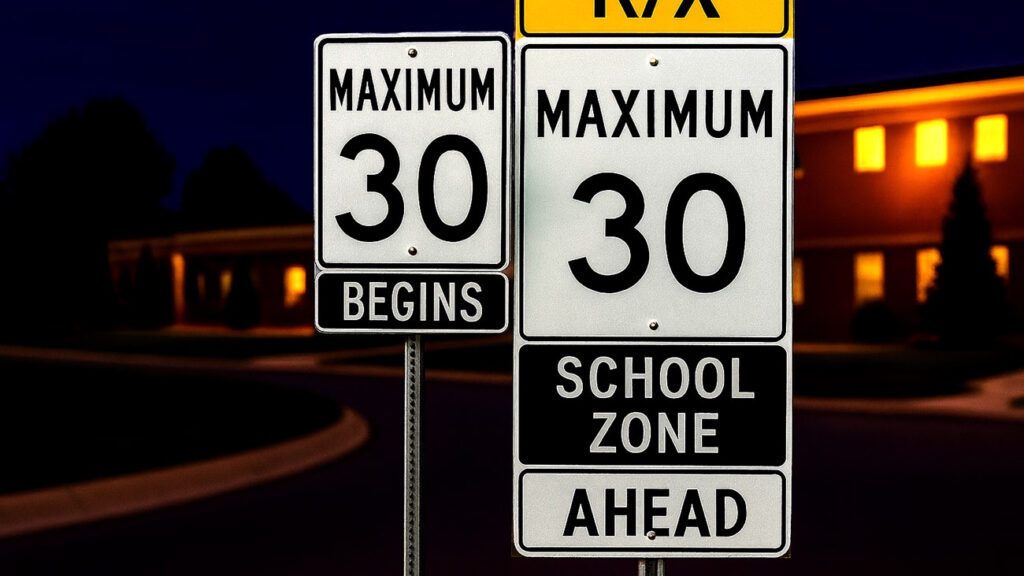
Issues of speed limits and policy rarely make front-page news, but last month was an exception. Ontario Premier Doug Ford banned the use of speed cameras, calling them merely a revenue-generating tool, and redirected funds to other traffic calming measures. One such measure was a new batch of oversized road signs. However, a serious problem arose: they do not fit the existing posts in Toronto.
The 90 new temporary signs, intended for 20 school zones in Toronto, are about a meter wide and can reach over two and a half meters in height. This means the sign itself is approximately as tall as the existing posts. In the nation’s capital, Ottawa, wooden posts about 3.7 meters tall had to be used to support such massive signs.
“When I was told about this, I laughed,” he said. “So let’s be clear: there are no problems in any other municipalities. But, of course, it’s Toronto and Ottawa again. They can’t install a big sign? Well, do I need to go there and show them how it’s done? I think this is just another excuse. You don’t like the signs? Install speed bumps… That’s a joke. I can’t believe it.”
The city faced technical and efficiency problems
Last week, Toronto Mayor Olivia Chow confirmed that the signs are indeed too large and the city will have to install new posts. Fortunately, the province has promised to allocate funds for this. Ford believes that large speed limit signs, along with new speed bumps and flashing light signals, will be a more effective deterrent than cameras and fines.
However, according to research reported by the Toronto Star, the large signs are expected to do almost nothing to combat speeding and aggressive driving. Furthermore, only 21 of the 150 locations where cameras are now banned were deemed suitable for installing speed bumps or cushions, and none can be equipped with full speed humps or roundabouts.
This situation points to a broader problem of implementing political decisions without a full technical and practical assessment at the local level. Replacing one safety technology with another requires not only funding but also consideration of infrastructure limitations, such as the height and strength of posts. The discussion between provincial and city authorities around these signs has revealed a gap between centralized decision-making and its implementation in specific urban conditions. The question of the measures’ effectiveness also remains open, as the evidence base may contradict political beliefs, creating additional challenges for ensuring road safety.