 by
by Rivian Unveils Plans for Autonomous Driving and Artificial Intelligence
During its first day dedicated to autonomy and artificial intelligence, Rivian presented extensive plans for the future. CEO RJ Scaringe stated that the ultimate goal is to create a Level 4 autonomous driving system that in many situations will be able to fully replace a human behind the wheel.
Key announcements included:
In-House Processors as the Foundation for the Future
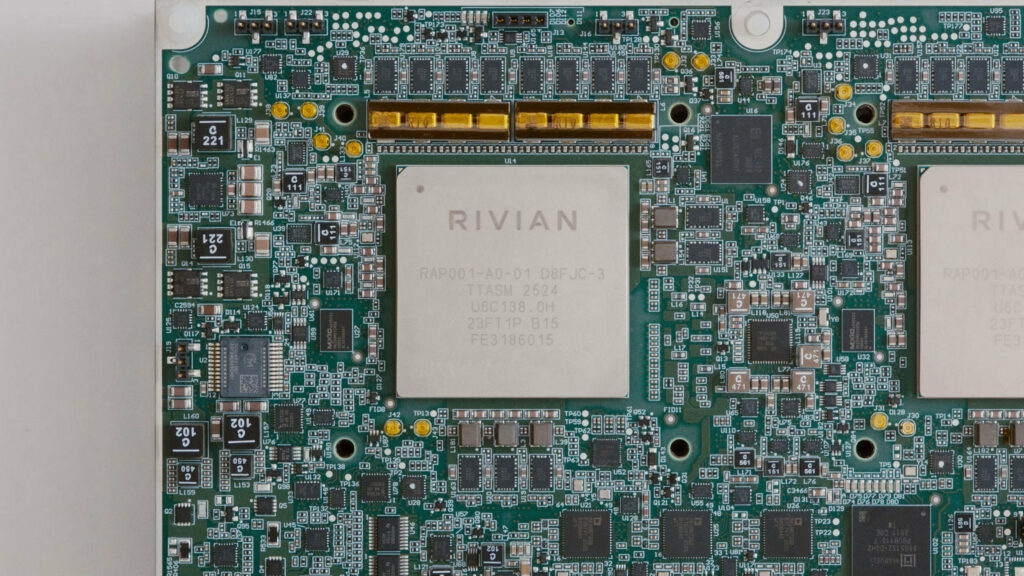
One of the key factors for Rivian’s progress is cited as the transition to its own silicon chips, specifically designed for physical AI focused on computer vision. The first such chip is named the Rivian Autonomy Processor (RAP1). It integrates computing power and memory into a single module. This processor powers the autonomous computing module and has a processing capacity of 5 billion pixels per second.
Autonomous Driving and the Role of LiDAR
Rivian also announced the integration of LiDAR sensors into future R2 models, starting from late 2026. These sensors are intended to complement the company’s multimodal sensor strategy, providing detailed three-dimensional spatial data and redundant environmental perception. The company believes LiDAR will improve real-time detection and help ensure safety in non-standard situations.
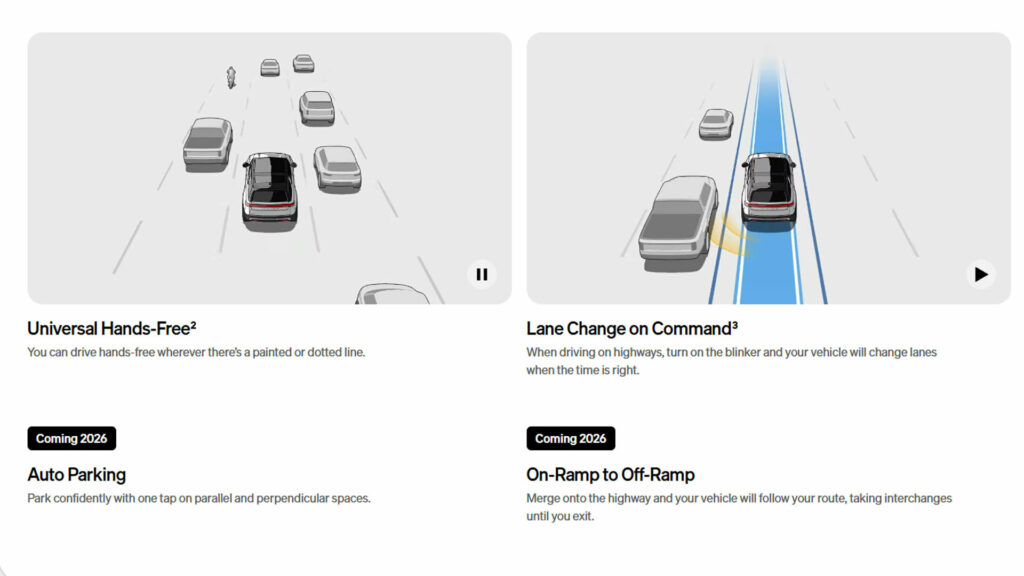
Universal Hands-Free Driving Coming Soon
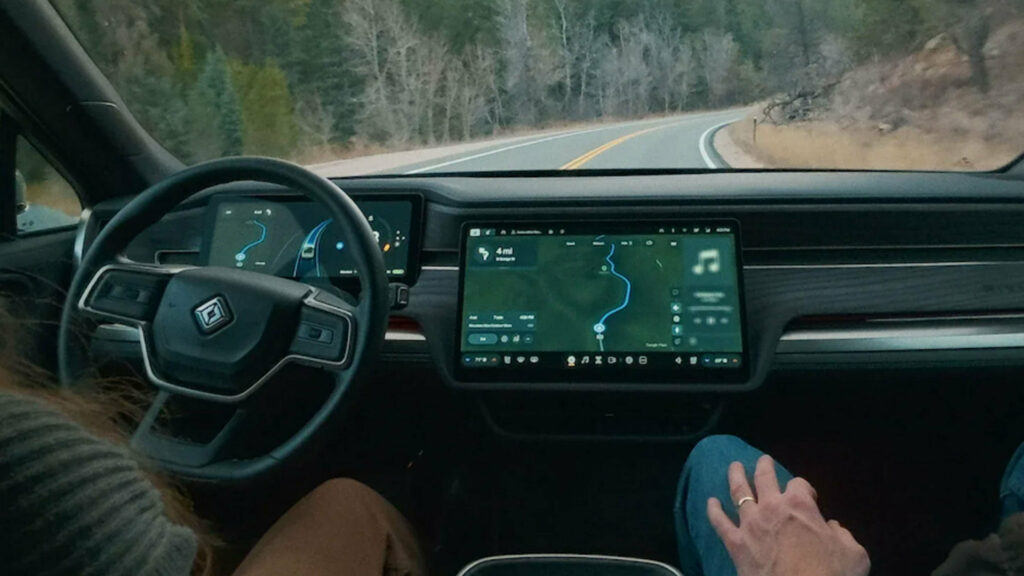
The Universal Hands-Free driving system is set to appear on R1 vehicles in the near future. It promises to enable hands-free driving on a significantly larger number of road sections. Specifically, owners will be able to use it on over 3.5 million miles of roads in the US and Canada, including not only highways but also roads with clearly marked lanes.
Autonomy+ Subscription and Its Capabilities
In early 2026, Rivian plans to launch a new subscription called Autonomy+. Its cost will be $49.99 per month or $2500 for a one-time purchase. The subscription will include the Universal Hands-Free system and a lane change on command feature. Later, automatic parking and a “highway on-ramp to off-ramp” function will be added, allowing the vehicle to independently perform merging and exiting maneuvers.
AI-Based Voice Assistant
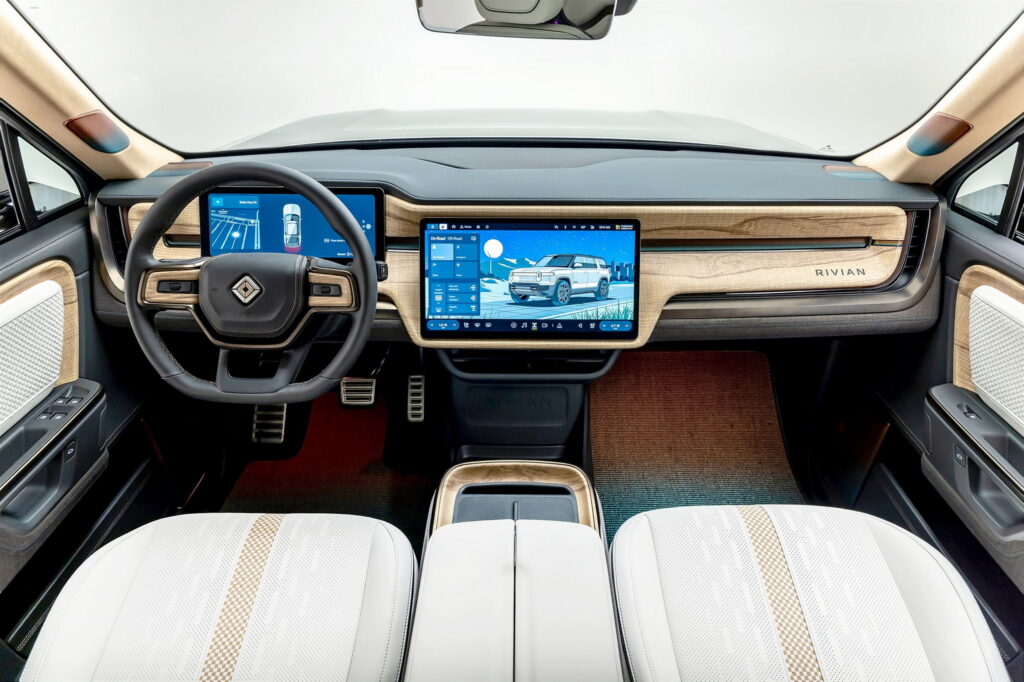
In addition to autonomy technologies, Rivian announced a next-generation voice assistant – Rivian Assistant, whose launch is scheduled for the beginning of next year. It will be able to understand the vehicle’s status, the user’s digital life, and the surrounding environment. The assistant will allow for conversation in natural language and interaction with third-party apps, with Google Calendar being the first integration.
These announcements demonstrate a deep rethinking of the car not just as a means of transportation, but as a mobile intelligent platform. The emphasis on in-house microprocessor architecture and a comprehensive approach that combines hardware (LiDAR, chips), software capabilities (autonomy), and interaction interface (voice assistant) indicates Rivian’s aspiration to control the entire technological chain. The success of these initiatives will depend not only on technical perfection but also on regulatory acceptance, market readiness for subscription models, and the systems’ ability to operate safely in the real, imperfect world. The planned timeframe for the appearance of many features – 2026 – gives the company time for refinement, but simultaneously sets clear benchmarks for competitors in the electric vehicle and autonomous technology industry.