 by
by Volkswagen Unveils Fully Autonomous Gen.Urban Car
Volkswagen has revealed details about its research-focused, fully autonomous Gen.Urban car. This prototype, designed for an urban environment, lacks a traditional steering wheel and pedals, highlighting its purpose as a robotaxi.
A New Testing Phase for the Autonomous Prototype
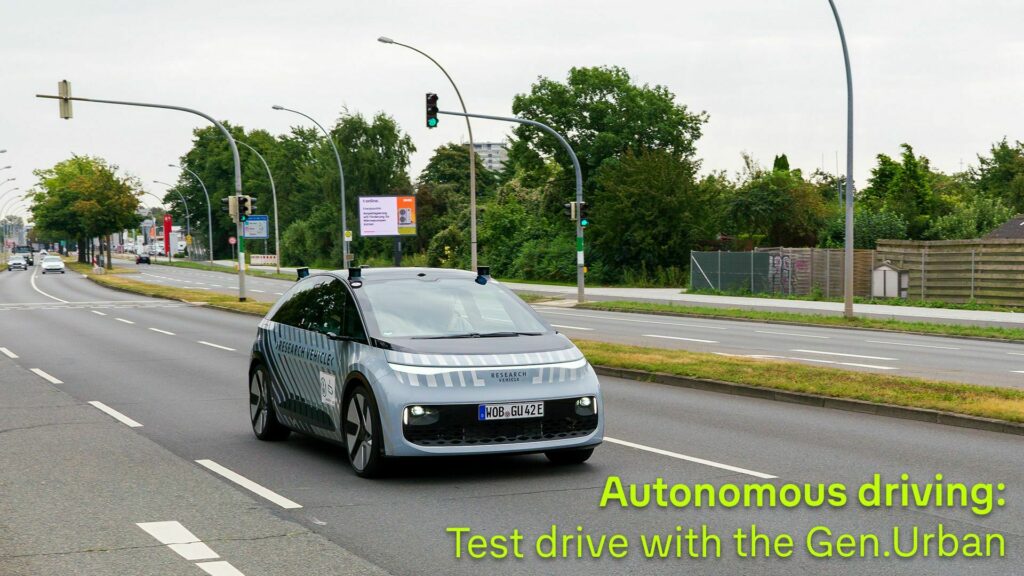
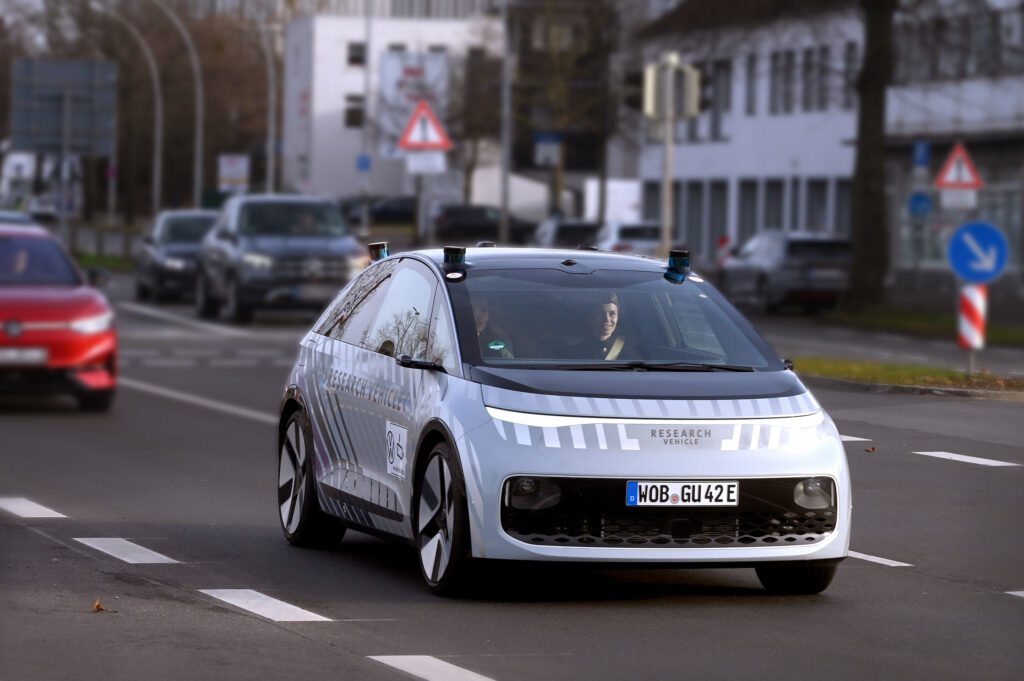
Competition in the robotaxi market is intensifying, and Volkswagen is entering its Gen.Urban into a new testing phase. Over the past year, the prototype underwent intensive trials and is now capable of navigating autonomously in Wolfsburg’s city traffic. Despite full autonomy, a safety driver remains in the front seat, ready to intervene using a specially designed control panel with a joystick.
Design and Technical Features
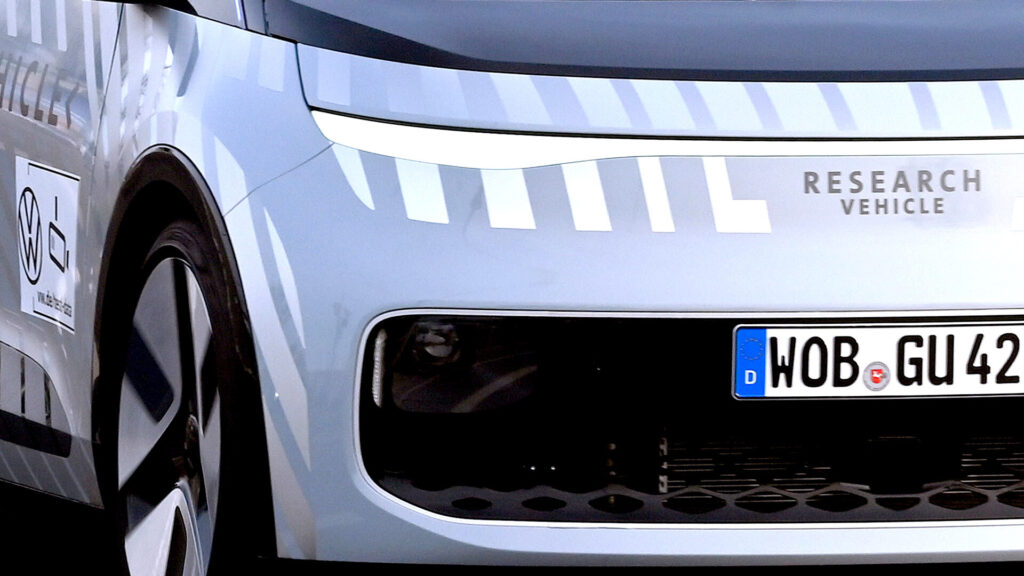
In design, the car resembles a futuristic version of the ID.3. It features a streamlined shape with a wide grille, low-mounted headlights, and an LED light strip. The body is characterized by smooth surfaces, hidden door handles, and digital rearview mirrors. The roof is equipped with four or five sensors, likely complemented by a camera on the front.
Researching Human Interaction with the Autonomous Car
Volkswagen has not yet disclosed detailed technical specifications, but the new testing phase focuses on studying how passengers use the vehicle. The company is collecting comprehensive data on user behavior and their interaction with the Gen.Urban. Researchers are interested in how people spend time in an autonomous car, how comfortable they feel, and how different population groups—from children to the elderly—will interact with such transport.
Future User Experience and Customization
The findings will help refine the interior and user experience of future cars. Interestingly, personalization begins even before the passenger gets in the car. Using an app, one can adjust the cabin temperature and ambient lighting. Upon taking the driver’s seat, it automatically adjusts to the desired position, and the passenger is greeted by a wide front display with various information.
The development and testing of prototypes like the Gen.Urban point to profound changes in the automotive industry. The transition to fully autonomous transport requires not only technological breakthroughs in sensors and artificial intelligence but also a fundamental rethinking of the interaction between humans and machines. The success of such projects will depend on how convenient and intuitive they are for ordinary people who may never have sat behind a steering wheel. This also poses new challenges for urban infrastructure and legislation, which must regulate the use of such vehicles in public spaces.