 by
by Pros: Excellent design, spacious interior, true off-road capability.
Cons: High price, standard tires don’t perform best, feels like a large vehicle behind the wheel.
A New Era of Power and Luxury
When Land Rover introduced the updated Defender in 2020, purists were skeptical about modern technology and luxurious upholstery in an iconic off-roader. However, by 2026, the Defender 130 V8 has become the most powerful and luxurious variant of this model. It’s a car that enhances an already capable platform.
Review: The 2026 Ram 1500 V8 Hemi is worse on paper but better in reality than the six-cylinder Hurricane.
The 130 modification joined the family last and quickly became the primary choice for buyers who need a lot of space for passengers or cargo without sacrificing off-road ability. It expands the Defender’s dimensions without straying too far from its identity.
Installing a supercharged V8 engine only enhances the character of this already very attractive off-roader. It’s like adding American muscle power to the Land Rover heritage.
Key Specifications
The Real Driving Experience
The question remains: how does the largest and most powerful Defender actually feel behind the wheel? Is it as capable as other variants in the lineup? What’s it like to live with daily? A week-long test provided answers that were somewhat surprising, given the car’s price of over $130,000.
Previous experience with the smaller five-seat 110 version showed it to be a true all-rounder, yet the 130 has certain compromises. Nevertheless, its appearance is a positive phenomenon.
A Modern Interpretation of an Icon

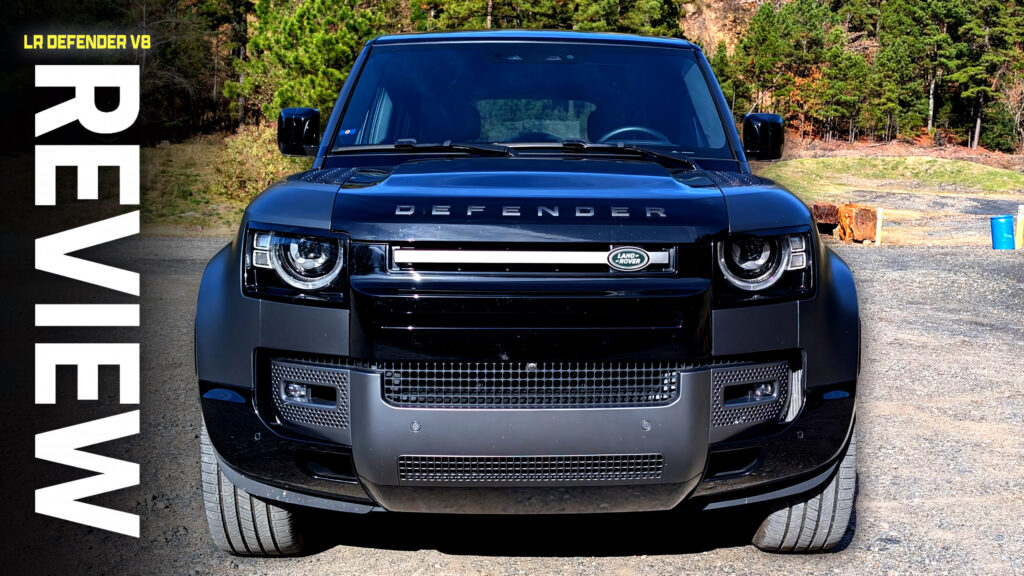
From a design perspective, the 130 is perhaps the most refined in the family. It combines classic Land Rover style with a modern silhouette better than other models from the brand. The car is significantly larger than the original Defender, but as a modern interpretation, it is successful.
The 2025 Land Rover 110 Defender is a luxury off-roader that loves dirt.
Land Rover has retained the ruggedness and angularity of the original. This off-roader is impossible to confuse with anything else. It looks monolithic and reliable. Some visual details, such as the opaque panels on the C-pillars, are a nod to older models, although they serve a decorative function. The hood also features a plastic diamond-plate imitation.
Overall, it’s an attractive, stylish, and noticeable design. Land Rover also offers special matte wraps, as on the test car, which attract attention.
An Interior for Every Passenger

The interior is practically identical to other models in the Defender family. Durable materials are used here, such as textured aluminum on the steering wheel spokes. The dashboard is focused on functionality with plenty of storage compartments and convenient handles.
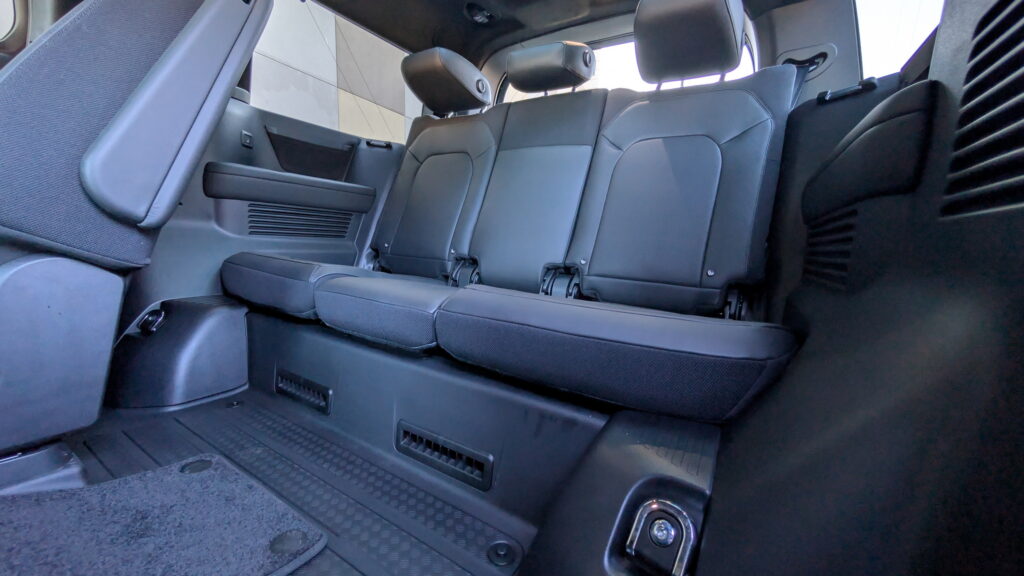
A feature of this model is its focus on passenger comfort. The second row of seats features captain’s chairs with a raised seating position for better visibility, which does not reduce headroom. Even the third row is not a formality: the side seats have individual heating, compartments, network ports, ventilation, and cup holders.
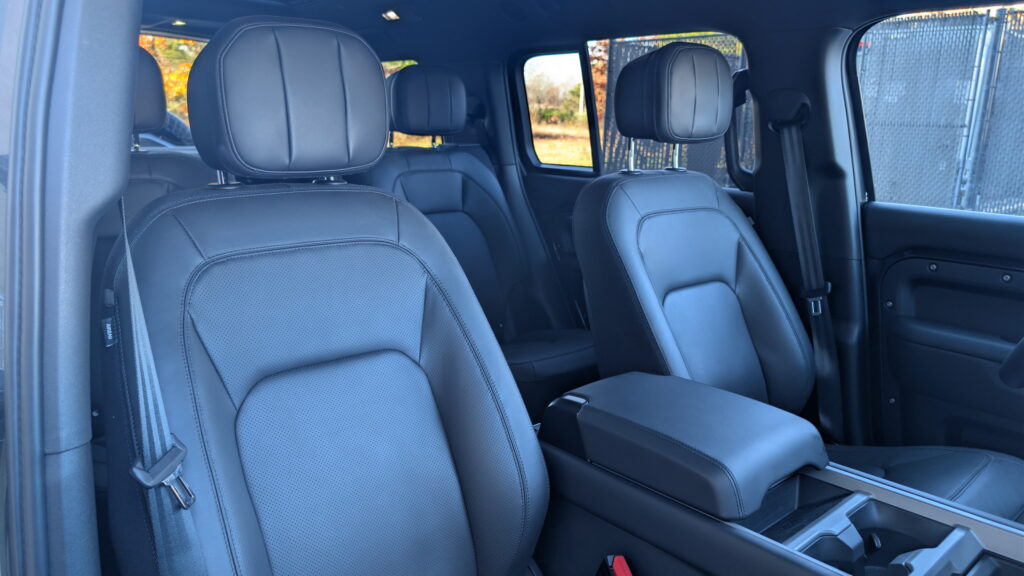
Cargo space is also impressive: 13.7 cubic feet behind the third row, 43.5 behind the second, and over 80 cubic feet with the seats folded.
Interior Shortcomings
However, the interior is far from perfect. The seats do not meet expectations for such a price. The multimedia system, while intuitive, has drawbacks. For example, in the Range Rover, the system allows for quicker climate control adjustments for each passenger.
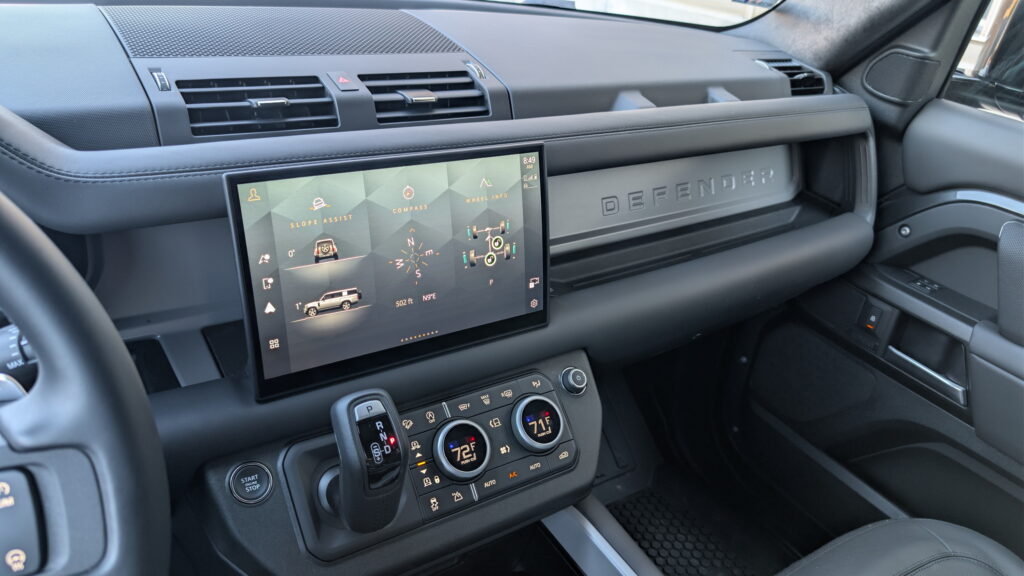
Furthermore, the Pivi system can maintain a connection with the phone for too long even after the car is locked, which sometimes leads to audio from the device continuing to stream into the car.
Driving Impressions
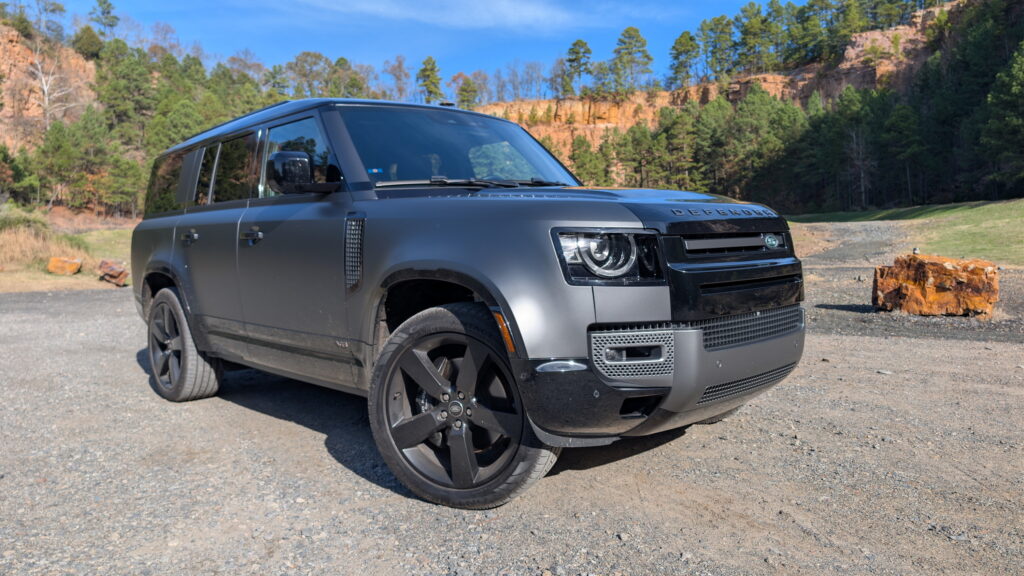
The supercharged V8 engine with 493 hp and 610 Nm of torque sends power to all four wheels via an eight-speed automatic transmission. However, behind the wheel, it doesn’t feel like a powerful muscle car, partly due to its weight.
The Defender 130 V8 weighs approximately 335 kg more than the six-cylinder 110 version. This additional mass is noticeable in acceleration, braking, and handling. The six-cylinder version even has a better power-to-weight ratio.
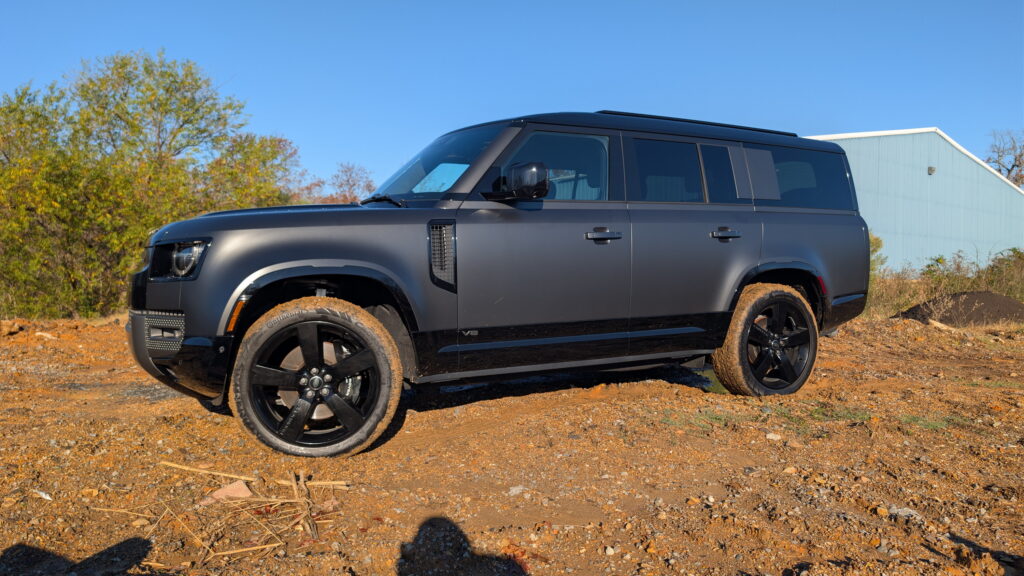
Fuel consumption is only 15.4 miles per gallon (approximately 15.3 l/100 km), making it the least economical Defender. Operating costs, including brake and tire wear, will be higher.
Off-road capability also has compromises. Although the car has air suspension with 293 mm of ground clearance, locking differentials, and decent angles, the standard 22-inch Continental Cross Contact tires do not provide enough confidence off-road.
However, for the target buyer looking for a comfortable family car, these compromises may be insignificant. In everyday use, the 130 V8 is comfortable, quiet, and convenient. Visibility from the cabin is excellent, and the 360-degree camera system is one of the best on the market.
Market Competitors
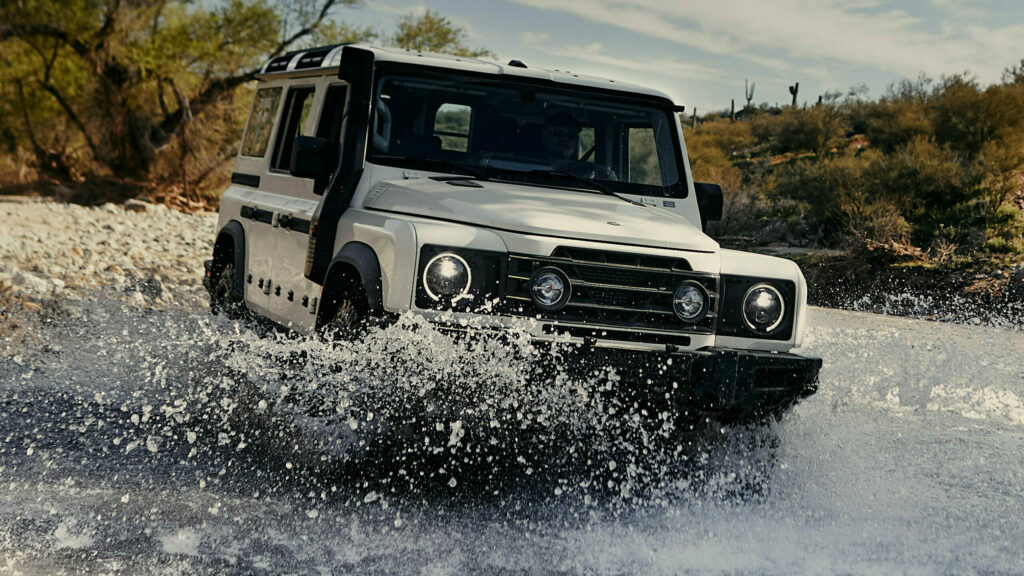
The Defender is unique among luxury off-roaders because it is focused on transporting people and off-road driving. Its closest competitor is the Ineos Grenadier, which is closer to the classic Defender in spirit and price but falls short in luxury, comfort, and on-road dynamics. Land Rover also offers three rows of seats.
The Range Rover Autobiography feels like an inconspicuous Rolls-Royce until you sit in the back seat.
While some might consider the Range Rover, it is less adapted for off-road use. For those planning outdoor trips, the Defender remains the better choice.
Conclusions and Observations
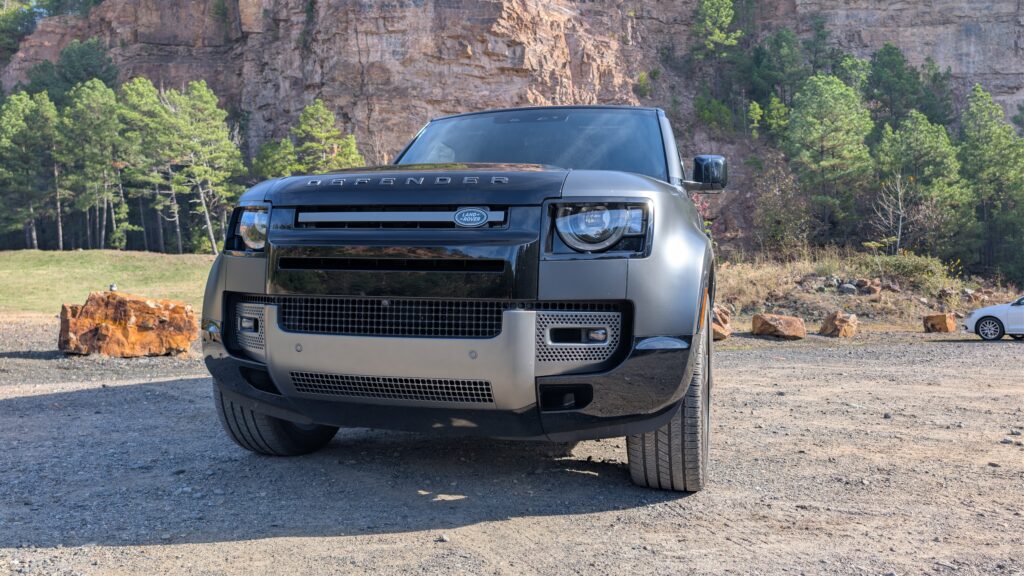
The Defender 130 V8 is an exciting contradiction. It is the largest, most expensive, and most powerful Defender, yet at the same time the least focused version. It’s not for purists or hardcore off-roaders, but for those who value space, status, and the fact of having a V8 engine under the hood.
As a daily car, it is successful: comfortable, manageable in the city, with excellent interior ergonomics. However, as a sporty off-roader, it doesn’t provide the feeling of true muscle power and is not as cohesive as the lighter 110 version.
For most buyers, the six-cylinder versions make more sense in terms of dynamics, cost, and character. But the Defender 130 V8 fills its niche — it’s a car for those who want the maximum in everything: size, space, power, and prestige, despite the compromises. It may not be the best Defender, but it is undoubtedly the most luxurious.
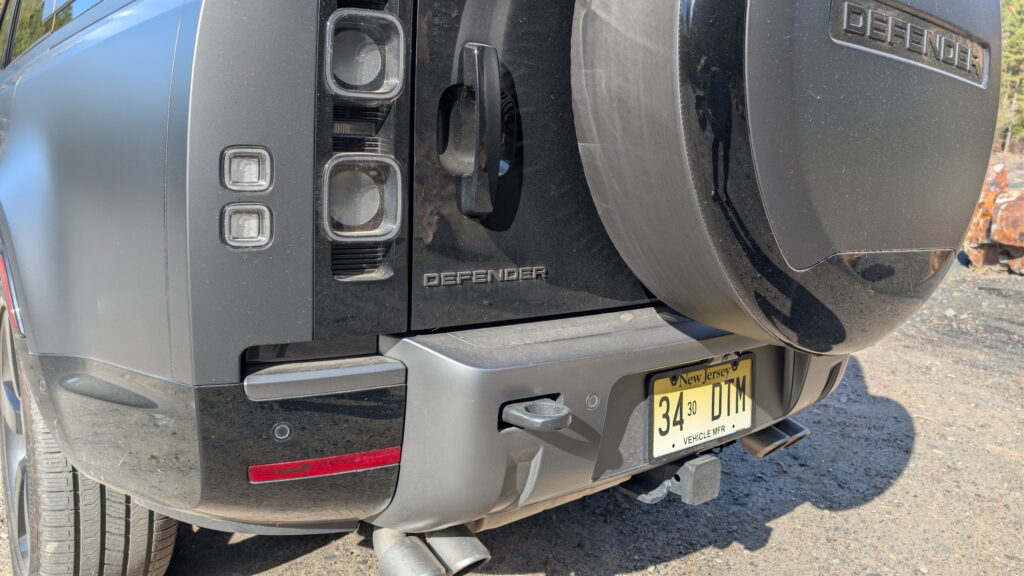
The price of over $130,000 places it in the category of exclusive purchases, where rational arguments often give way to emotional desire. In a market increasingly transitioning to electric vehicles and smaller engines, the very existence of such a large supercharged V8 is a statement in itself. It appeals to nostalgia and the idea of endless possibilities, even if most of its capabilities remain unrealized in real-