 by
by Settlement with State Attorneys General
A bipartisan coalition of state attorneys general announced reaching a settlement agreement with Mercedes regarding its own scandal surrounding harmful diesel engine emissions.
According to the New York State Attorney General’s office,
Mercedes equipped hundreds of thousands of diesel cars with hidden software designed to cheat emission tests, mislead consumers, and illegally pollute the environment across the country.
Deception Mechanism and Consequences
According to the coalition’s findings, Mercedes installed hidden software on its diesel cars to artificially lower emission levels during official state tests. However, under normal operating conditions, these vehicles’ emissions could exceed the legal limit by 30 or 40 times.
In addition to obtaining “emission certificates that the cars did not actually deserve,” the coalition stated that Mercedes misled consumers by advertising these vehicles as “clean,” “green,” and with “ultra-low emissions.”

Terms of the Financial Settlement
Under the terms of the settlement, Mercedes will pay $149,673,750, of which $120 million will be directed to the states for purposes of “preventing, reducing, and mitigating air pollution.”
The remaining amount of $29,673,750 is a penalty that is “temporarily suspended.” Under this scheme, Mercedes will receive a credit of $750 for each vehicle that is repaired, bought back by the company, or taken out of service.
To encourage owners to repair, the automaker must offer customers a $2,000 payment for performing an approved modification to the emission system. Claims must be submitted by September 30, 2026, and the manufacturer will mail informational letters explaining the program.

Restrictions and Obligations for Mercedes
Mercedes is also prohibited from selling or leasing any diesel vehicles equipped with these illegal emission system cheating devices, making misleading statements regarding vehicle emission performance, or claiming that a diesel vehicle is clean or has low pollution levels if such a claim is not accurate and substantiated. Furthermore, the company must regularly report on the progress of repair work.
List of Affected Models
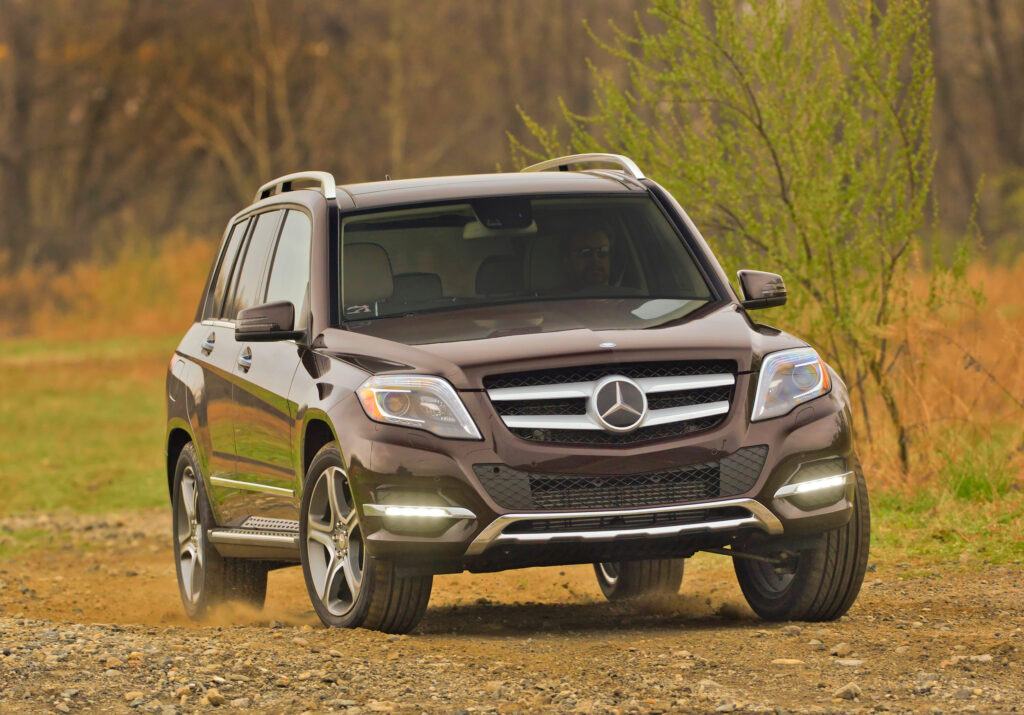
Although the text of the agreement is quite dry, it reveals a number of models on which the cheating devices were installed. These include, in particular, the E350 from model years 2011-2013 and 2014-2016. The list also includes versions of the GL-, GLE-, GLK-, ML-, R-, and S-Classes. Clearly, the Sprinter is also involved in the case.
The states asserted that
through several hidden devices that functioned as defeat devices, the diesel vehicles were designed to detect parameters corresponding to official emission test cycles and activate a cleaning mode under those conditions – thereby creating the appearance of compliance with emission standards – while in other instances the system reverted to a previous control mode, resulting in significant excess NOx emissions in real-world driving conditions.
This was part of a dual-dosing strategy to “avoid the compromises required for lawful NOx emission control.” Specifically, the company managed to avoid performance and fuel economy penalties, as well as limit the consumption of diesel exhaust fluid.
Previous Settlements and Scale
This agreement came after a previous $2.2 billion settlement with the U.S. government, as reported by Reuters. In total, Mercedes allegedly sold over 211,000 vehicles with the cheating device between 2008 and 2017.
List of Mercedes Models Involved in the Scandal
Model | Model Years
E250 | 2014-2016
E350 | 2011-2013
GL320 | 2009
GL350 | 2010-2016
GLE300d | 2016
GLE350d | 2016
GLK250 | 2013-2015
ML250 | 2015
ML320 | 2009
ML350 | 2010-2014
R320 | 2009
R350 | 2010-2012
S350 | 2012-2013
Mercedes / Freightliner Sprinter (4-cylinder) | 2014-2016
Mercedes / Freightliner Sprinter (6-cylinder) | 2010-2016
This case clearly demonstrates how technical solutions aimed at circumventing environmental regulations to achieve commercial advantages can lead to serious legal and financial consequences even for the largest automakers. The fine amounts and compensation mechanisms embedded in the agreement indicate regulators’ desire not only to punish but also to actively engage owners in rectifying the situation by offering them financial incentives. Similar precedents in the automotive industry continue to influence global approaches to certification, control, and transparency regarding the real environmental performance of vehicles, forcing manufacturers and regulators to seek new balances between performance, economy, and compliance with standards.