 by
by Ford’s Strategic Pivot in Batteries
Ford is not only scaling back its electric ambitions but also fundamentally revising its approach to battery manufacturing. This month, the automaker canceled two major electric vehicle battery deals: an $11.4 billion joint venture with South Korea’s SK On and a $6.5 billion supply agreement with LG Energy Solution.
While Ford is temporarily slowing the development of its own electric vehicles, it is focusing efforts on another type of battery – those designed to power entire energy grids.
In 2023, the company entered into a licensing agreement with Chinese giant CATL to use lithium-iron-phosphate (LFP) battery technology. Initially, the plan was to produce batteries specifically for electric vehicles, but those plans have changed.
Energy for Grids Instead of Cars
Instead of installing CATL batteries in cars, Ford will now use this technology to produce large-format batteries intended for energy storage. These mass-produced modules are designed for utilities and grid operators.
Given that we already had a license to produce this technology in the U.S., along with our manufacturing experience – over a century of mass production – this seemed like a very logical step for us
– stated Lisa Drake, Ford’s Vice President of EV Technology Programs and Systems.
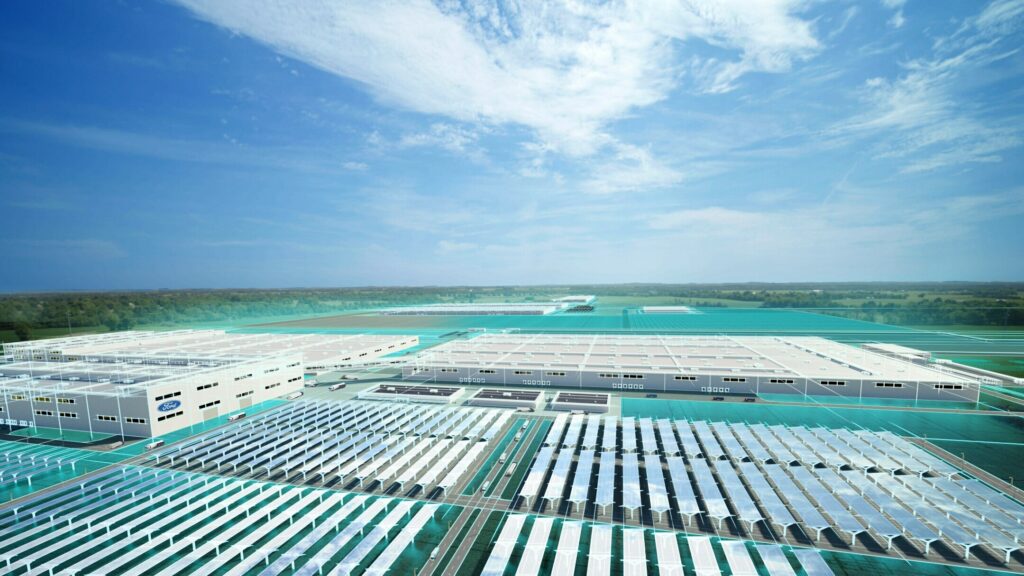
The implementation of the deal with CATL has been accompanied by political difficulties for Ford. The Governor of Virginia rejected Ford’s plans to build a plant there due to the company’s Chinese ties. Ford is now building its plant in Michigan and plans to open it next year.

The Logic of Domestic Manufacturing
Against the backdrop of the U.S. administration’s efforts to reduce dependence on Chinese products, Ford believes its approach – manufacturing in America under a licensed technology – is better than continuing to import finished batteries from China, which are already widespread in the U.S. energy sector.
Given the ongoing needs of American energy producers, supporting efforts to manufacture batteries in America instead of importing them from China seems obvious
– the company added.
The automaker also consulted with potential customers about demand for energy storage batteries and received a positive response. LFP cells are well-suited not only for electric vehicles but also for stationary energy storage systems, making Ford’s decision logical.

Ford’s ultimate goal is to develop its own low-cost batteries, using the experience gained from the licensing agreement with CATL. According to Lisa Drake, without cooperation with the Chinese company, Ford would have needed about a decade to catch up with competitors and create its own competitive LFP technology.
This strategic maneuver by Ford reflects a broader trend in the global automotive industry and energy sector, where battery technologies are becoming a key asset. Shifting focus from automotive batteries to grid-scale systems could prove to be a more stable business, less dependent on fluctuations in electric vehicle demand. Furthermore, it allows the company to circumvent some of the political risks associated with Chinese technology in the sensitive passenger car sector by moving it to a less public but strategically important segment of energy infrastructure. The success of this initiative will largely depend on how quickly production can be established in Michigan and the trust of local energy companies can be won.