 by
by New Compact Electric Car from Hyundai
Electric vehicle sales may be cooling due to reduced government incentives in the US, but Hyundai has no intention of taking its foot off the accelerator. In fact, the brand is moving forward with its most compact electric car after the Inster. Named the Ioniq 3, this practical five-door hatchback model occupies a position below the Ioniq 5 and Ioniq 6 in both size and price.
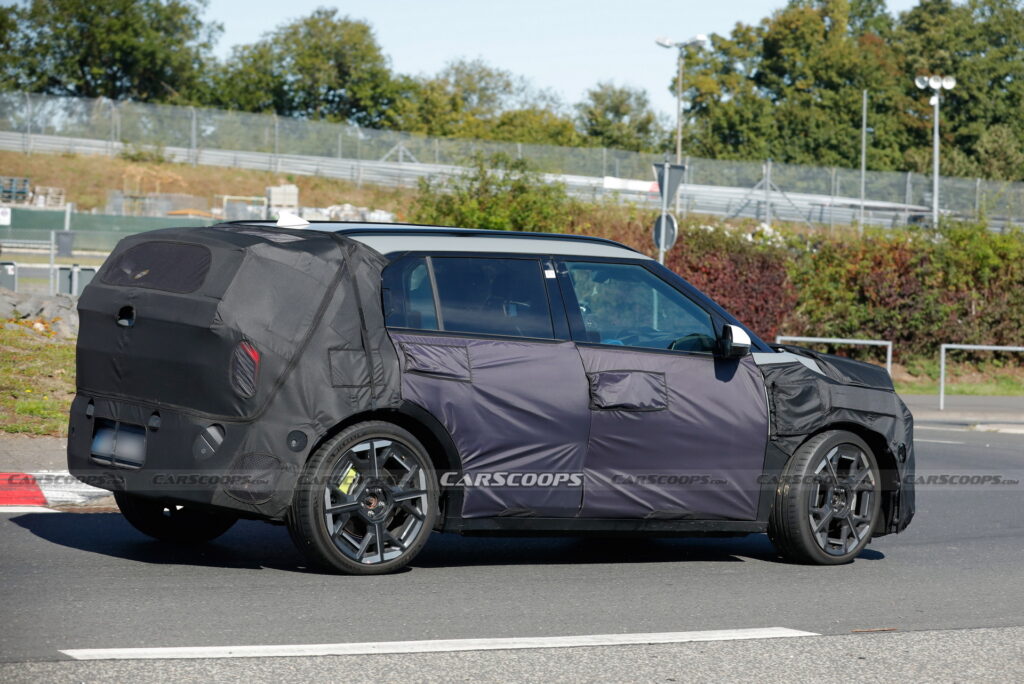
Previewed by the recent Concept Three, the Ioniq 3 could become one of Hyundai’s most important global electric vehicles, combining affordability with everyday practicality. Camouflaged prototypes have already been spotted during open-road testing, hinting at an imminent official debut. Here is everything we know so far.
The Golden Mean in Design
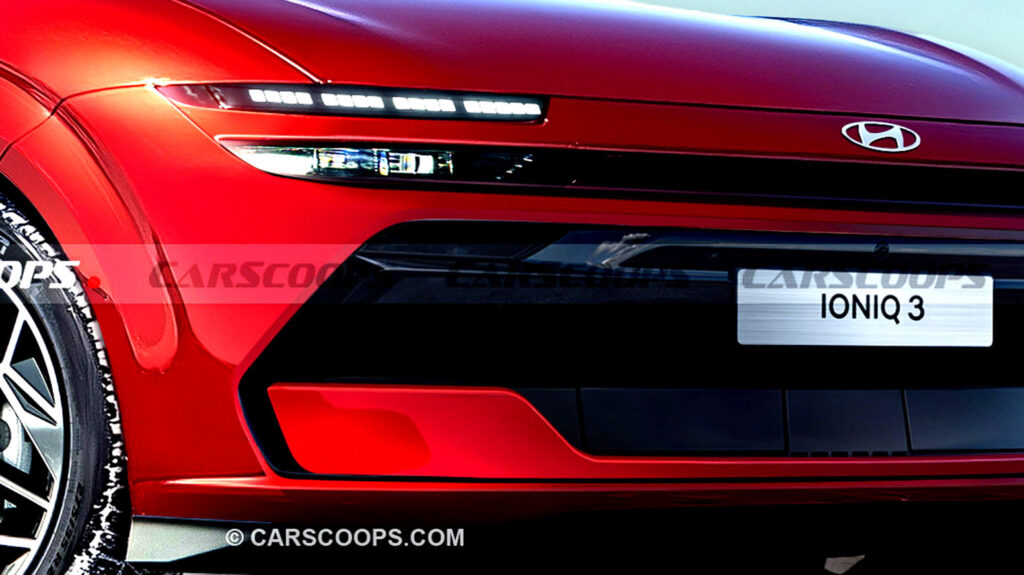
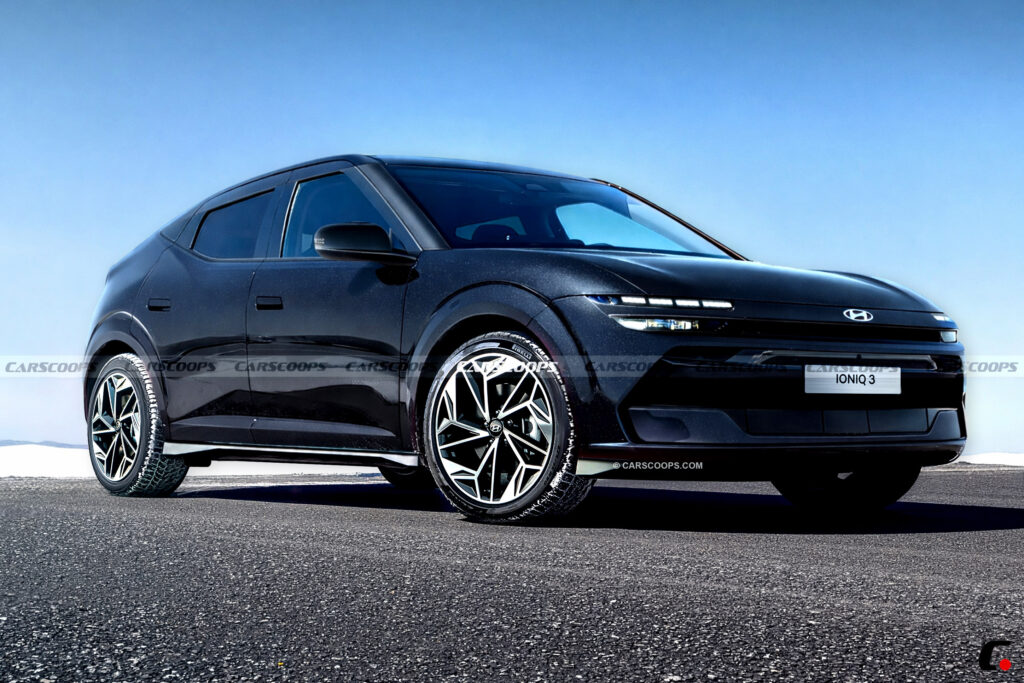
Unlike its larger siblings, the Ioniq 3 avoids a polarizing look, offering a more restrained design. Prototypes confirm it retains the coupe-like proportions of the Concept Three, although the front end is executed more conservatively: conventional cooling intakes for the battery and thin pixel daytime running lights, separated from the main headlights.

In profile, the model replaces the concept’s thin window frames with more substantial elements. Otherwise, it’s a clean, uncluttered profile with smooth surfaces and intersecting lines, inspired by Hyundai’s ‘Art of Steel’ design language.
The rear features a high-mounted full-width LED light bar with pixel elements and a split tailgate glass configuration similar to the Toyota Prius. The concept’s translucent aero elements and aggressive diffuser won’t make it to the production model, though it will still have a thin spoiler.
Technology-Oriented Interior
The cabin offers a completely new experience, significantly different from Hyundai’s existing lineup. It is equipped with a separate digital instrument cluster and a large Tesla-style infotainment display.
The screen runs on Hyundai’s new Pleos Connect system, built on the Android Automotive OS. This provides cloud-based user profiles, allowing owners to download features on demand, as well as conversational voice control for navigation and other vehicle functions.
Importantly, spy photos confirm the presence of physical buttons for climate control below the screen. The five-seat interior follows the same minimalist theme as other Ioniq models, with simple door panels and oval decorative elements.
Other features include compatibility with Apple CarPlay Ultra, interior ambient lighting, and an upgraded Level 2 driver assistance system.
Platform, Powertrain, and Battery

While key specifications remain a secret, it is known that the Ioniq 3 will be built on a simplified version of the E-GMP platform. Unlike the 800-volt architecture used by the Ioniq 5 and 6, this model operates on a 400-volt system, helping to keep costs down.
It shares much with the underpinnings of the upcoming Kia EV4, so a single-motor, front-wheel-drive configuration with around 201 hp is expected at launch. A dual-motor version may appear later in a potential N sport modification.
Two NCM lithium-ion battery configurations are reported to be available: a smaller 58 kWh pack and a larger 81.4 kWh one. The latter should provide a range of approximately 390-400 miles; both variations will have V2G (vehicle-to-grid) and V2L (vehicle-to-load) capabilities.
Competitors and Launch Timeline
Key competitors include the Kia EV3 and EV4 (essentially the Ioniq 3 in different clothing), Volkswagen ID.3, Cupra Born, Peugeot e-308, Mini Aceman Electric, MG4, BYD Dolphin, and Skoda Enyaq.
Given the thin camouflage on prototypes and the already known key interior technologies, the full debut is expected within the next six months, with global sales starting before 2027. As for availability in North America – unfortunately, since the car will be built in Turkey, it will not reach the US market.
Hyundai’s decision not to bring the Ioniq 3 to the US may raise questions, considering the demand for affordable compact electric vehicles. However, it is likely related to production logistics and market strategies focused on Europe and Asia. The success of similar models, such as the Kia EV4, could later influence a review of these plans, especially if global competition in the budget EV segment continues to intensify. Technological solutions like the 400-volt architecture and the new media system clearly show that Hyundai is betting on efficiency and user experience, not just maximum performance.