 by
by Chinese Company Develops New Rotary Engine for Aviation
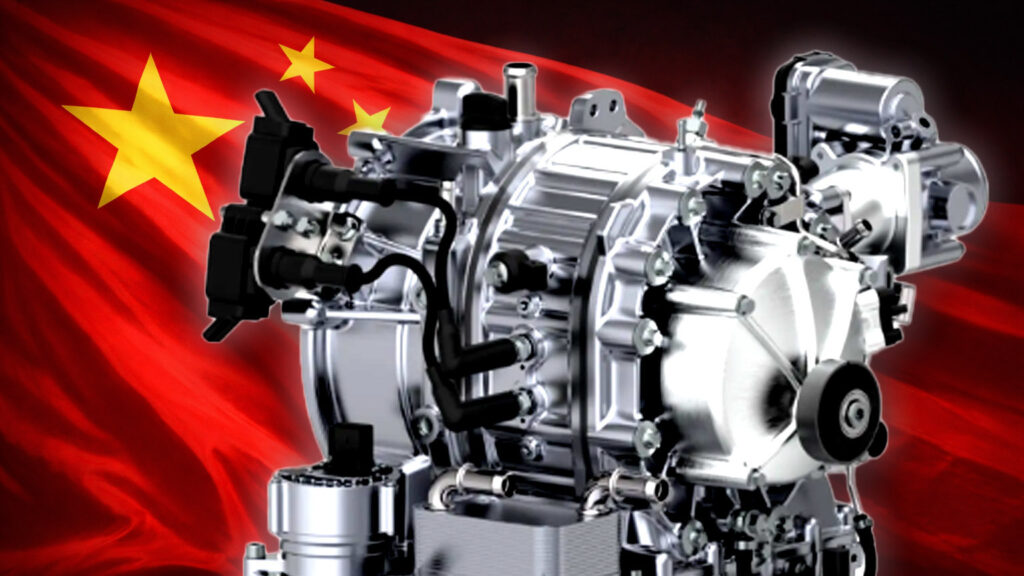
Chinese automakers are not only changing the world of electric vehicles but are also taking on technologies that seemed forgotten. One subsidiary of the Changan Automobile group is working on reviving the Wankel rotary-piston engine, once made famous by Mazda. However, the new engine is not intended for the roads, but for the sky.
The project is being implemented by Harbin Dongan Auto Engine, which has already created a prototype single-rotor engine for low-altitude flights. It is designed for drones and vertical take-off and landing (VTOL) aircraft, whose market in China is rapidly developing.
Technical Specifications and Advantages
The developed prototype is not impressive in terms of power but is perfectly suited for its niche. The engine reaches up to 6500 revolutions per minute and delivers 53 kW (71 hp). Its design includes a cast aluminum housing and a special nanocomposite coating to reduce friction, indicating a focus on durability and efficiency for aviation applications. Development of a twin-rotor version, which is expected to double the power to 110 kW (148 hp), is already underway.
The rotary scheme is well-suited for such tasks. It is compact, has a high power-to-weight ratio, and operates quietly with minimal vibration—qualities that are much more important for flight than for daily driving.

Expansion Plans and Partners
Dongan plans not to limit itself to one or two engines. It is also working on rotary engines for medium- and high-altitude drones, including both atmospheric and turbocharged variants. Among the project’s partners are the ARIDGE aviation unit of Xpeng, as well as giants like Huawei and DJI. Serial production of the single-rotor engine is planned to begin in 2027.
What About Mazda and Its Rotary Engines?
Mazda remains the company most closely associated with the Wankel engine, although it did not invent it. After decades of use, the brand was forced to stop producing such engines for its cars in 2012 due to stringent Euro 5 emission standards. However, in 2023, the rotary engine returned under the hood of the MX-30 R-EV hybrid as a range-extender unit.

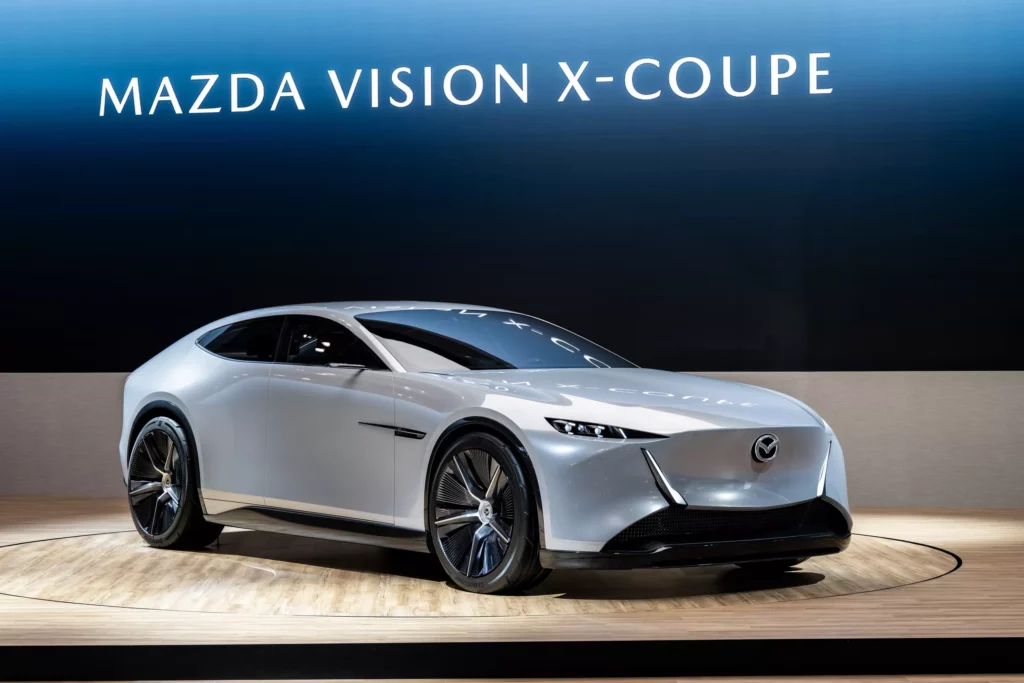
Earlier this year, Mazda unveiled the Vision-X Coupe concept car with a turbocharged rotary engine, an electric motor, and a battery, which together produce 503 hp. This is a reminder that Mazda has not yet said its last word in the history of rotary engines.
The interest of the Chinese auto industry in rotary technology for aviation could become a new stage in its development. While Mazda is focused on integrating the Wankel engine into ground transportation as an auxiliary element, Chinese engineers see its potential as a stable core for flying vehicles. This could open up a completely new field of application for a technology that once struggled for survival in the automotive world due to emissions and fuel consumption—a field where its key advantages of lightness, compactness, and smooth operation will be valued much more highly.