 by
by Behind the wheel of the new electric Polo: the return of buttons and classic design
Volkswagen has finally revealed the production interior of the new electric ID. Polo ahead of its official premiere, which will take place this year. The biggest news is the long-awaited return of physical buttons and switches.
This is the first car fully developed under the leadership of Volkswagen’s new chief designer, Andreas Mindt. The ID. Polo marks a change in course, combining tactile control elements with modern technology in a more user-friendly execution. This philosophy is expected to be used in other new or updated Volkswagen models in the near future.
Tactile feel instead of touch panels
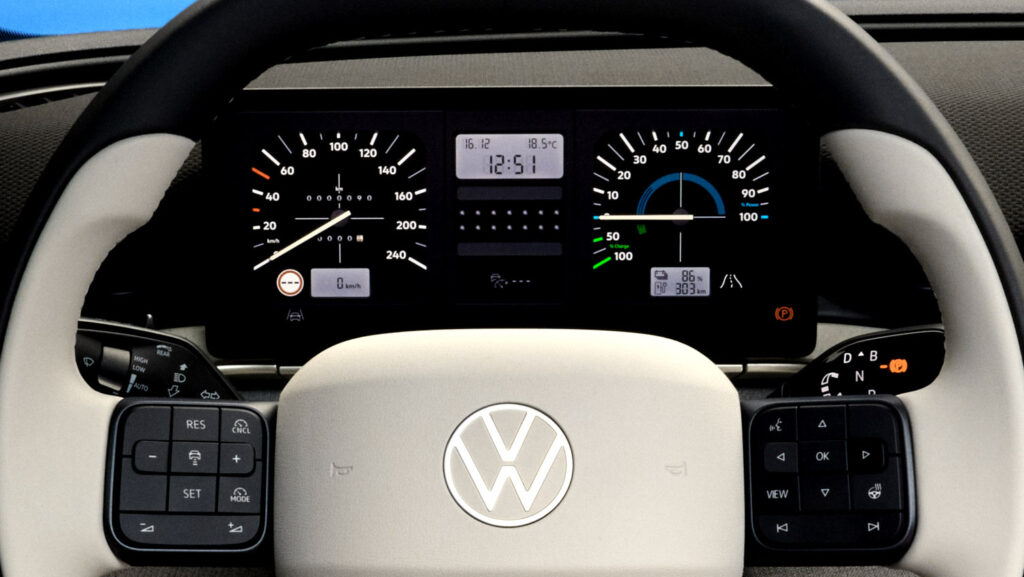
Gone are the touch sliders and haptic panels that caused dissatisfaction among owners of the ID.3 and other recent VW models. In their place are genuine physical controls, including a ridged volume knob and a traditional block of four switches for the windows. The redesigned steering wheel brings back grouped mechanical keys for cruise control and multimedia functions, prioritizing convenience over pointless innovation.
The 10.25-inch digital instrument cluster, mounted directly on the dashboard, signals a return to classicism, replacing the awkward steering column screen from the ID.3. VW has equipped this unit with new software that adds functionality along with nostalgic details. By pressing a button, the driver can activate retro graphics reminiscent of the gauges and visual elements in the style of classic 1980s Golfs.
Updated center console and materials
The larger 13-inch touchscreen for the multimedia system is located on the center console, and it has also benefited from the rethought controls. The polarizing touch sliders for adjusting volume and temperature have been removed. Instead, a neat row of physical buttons for climate control and hazard lights is positioned below the screen. A rotary knob is responsible for volume and can also be used to select tracks or radio stations.
The interior itself is kept in a more cozy tone, with soft recycled fabric covering the dashboard, doors, and even the center console. Volkswagen has retained its signature quirk on the pedals, which still feature play and pause symbols.
We have created an interior that feels like a friend from the first contact. Clear physical buttons provide stability and trust, warm materials make it appealing, and charming details like the new retro instrument views show the typical Volkswagen wink
Technical specifications and price
The new electric Polo is 4,053 mm long, 1,816 mm wide, 1,530 mm high, and has a wheelbase of 2,600 mm, making its dimensions similar to the internal combustion engine model.
The ID. Polo will go on sale with a choice of two battery types and three front electric motors, with a maximum power output of up to 208 hp. A hotter GTI version with 223 hp will appear next year. The battery options will include an LFP battery with a capacity of 37 kWh and a more advanced 52 kWh NMC battery with a cell-to-pack design. Fast-charging capabilities will range from 90 to 130 kW depending on the trim, and all versions are based on the updated MEB+ platform.
Although Volkswagen announced a base price in Germany of 25,000 euros, the company recently confirmed that only higher-trim versions will be available at the start of sales. The starting price is likely to be closer to 30,000 euros, depending on the configuration.
The return to physical controls in the ID. Polo is not just a nostalgic gesture, but a response to specific customer complaints. This move could become a defining trend for the entire industry, which in recent years has become too enamored with touchscreens, often at the expense of safety and driver convenience. The success of this model could force other manufacturers to reconsider their approaches to interior design, especially in affordable segments where simplicity and intuitiveness of controls are critical. Price, however, remains a key factor, as the announced affordability may prove to be limited at the start of sales.