 by
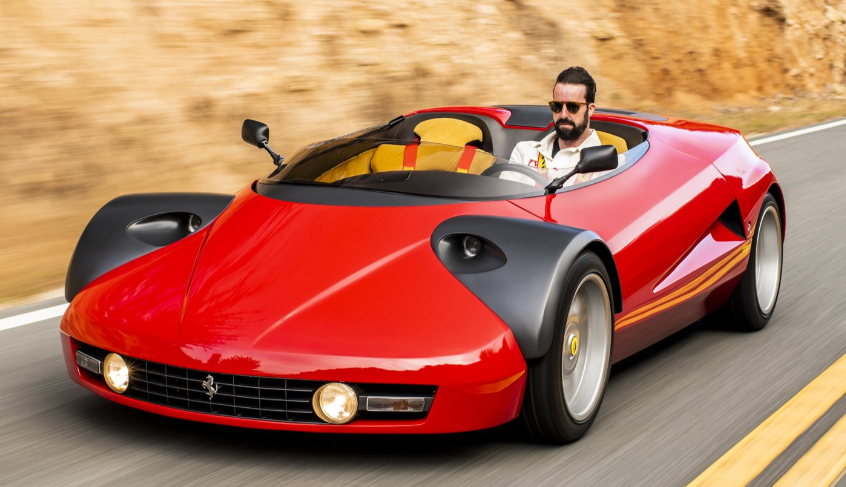
by In 1993, at the Frankfurt Motor Show, the Ferrari Conciso debuted – an exclusive supercar without a roof or windshield (barchetta), created by the German Bernd Michalak Design Studio. The car was based on a 1989 Ferrari 328 GTS with low mileage. This is reported by Classic Driver.
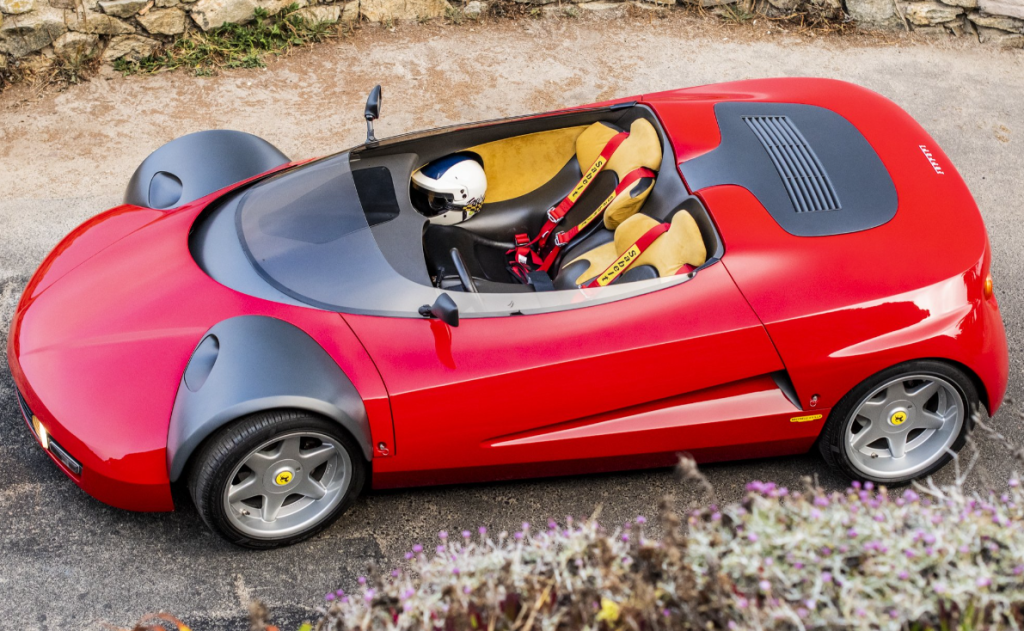
Designer Bernd Michalak was guided by the principle of “athleticism without a single superfluous gram.” Only the transmission and chassis of the original 328 GTS remained, which were wrapped in a minimal amount of material. The body made of aluminum alloy received a wedge shape without doors and without protection from bad weather.
Ferrari Conciso Received a Three-Element Aluminum Body
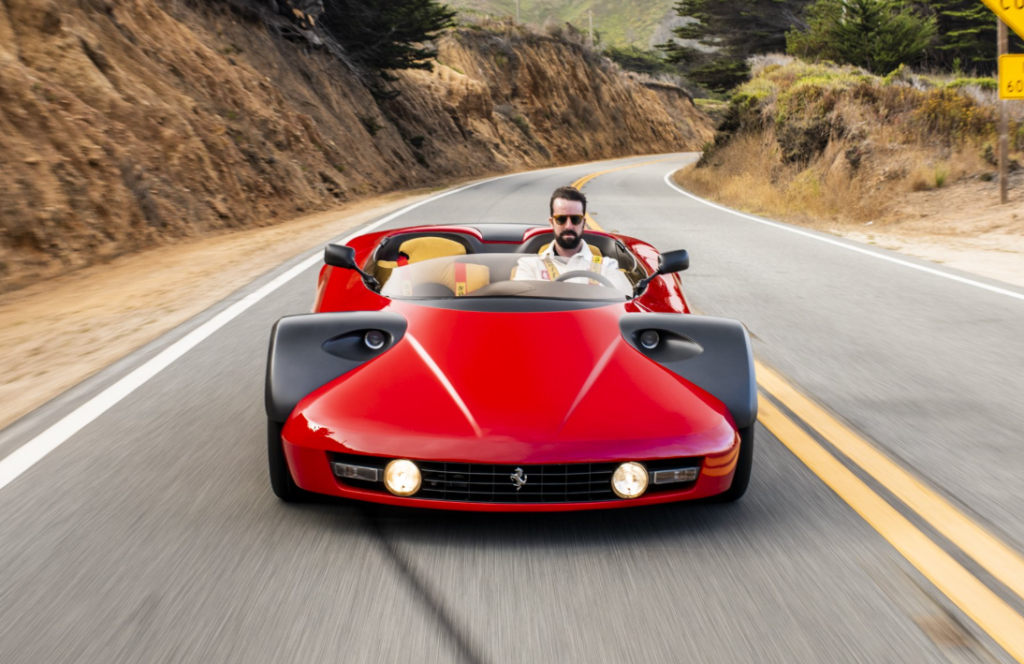
The body consisted of three main parts: front and rear opening sections and the central cockpit section. Gray matte front wing extensions with integrated headlights and elongated NACA-style air intakes in front of the rear wheels became bright design details. The Conciso lost 30% of its weight compared to the base 328 GTS, with weight reduced to less than one ton.
The Barchetta Supercar Retained the Original Ferrari 328 Engine
The transversely mounted 3.2-liter V8 with four valves per cylinder remained unchanged. Power was 266 hp, torque – 304 Nm. Thanks to the reduced weight, acceleration to 100 km/h took 5 seconds (0.5 seconds faster than standard), and the top speed reached 278 km/h compared to 267 km/h for the production model.
The interior received the organic shapes of the 1990s. The seats were integrated into the fireproof bulkhead with attached headrest cushions. Fuel, temperature, and oil pressure gauges were placed in front of the steering wheel, while the tachometer and speedometer were moved to the right. Instead of door cards, niches for storing racing helmets were made.
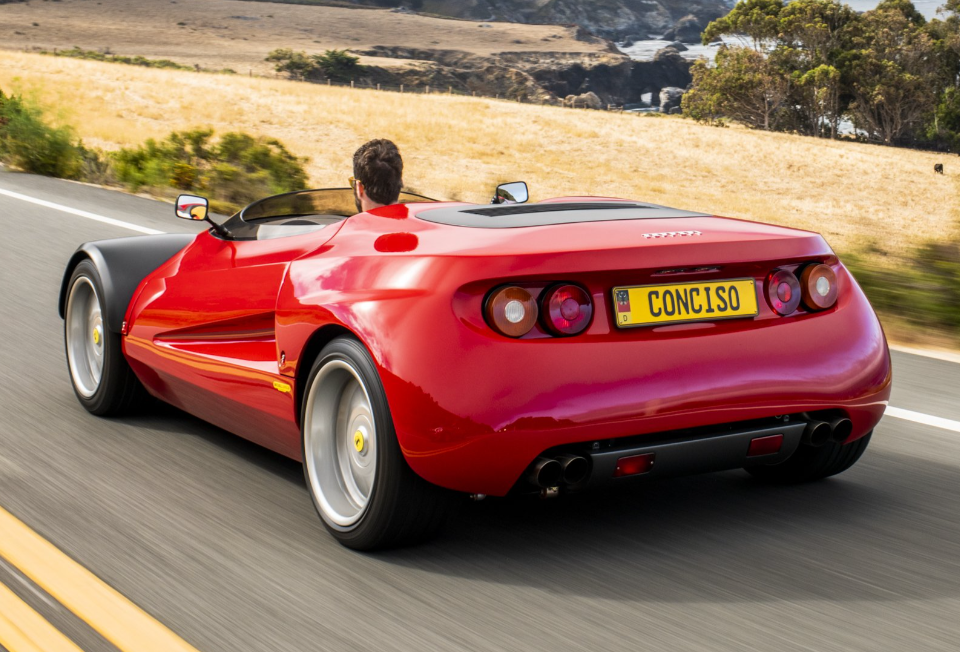
Despite the impressive appearance and Michalak’s desire to establish limited production, only one unit was built. In 1994, the Conciso received the second prize at the Eurosign Design Awards. After that, the car was sold to a prestigious collection in North America, where it remained until 1998, then passed to a Belgian collector.