
 by
by New car prices in the US reached a historic high in December 2025, surpassing the psychological mark of $50,000. The main driver of this growth was sales of full-size pickups.
Record Pressure from Pickups
December is traditionally a month of peak prices, but an absolute record was set in 2025. According to Kelley Blue Book, the American desire to buy trucks significantly influenced the overall figure. In December alone, buyers spent a colossal $15 billion on full-size pickups.
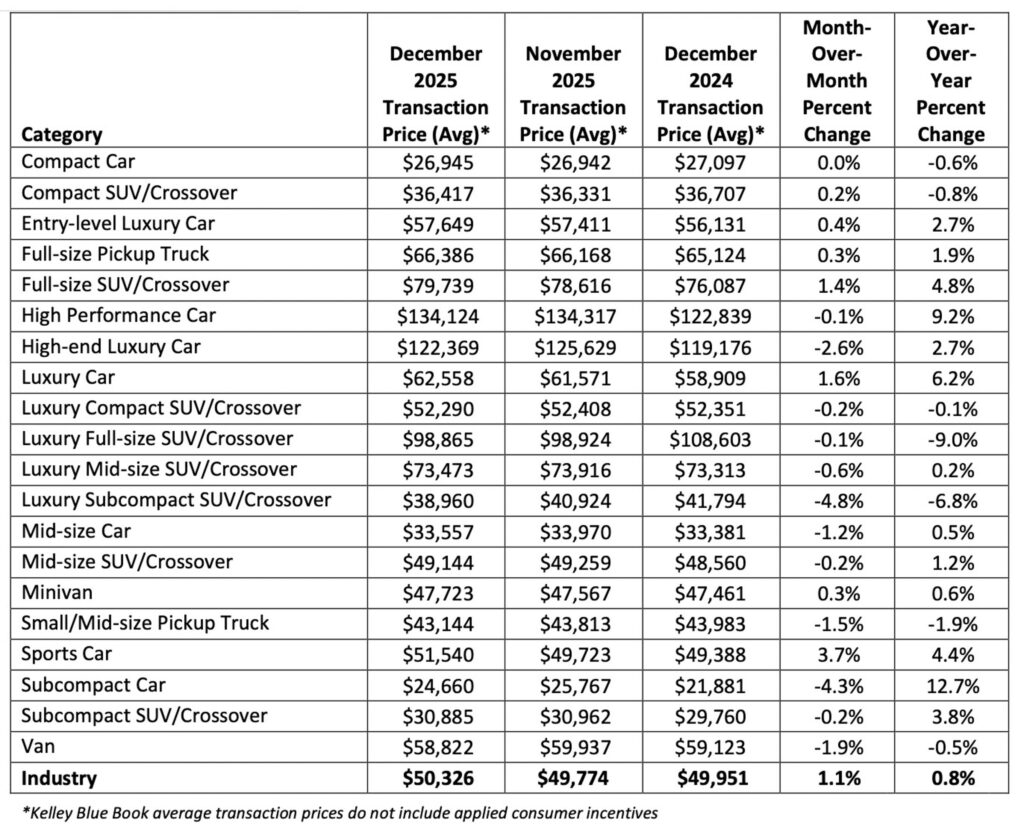
Giant pickups like the Ford F-150 and Chevrolet Silverado sold for an average price of $66,386. Although this is only 1.9% higher than in December 2024, the huge sales volume of over 233,000 units made this segment a key factor in raising the average market price for the entire automotive industry.
Choice in Favor of Luxury
This dynamic indicates that price growth is not only due to inflation but also due to buyers’ conscious choice in favor of more expensive models. According to Cox Automotive, almost 20% of buyers in December chose luxury-class cars, and this does not include premium pickups, which in their characteristics and equipment are increasingly approaching luxury vehicles.
We typically observe higher prices in December as the market offers a strong mix of high-end and luxury vehicle sales. It’s important to remember that the average transaction price reflects what was sold in a given month, not what is available. Last month, nearly 20% of buyers purchased a luxury-class car, which is a peak for 2025.
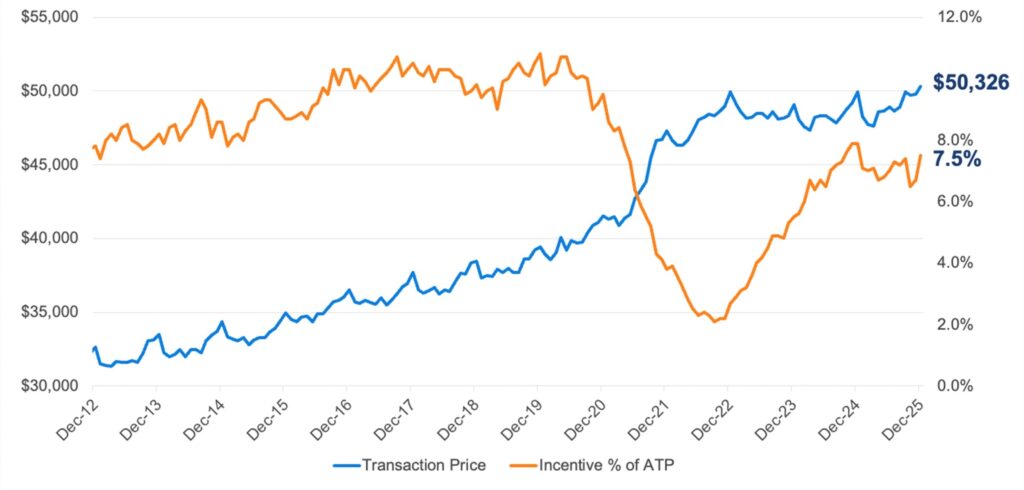
The average manufacturer’s suggested retail price (MSRP), or “sticker price,” also set a record in December, reaching $52,627. This figure has remained above $50,000 for eight consecutive months. The average size of manufacturer incentives was 7.5% of the transaction price, which is below the pre-pandemic level, meaning buyers are experiencing real “sticker shock.”
Situation in the Electric Vehicle Market

The situation in the electric vehicle market was mixed. The average transaction price for an EV slightly decreased compared to November but remained higher than the annual figure, standing at just over $58,000. However, significantly more generous manufacturer incentives, which reached a record 18% (more than double that for ICE vehicles), played a key role in sales.
Thanks to this, over 84,000 electric vehicles were sold in a month, which is the best figure since the cancellation of tax credits in September. However, the total EV sales volume for 2025, according to analysts’ estimates, was about 1.28 million units, which is 2% less than in 2024.
Detailed Price Statistics
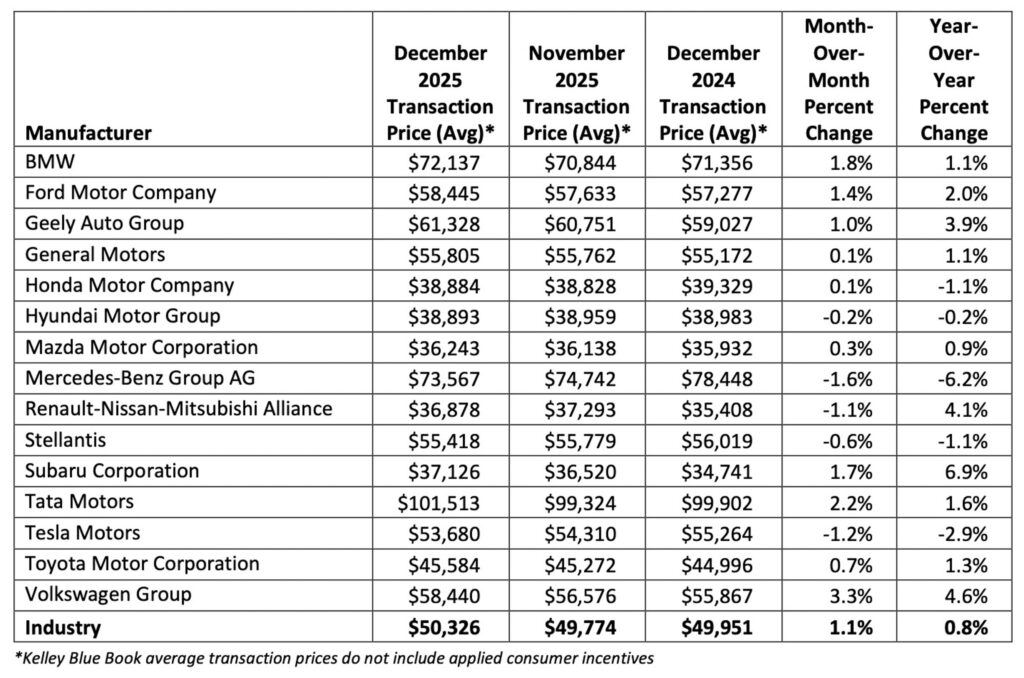
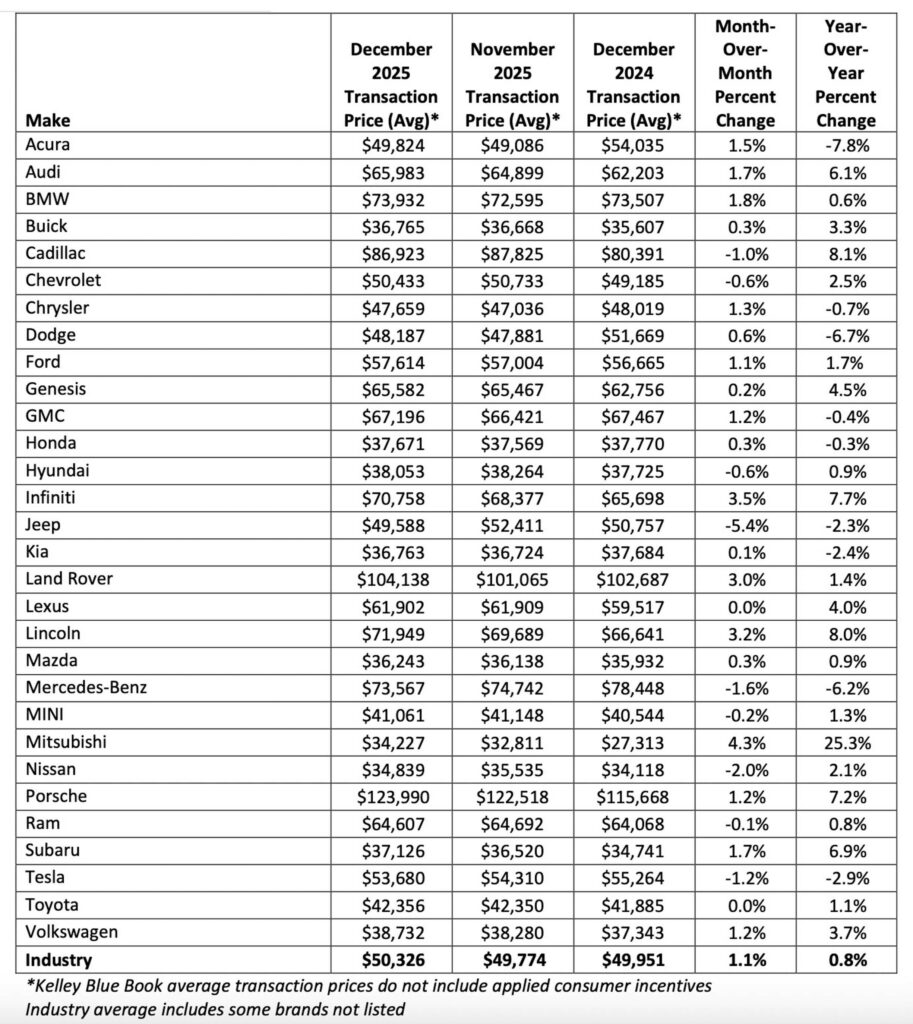
The charts below illustrate the distribution of average transaction prices across different segments, automakers, and brands.
In addition to the direct impact on statistics, mass purchases of expensive pickups and luxury cars indicate deeper trends in the consumer economy. Even amid uncertainty regarding electric vehicles, certain categories of durable goods continue to show steady demand. This may indicate that for a significant part of the population, financial opportunities remain stable, allowing for expensive purchases. Such a sales structure also raises questions for manufacturers regarding the future balance between affordability, profitability, and environmental goals, especially in the context of the growing popularity of large and energy-intensive vehicles.