 by
by Convicted for Arson of Tesla Dealership
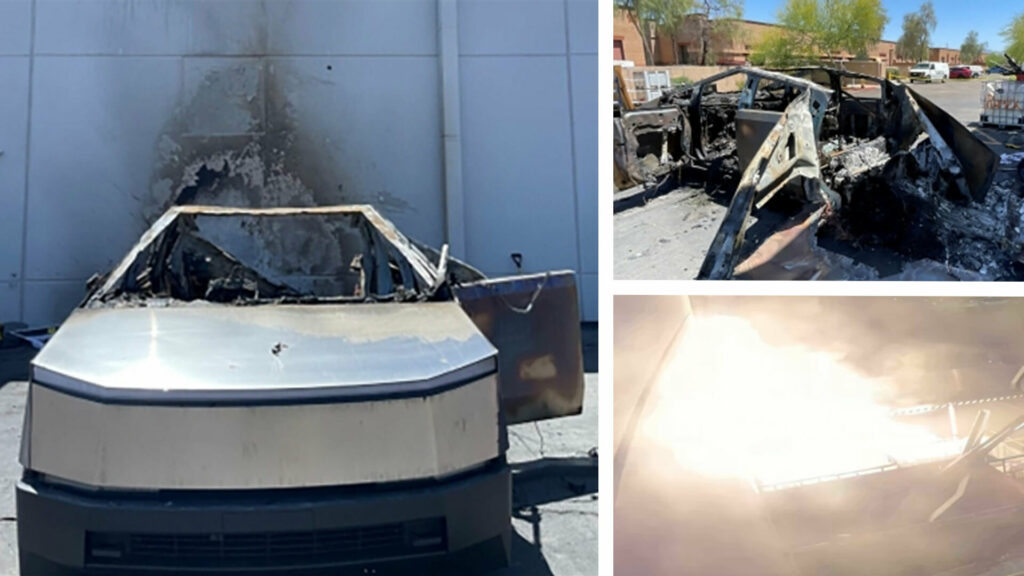
Last year, a wave of attacks on Tesla cars and dealerships peaked amid heightened public sentiment. Federal authorities intervened, but the consequences of those events are still being felt. One of those held accountable for their actions is 35-year-old Ian Moses, who was recently convicted for arson of a Tesla dealership and a Cybertruck in the city of Mesa, Arizona.
Crime Details
According to the U.S. Attorney’s Office, the incident occurred on the night of April 28, 2025. Surveillance cameras captured Moses placing special fire-starting bricks near the dealership, dousing them with gasoline, as well as dousing the building itself and three Tesla cars with fuel, before setting it all on fire. As a result of the fire, a Cybertruck was completely destroyed and the building’s exterior walls were damaged. After the arson, the perpetrator fled on a bicycle.
Arrest and Incriminating Evidence
Despite wearing a black mask during the attack, Mesa police arrested him around 3 a.m., approximately a quarter mile from the crime scene. He was wearing the same clothing as the attacker in the recordings, and a hand-drawn map of the area was found on him, with the letter “T” marking the location of the dealership.
This is quite incriminating evidence, and Moses pleaded guilty to all charges on October 27, 2025.
Sentence and Consequences
Earlier this week, the court sentenced him to 60 months of imprisonment and 36 months of supervised release after serving the main term. The offender will also be ordered to pay restitution, the amount of which will be determined at a hearing on April 13. This sentence can be considered relatively lenient, as he initially faced five counts of maliciously damaging interstate property and vehicles using fire, each carrying a potential sentence of 5 to 20 years in prison and a fine of $250,000.
Law Enforcement Reaction
U.S. Attorney Timothy Kurschen stated:
Arson can never be an acceptable part of American politics. This five-year sentence reflects the seriousness of these crimes and makes it clear that politically motivated attacks on Arizona communities and businesses will face full accountability.
This case became one episode of broader social tension that spilled over into acts of vandalism. Although the case is closed, it leaves questions about the effectiveness of deterrents for such crimes and the real consequences for those attempting to express protest through property destruction. The restitution, yet to be determined, could become a significant financial burden for the convict, likely intended as a warning to others.