 by
by Creating a genuine enthusiast community from scratch is no easy task for automakers. For Hyundai, a brand not initially associated with driver-focused and exciting cars, establishing the N performance division aimed not only at developing cars. It was about cultivating an entire culture, which is a significantly more complex achievement.
The Event’s Success in Australia
Through a series of owner-focused events, Hyundai Australia achieved this goal. There are now thousands of dedicated N car owners across the country, which helped the company’s models become some of the most popular hot hatches in Australia. Moreover, models like the i20 N and i30 N have become true benchmarks in their segments.
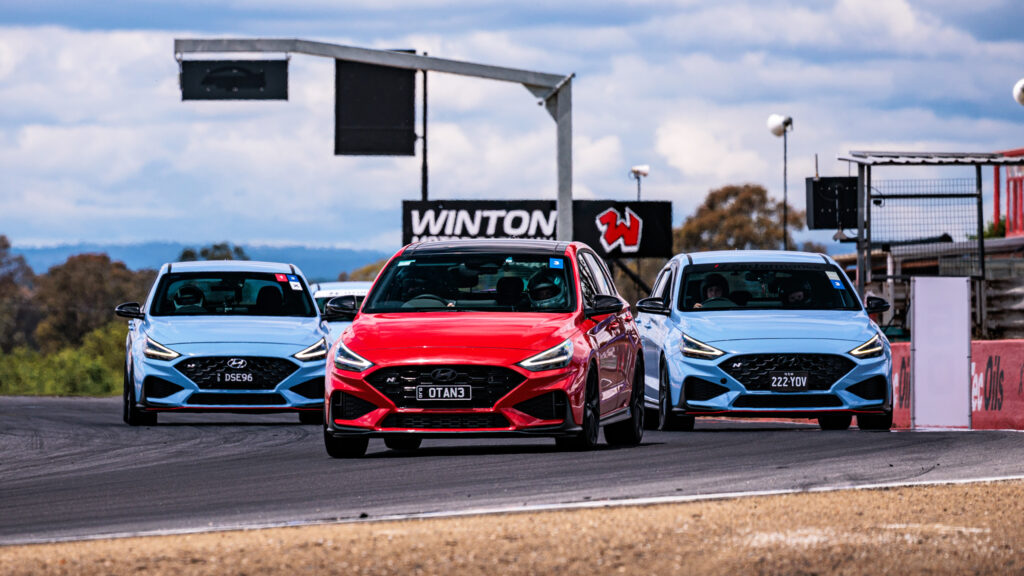
In November, the annual N Festival returned for its seventh iteration, but with a new addition. The event was opened not only to N owners but also to a limited number of owners of other car brands, allowing even a bright yellow Renault to participate.
Details of the 2025 Festival
The 2025 event took place at Winton Raceway, approximately two hours’ drive north of Melbourne. Due to growing interest in recent years, the festival lasted a full three days for the first time. For owners wanting to hit the track, there was no better event.
Over 350 cars were present at the festival in December. Participation required an entry fee of 60 Australian dollars. In return, owners received ample track time, an N merchandise gift pack, and instruction from experienced driving coaches. This makes the event a real bargain, considering regular track days cost from 300 Australian dollars.
Newcomers on the Track
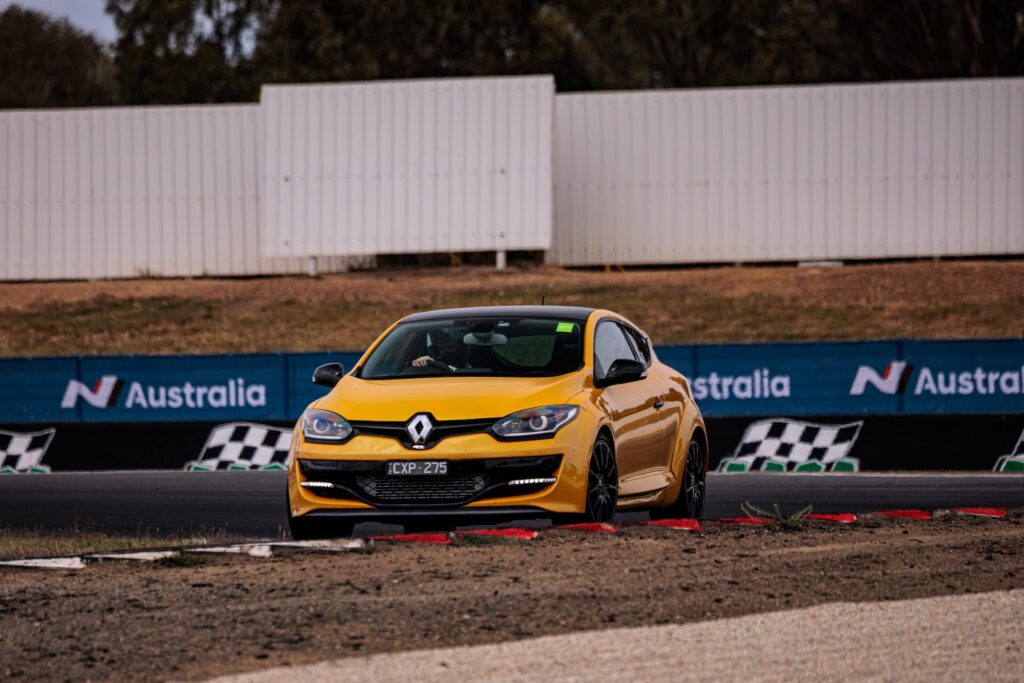
The novelty of the 2025 N Festival was the ‘Nvy Track Sessions’. These sessions were open to 20 non-Hyundai N car owners each day. Participation required an invitation from an N owner and payment of the same fee. I managed to secure a spot for my Renault Megane RS275.
On Friday, Saturday, and Sunday, participants were divided into six groups of 20 cars, one of which was designated for non-N cars. Each group had five 15-minute track sessions, totaling 75 minutes per day. For most drivers, this is more than enough.
Although I have participated in many track days before, this was the first experience for my Renault. The chassis and brakes remained standard, but the car was fitted with sticky Continental SportContact7 tires, and the engine was modified with a new intake, blow-off valve, intercooler, downpipe, and a chip tune. This delivers 219 kW (294 hp) and 445 Nm of torque at the wheels — solid figures for a 2.0-liter turbo engine.
The temperature was high, over 30°C during all my sessions, but my little French hot hatch performed flawlessly. My sessions featured impressive cars like a new BMW M3, Audi RS5, Porsche Cayman GT4, modified Toyota Supras, and a tuned Toyota GR Yaris, but I had no problem catching up to and overtaking each of them.
Just as the i30 N is considered one of the best hot hatches on the market, the third-generation Megane RS275 was also highly praised during its debut. Polished on the Nürburgring, it felt at home on the track, demonstrating high levels of grip, excellent stability under braking, and good straight-line speed. Of course, my tires now look a bit worn.
N Cars on the Track
Of course, the real stars of the day were the Hyundais. Hyundai Australia brought a whole fleet of cars for the press to test. I managed to get behind the wheel of each of the company’s current models, including the i20 N, i30 N hatch, i30 N sedan, and the powerful Ioniq 5 N.
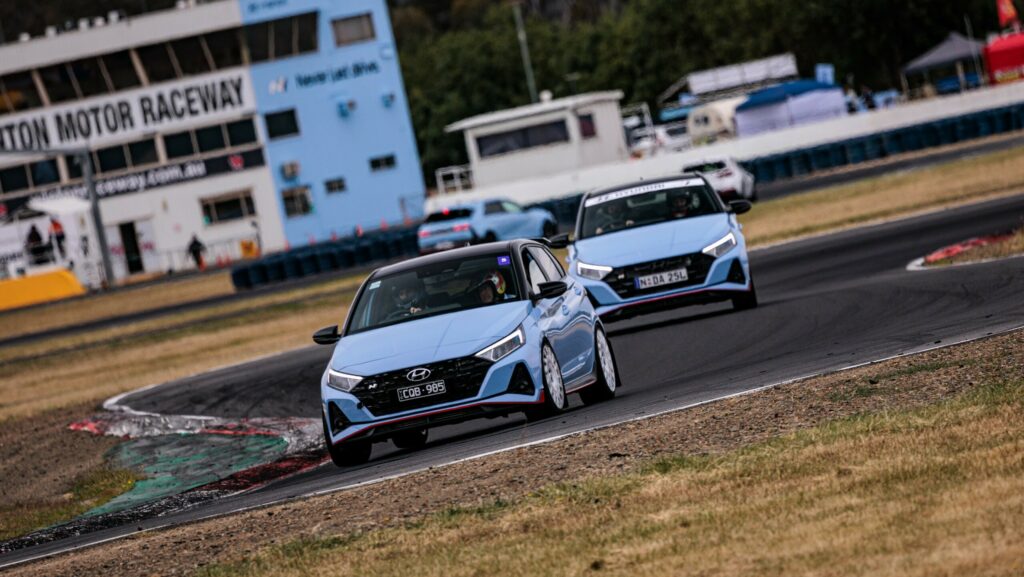
Winton Raceway is quite short and technical, perfectly suited for hot hatches like the Hyundais, not for powerful monsters. The tiny i20 N proved to be the perfect companion for this track.
Although the i20 N has only a 1.6-liter turbocharged four-cylinder engine and is over 50 kW less powerful than the i30 N, on the track it didn’t lag behind its older siblings. It feels incredibly agile and responsive, especially in the track’s corners, often lifting one of its rear wheels as the front tires grip the asphalt firmly.
Standardly, the i20 N comes with Pirelli P Zero NH tires, which performed excellently on the track. By the end of the day, they began to lose grip but remained predictable. The only issue I encountered was difficulty shifting from 3rd to 2nd gear with the rev-matching function enabled, something I also experienced at the N Festival back in 2022.
More Power, More Emotion
For those seeking excellent track handling, road comfort, and good straight-line speed, the i30 N hatch and i30 N sedan remain among the best options on the market. Although they share the same name, the i30 N sedan has a longer wheelbase than the hatch and is built on a different platform. In most countries worldwide, it is known as the Elantra.
In a straight line, the i30 N hatch is slightly more lively. Although both cars have the same 2.0-liter turbocharged four-cylinder engine and claimed outputs of 206 kW (276 hp) and 392 Nm, the peak boost pressure in the hatch is 17 psi, while in the sedan it is typically around 14 psi. This is due to the sedan’s controversial ‘Octane Learning Mode’.

To activate the full 17 psi, one must either drive in 8th gear at 109-159 km/h for 5 minutes, or drive in 4th or 5th gear with 40-70% throttle at 40-120 km/h also for 5 minutes. Obviously, this is impossible on a track. Many owners I spoke with had their cars chip-tuned to unlock full boost without this procedure.
This pair also behaves differently in corners. Both hold the road wonderfully, providing ample grip. However, the hatch is noticeably stiffer and feels lighter. In contrast, the i30 N sedan feels more stable due to its longer wheelbase, and it’s easier to find its limits. On the track, we prefer the hatch, but on the road, it’s the sedan that stands out.
The Advantage of the Ioniq 5 N
We also had the opportunity to do a few quick laps in Hyundai’s powerful Ioniq 5 N. This sports car redefined what is possible for an electric vehicle. It is not only extremely fast but also very fun to drive. No wonder Porsche and Lamborghini use it as a benchmark for their electric cars.
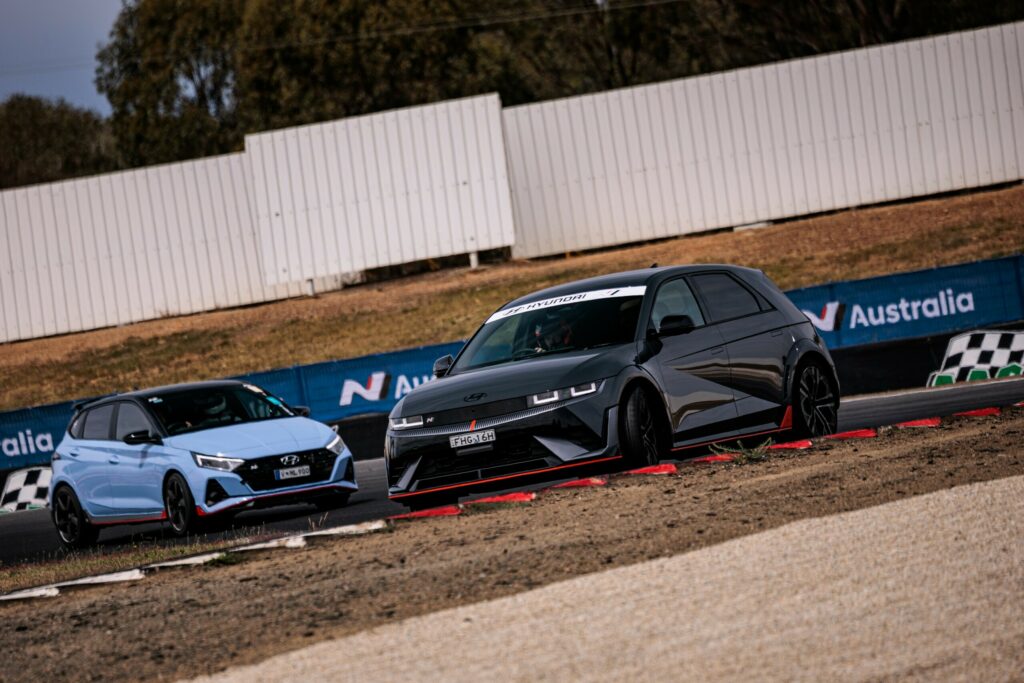
Of course, the dual-motor powertrain makes the Ioniq 5 N very fast in a straight line. However, because the straights at Winton are quite short, it doesn’t have many opportunities to reach its full speed. Fortunately, it excels in other aspects, especially in handling dynamics.
Thanks to engineering tricks, the power distribution between the front and rear wheels can be shifted. Thus, the Ioniq 5 N can be effectively used as a front-wheel-drive or rear-wheel-drive car. This makes it more flexible and agile than other N products from Hyundai. The downside? It’s electric, which makes it not very practical for regular track outings if there is no fast-charging station on site.
The Track Day Atmosphere
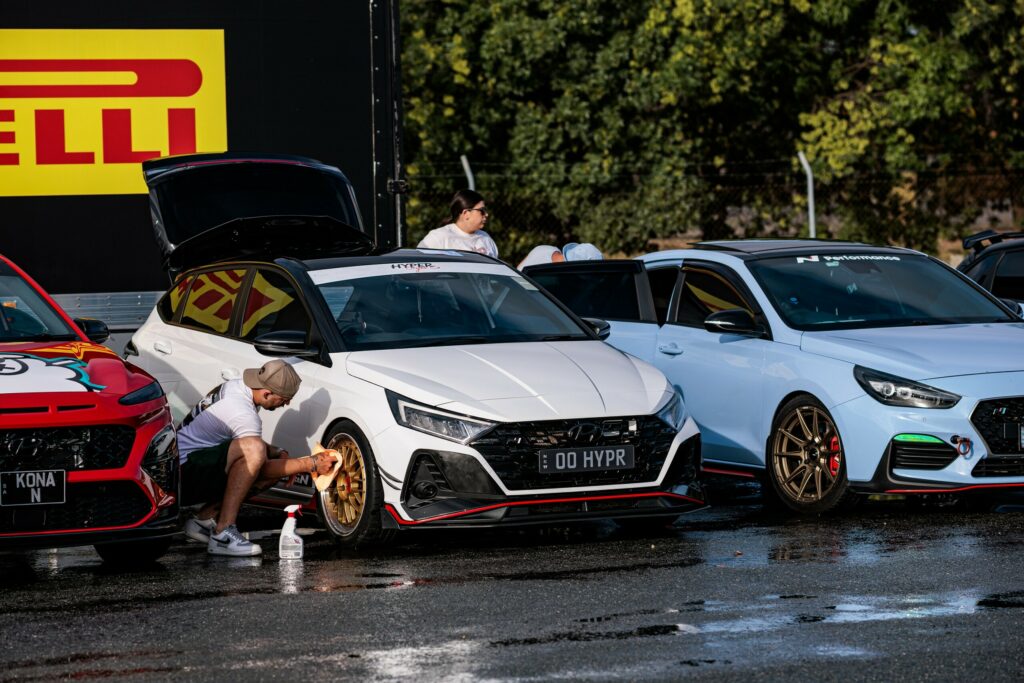
The 2025 N Festival wasn’t limited to dozens of track sessions. This year, owners could also participate in a series of drag races to determine whose car was faster in a straight line. A Show ‘N Shine car show and an organized drive on roads around the circuit were also arranged.
The Australian N Festival has become one of the best events in the country’s track day calendar, and it’s easy to see why. It’s affordable, well-organized, and welcoming. I’m sure it convinced some owners of other brands to call their local Hyundai dealer and place an order. As for me, used N cars are still not in my budget, so I’ll continue driving my French hot hatch.
Events like this vividly demonstrate how brand perception is changing. From cars associated with reliability and practicality to machines capable of evoking genuine emotions and bringing people together. The success of the festival in Australia is just one example of how Hyundai has managed not only to launch a new lineup but to create a living community. This shows that the modern automotive industry