
 by
by Concerns About the Idea
Since artificial intelligence is far from perfect, the news about the Trump administration’s plans to use it for writing federal norms has caused alarm. This concern appears justified, as, according to reports, a government lawyer stated that the goal is not perfect rules, but only those that are “good enough.”
Details of the Initiative
Reportedly, the Department of Transportation is considering using artificial intelligence to “revolutionize how we prepare regulatory acts.” The technology is promoted as a tool that will allow civil servants to work better and faster.
However, the department’s General Counsel, Gregory Zerzan, seems more focused on quantity than quality. He noted: “We don’t need a perfect rule on XYZ. We don’t even need a very good rule on XYZ. We need a good enough one. We are flooding the zone.” This approach raises fears that the government plans to “flood” the regulatory sphere with a large number of AI-generated norms, which could be particularly risky for an agency responsible for safety.
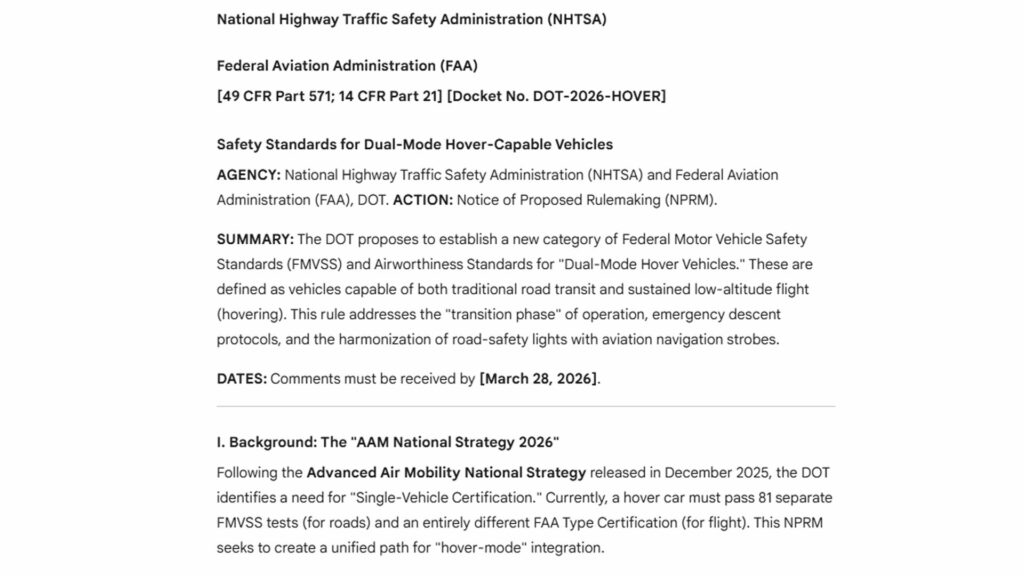
Draft rule on flying cars created by Gemini
Speed vs. Quality
The main motivation seems to be speed. The traditional process of writing and reviewing federal norms can take months or even years. In contrast, the Google Gemini version can reduce this time to seconds or a few minutes. Zerzan remarked that “it shouldn’t take more than 20 minutes to get a draft rule from Gemini.” This is part of a larger plan – to implement a process where it takes only 30 days from an idea to a draft ready for review.
The Human Role in the Process
Reportedly, one presentation claimed that Gemini can write approximately 80-90% of the regulatory text. The remainder is to be done by humans, who will also likely be responsible for checking the text for AI hallucinations and errors.
Posted by U.S. Department of Transportation on Monday, January 20, 2025
Criticism from Experts
Some employees and former officials express serious doubts about such use of artificial intelligence. Mike Horton compared using Gemini to write rules to “having your rulemaking done by a high school intern.” This analogy well reflects the essence of the concerns: the technology may be fast, but it lacks the depth of understanding, experience, and responsibility required to create complex regulatory mechanisms.

Whether using artificial intelligence to create rules is a good or bad idea, time will tell. It all comes down to how involved humans will be in the process to guarantee that the rules are clear, ensure safety, and comply with established practices. However, the very fact that the official goal is formulated as “good enough” and not “as high quality as possible” raises questions about priorities in such an important area as transportation regulation. Speed and efficiency certainly matter, but they should not stand in the way of creating reliable and safe norms that protect people’s lives. The balance between innovation and responsibility remains a key challenge.