 by
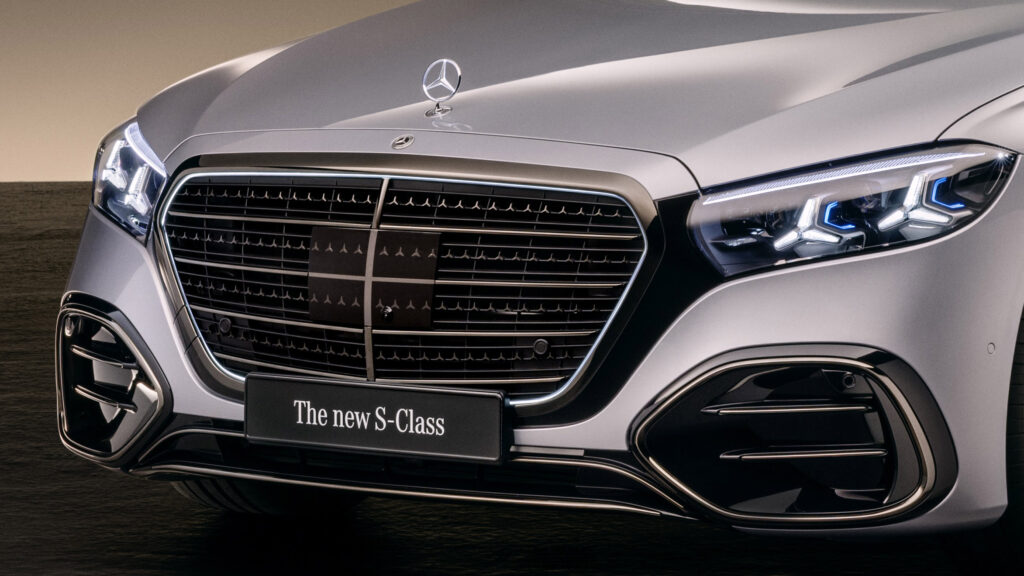
by Mercedes-Benz continuously strives to improve automotive lighting technologies. The updated version of the flagship S-Class sedan has received a new generation of Digital Light headlights, which represent a significant technological breakthrough. The main features of the system include:
Large-Scale Lighting Update
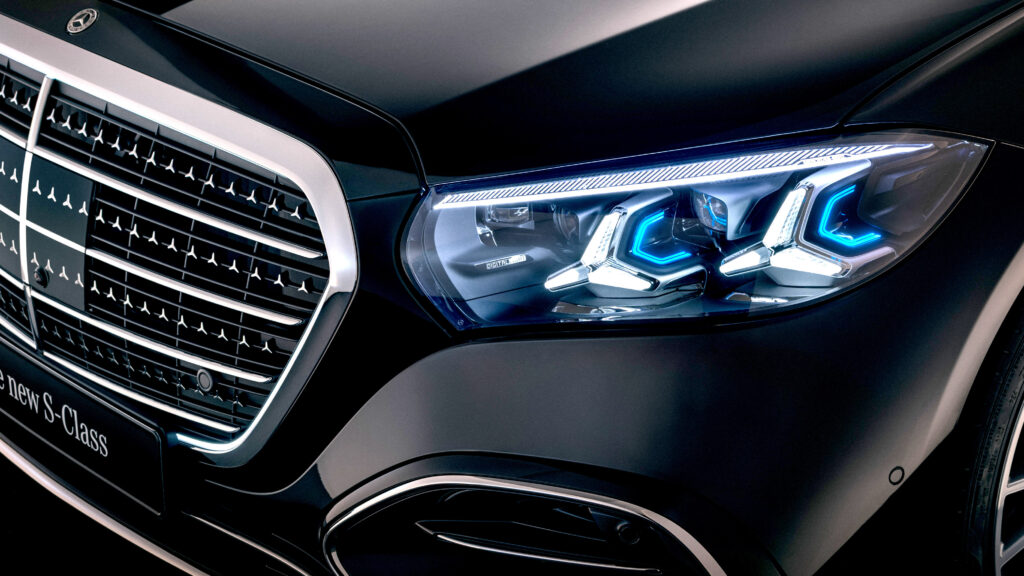
The flagship sedan is now available with the latest generation of Digital Light technology. Each headlight is equipped with 25 thousand micro-LED diodes, indicating a high level of complexity and sophistication of the system. In total, the car is fitted with 50 thousand such diodes.
The update is based on a new micro-LED lighting module, controlled by a high-performance chip. As the manufacturer states, this provides a lighting field that is approximately 40 percent larger than before, with noticeably higher brightness and clearer light distribution in corners.
Efficiency and Smart Functions
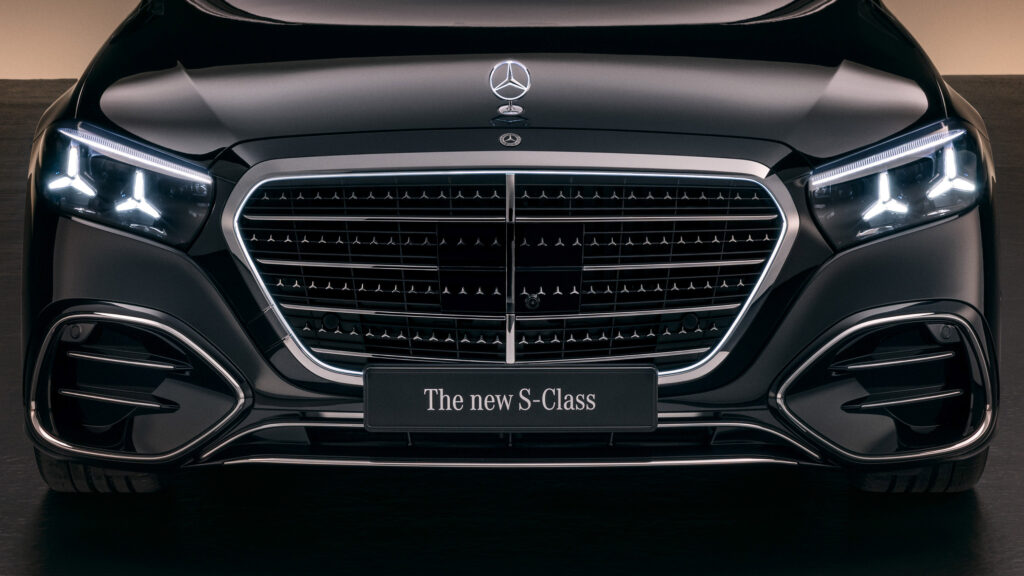
The compact design of the new micro-LED system also allowed Mercedes to reduce the headlight weight by more than 25 percent. This is facilitated by a simplified design that uses a single control unit. All lighting software is now integrated into the MB.OS architecture and developed predominantly in-house, giving Mercedes greater control over the system’s performance and development.
At full illumination, the system can direct light up to 605 meters ahead of the car. This is approximately equal to the length of six football fields. However, power and range are not the whole picture.
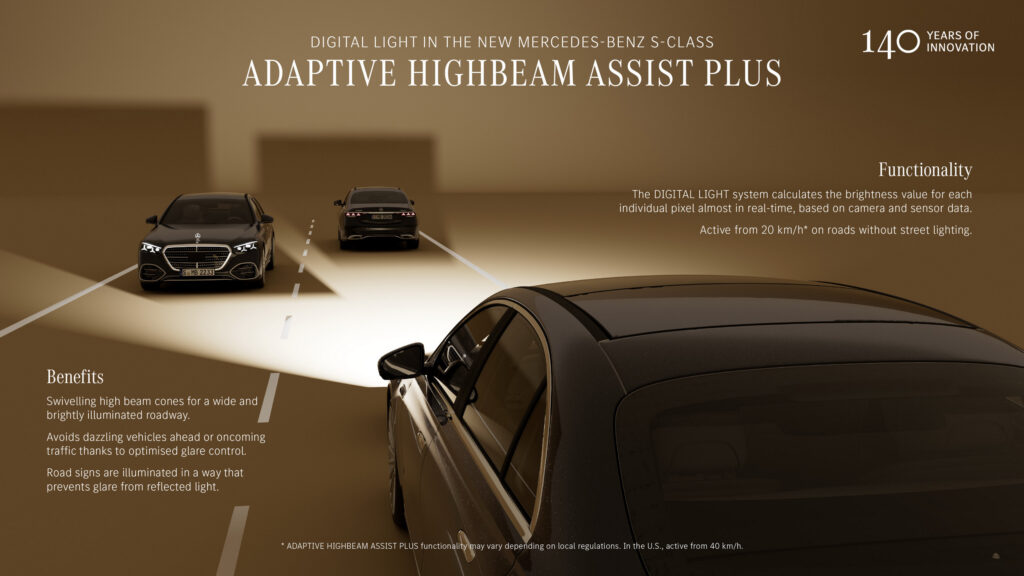
The true technological marvel is how precise the system can be. For example, the high beam can dynamically adjust based on data from cameras and maps. This avoids dazzling other road users while fully illuminating the path ahead. The partial high beam, now available in the USA, has also been improved for better detection of poorly lit road users.
Projection onto the Road Surface
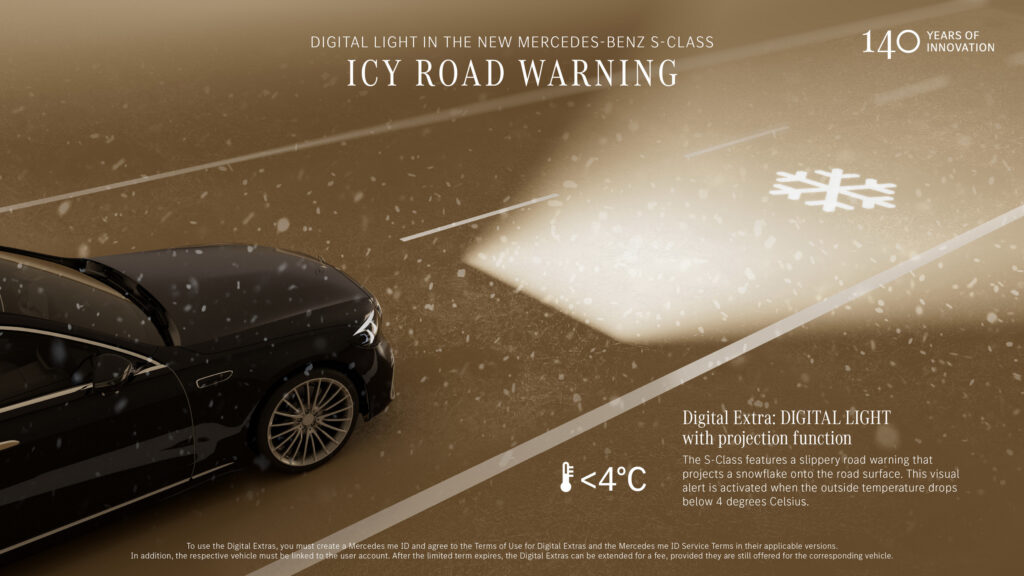
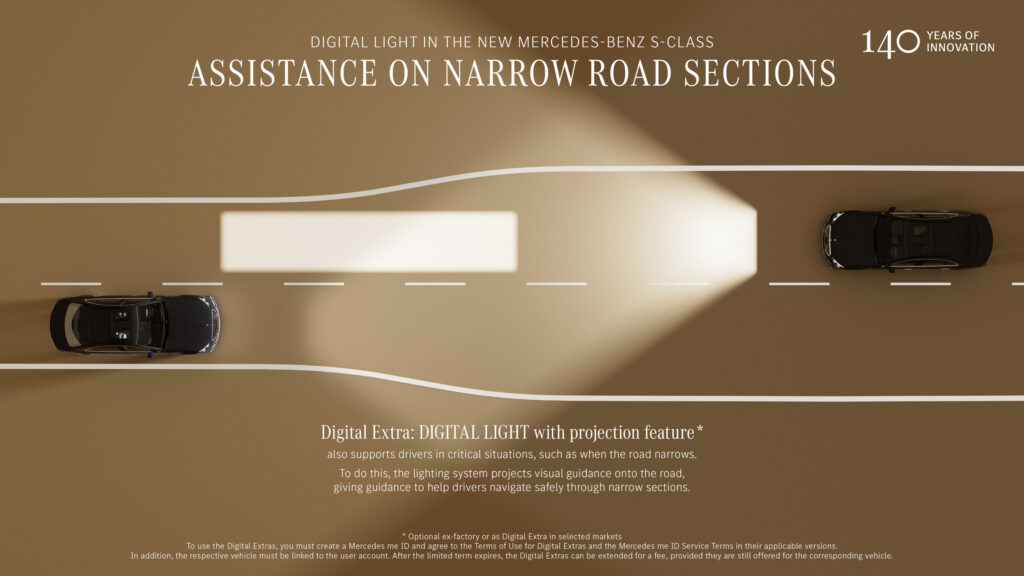
Furthermore, the headlights can actually project images onto the road. This projection function is part of Mercedes’ optional Digital Extra package. The projection function can display everything from lane departure warnings, wrong-way driving warnings to a new cold weather symbol that displays a snowflake on the road ahead when conditions become icy.
Lighting in construction zones has evolved into a narrowed lane light, which activates automatically upon detecting a reduced lane width. Owners can also activate animated lighting sequences, with updated “Digital Rain” and “Starlight Wave” designs that greet drivers when locking or unlocking the car.
Energy Efficiency and Repairability
It is important to note that all this happens in a headlight that actually increases light output while simultaneously halving energy consumption. If all this makes you worry about how much a replacement might cost, and let’s be honest, it should, then don’t forget last year’s announcement.
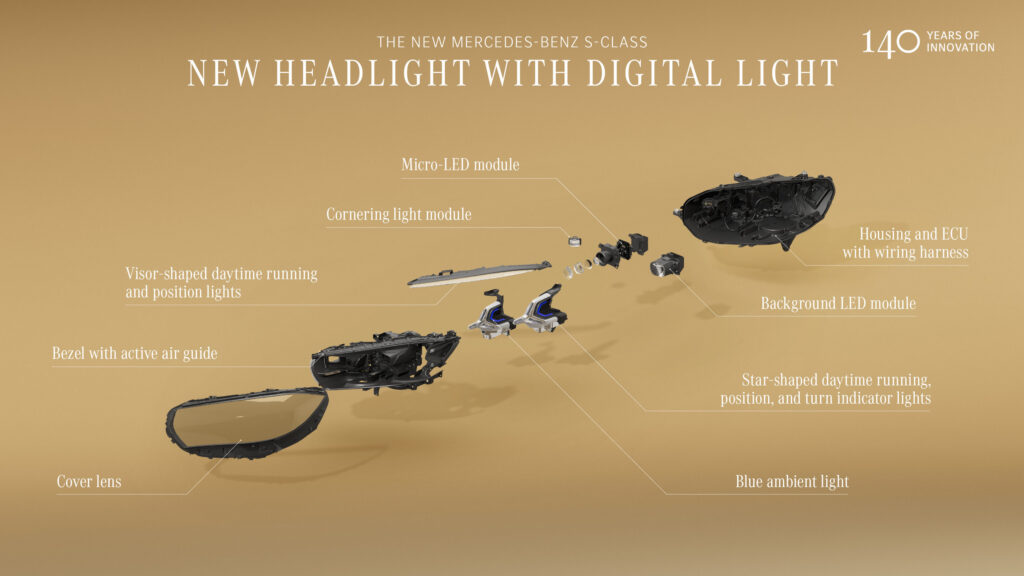
Mercedes is working to make such headlights easier to repair and replace by using screws instead of adhesive in manufacturing. While specific details are not yet confirmed, one of the published technical diagrams hints that the new S-Class headlights will have protective lenses attached with screws. Provided the internal components prove reliable, this seems like a win-win situation for everyone.
Serious Testing
It is also worth noting that Mercedes tested this entire lighting system in a special light tunnel at its Testing and Technology Center in Immendingen. The 100-meter-long drive-through tunnel replicates real road markings and layouts under controlled conditions, allowing engineers to precisely fine-tune the beam shape and projection behavior with repeatable accuracy, regardless of weather or time of day.
The implementation of this level of technology in a production car, even in the premium segment, indicates rapid progress in the field of automotive lighting. It is no longer just a matter of seeing in the dark, but an entire communication system between the car and its environment. Reducing energy consumption against a backdrop of significant performance gains is a particularly important step for future electric vehicles, where every watt of energy counts. The approach to repairability could also impact the total cost of ownership, which is a critical factor for customers, even when purchasing luxury-class cars.