 by
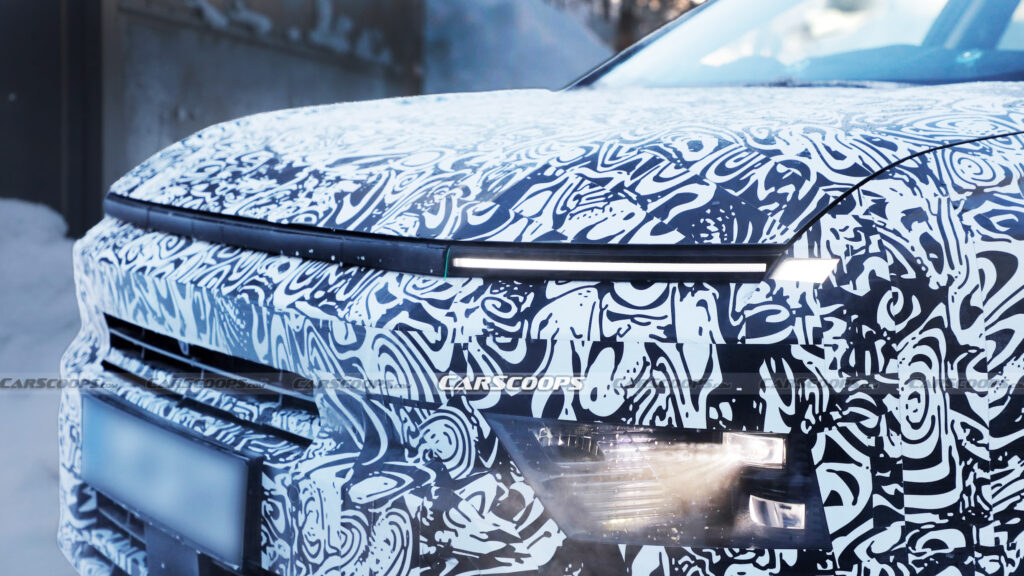
by During winter tests on European roads, a future novelty from Hyundai was spotted – the fully updated compact crossover Bayon. The camouflage on the prototype is minimal, allowing a glimpse of the key design changes. Here are the main expected innovations:
New Look for the Smallest SUV
The next generation of Hyundai’s smallest European SUV with an internal combustion engine has hit the roads without heavy camouflage. The light masking film allows a clear view that the compact crossover is getting a more mature and aggressive appearance. The Bayon occupies a position below the Kona model in the brand’s lineup and competes with models like the Volkswagen T-Cross, Ford Puma, and Nissan Juke. The current generation debuted in 2021 and was updated in 2024, so a full model change planned for this year is a completely logical step.
Design changes are obvious even through the film. If the current model is quite restrained and could be mistaken for a compact hatchback, the new one has a squarer roofline, more powerful proportions, and a more upright stance. Full-width LED light lines at the front and rear, and a sharp kink in the window line add visual muscle. Hyundai clearly wants this model to be perceived exclusively as an SUV.
Focus on Hybrid Technologies
Changes will affect not only the exterior. Today’s Bayon is equipped with various versions of a 1.0-liter three-cylinder turbo engine producing 99 or 118 hp, which in some markets is paired with a mild-hybrid system. However, according to information, the next generation may for the first time receive a full-fledged hybrid powertrain, not just a 48-volt starter-generator.
This will be an important step for this class of cars, especially for buyers seeking low operating costs but not ready to switch to fully electric transport.
The same sources mention an N Line version with sportier bumpers and chassis tuning. The appearance of such a Bayon modification would be a surprise but would undoubtedly generate interest.
Getting Closer to the Kona Model
The new Bayon looks larger in the photos, which is confirmed by Korean media reports. They mention a longer wheelbase compared to the current 2580 mm and a wider track, which should free up additional space in the cabin and trunk. Inside, a significant technological upgrade is expected: a larger multimedia system screen and an expanded list of safety systems to keep up with competitors.
However, all these improvements raise a logical question: if the Bayon becomes larger, more technological, and gets a hybrid, won’t it start taking market share from its older brother, the Kona? For budget-conscious buyers, a larger hybrid Bayon could become the perfect choice, creating serious competition for models like the Volkswagen T-Roc and Ford Puma.
The increase in dimensions and the emergence of new powertrain options reflect the general trend in the compact crossover market, where boundaries between classes are becoming increasingly blurred. For Hyundai, this is an opportunity to strengthen its position in the most fierce segment by offering customers a model with a more expressive character and a more efficient drivetrain. The success of this strategy will depend on the final price and how clearly the brand can position the updated Bayon separately from the Kona, avoiding excessive competition within its own lineup.