 by
by Pros: True speed, agile handling, loyalty to design features.
Cons: Cramped rear seats, limited luggage space.
Although the impression in the automotive industry may be that the transition to electric vehicles is slowing down, Toyota is moving forward at full speed, having introduced three new electric models at once. The most lively among them may be the C-HR.
A New Stage for a Familiar Name
Today the attention is focused on the C-HR – a well-known model line that returns exclusively in an electric version. This is an important event not only because of the switch to electricity. It is the first former gasoline-powered Toyota model to become fully electric. It is only a few months ahead of the new Highlander, but that’s enough. Both models will have a major impact on Toyota’s future.
The target audience for the C-HR is a different demographic group. With a starting price of just under $38,000 (excluding additional costs), it is aimed at Tesla Model Y buyers who want something a bit smaller. With standard all-wheel drive, 338 horsepower, and a range of nearly 300 miles, this is a new face on the market that will undoubtedly become popular one day.
Quick Facts
Model: 2026 Toyota C-HR
Starting Price: $37,000 (excluding delivery)
Dimensions: 177.9 inches length, 73.6 width, 63.8 height
Wheelbase: 108.3 inches
Weight: 4,322 pounds
Powertrain: Two electric motors, 74.7 kWh battery
Power: 338 hp
0-60 mph Acceleration: 4.9 seconds
Transmission: Single-speed
Range: Up to 287 miles
Sales Start: First half of 2026
It remains to be seen whether it is good enough to establish itself on the market for a long time, or if it still lacks a few elements for the perfect EV. A week of testing in hilly Ojai, California, helped separate the good from the bad.
Exterior Design
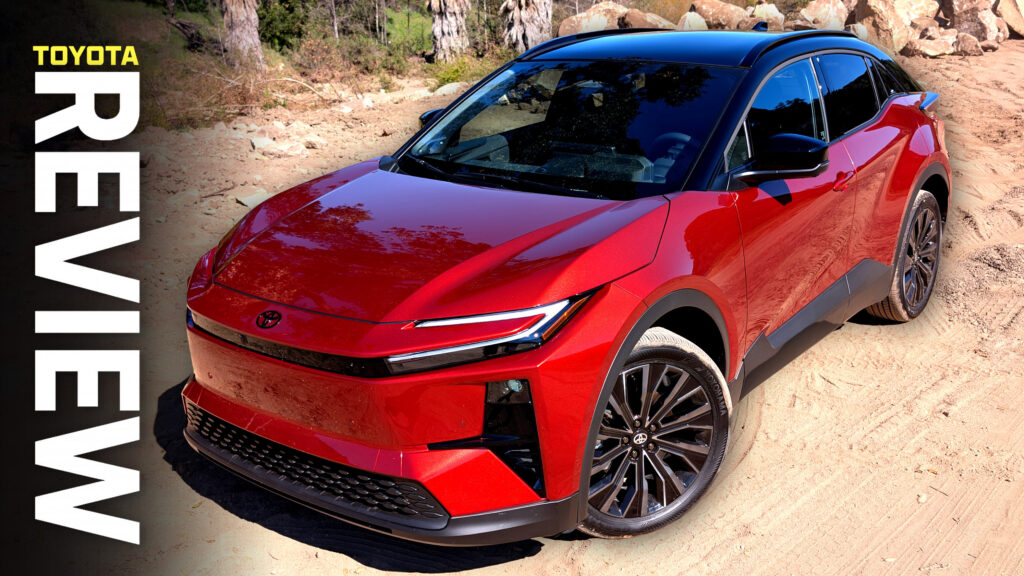
The C-HR name has always invited comparisons to the Honda HR-V, but the exterior design has been very different from the start. We are happy to report that the same playful nature has carried over to this new electric version of the crossover.
The front end is executed in Toyota’s new design language, with a low, aggressive nose and narrow headlights that visually widen the car. The domed roofline flows smoothly into the rear, and from some angles the C-HR looks more like a hatchback than a crossover, which works to its advantage. It feels athletic, despite some compromises.
Compared to the bZ Woodland, the C-HR looks more compact and urban. It is clearly aimed at buyers who want something sporty and expressive, not powerful or adventurous. The wheel designs also help create this image: 18-inch alloy wheels on the SE version and aggressive 20-inch wheels on higher trims.
If the old C-HR was bold but polarizing, this one is more mature. It is still stylish, but less attention-seeking and more likely to deliver an experience worthy of its unconventional exterior.
Interior Space
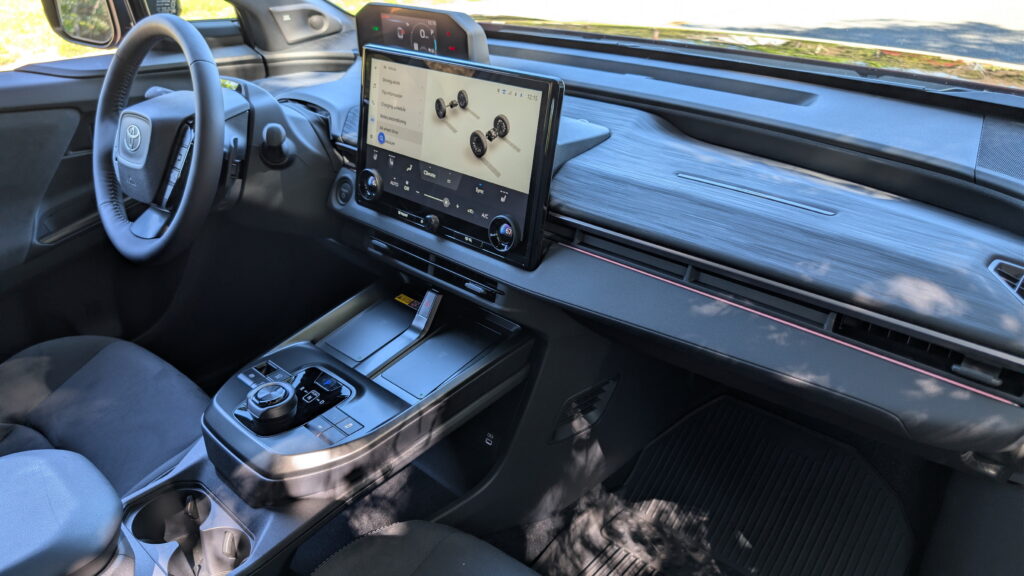
Toyota warned in advance that we would see a lot in common between this model and the bZ Woodland, and that’s true. It features supportive front seats, an intuitive multimedia system, a steering wheel that feels good in the hands, and visibility better than one might assume given the sloping roofline. The driver’s position is comfortable, although a bit more steering wheel adjustment would be welcome.
A 14-inch touchscreen dominates the dashboard and is standard across all trims. It is responsive, has a clear structure, and avoids the overly complex logic problems that plague some competitors. Two wireless charging pads and practical storage compartments underscore that Toyota still knows how to design for everyday life.
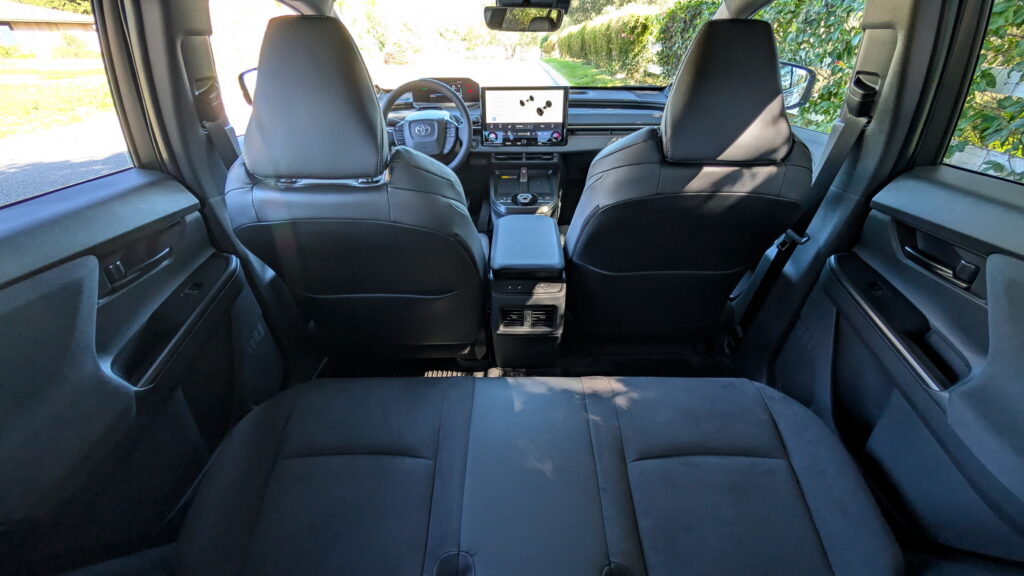
The quality of materials has also improved compared to Toyota’s previous electric models. Soft surfaces and ambient lighting maintain a modern feel without crossing into gimmickry. And then you climb into the rear seats. Everything changes from perfectly acceptable to suddenly suitable only for the smallest passengers.
How Cramped is Too Cramped?
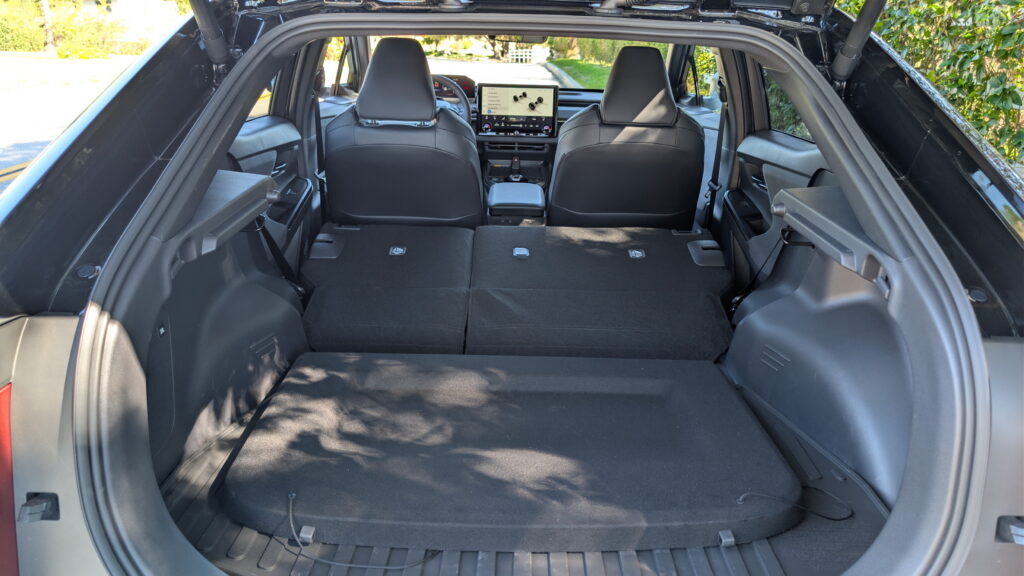
As a taller-than-average person, I understand I won’t fit everywhere, but I was genuinely impressed by how cramped the C-HR’s rear seats are. It’s a compact crossover, and that becomes obvious as soon as we compare it to another new crossover, for example, the Mazda CX-5.
The Mazda’s wheelbase is only 2.5 inches longer. Despite this, the CX-5 offers 7.7 inches more legroom, up to 2.8 inches more headroom, and over 10 cubic feet of additional space in the rear seats overall. Simply put, rear-seat passengers will be uncomfortable in the C-HR unless they are very small. On the other hand, children will fit perfectly.
The luggage space fares better: 25.3 cubic feet behind the rear seats and almost 60 cubic feet with the seats folded. This is quite acceptable for everyday life, but the organization of passenger space clearly indicates what Toyota’s priorities were.
Driving Impressions
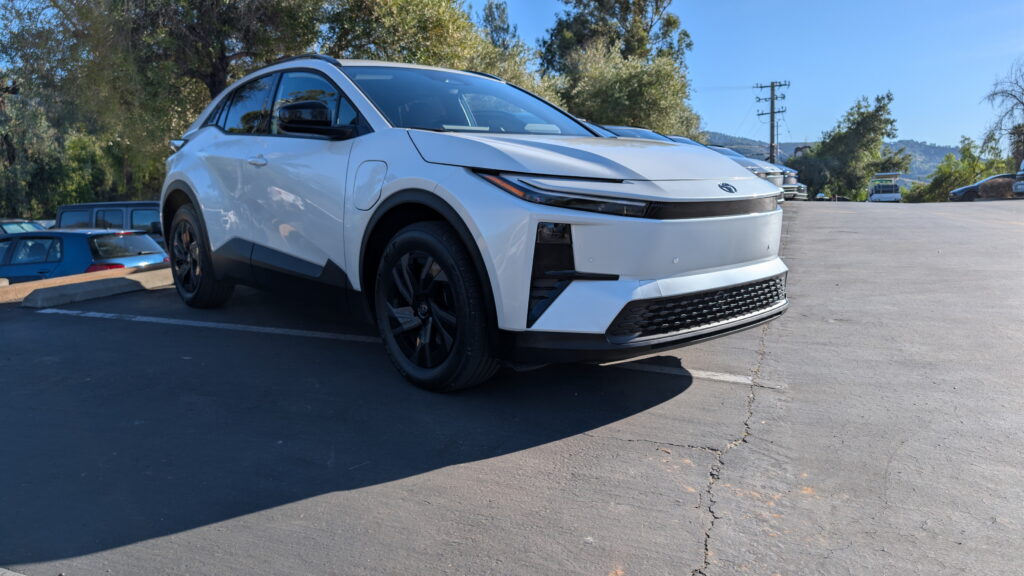
This is where the plot gets more interesting, in the best sense. Electric vehicles are known for instant torque, but that doesn’t guarantee good driving impressions. The C-HR moves down the road with more confidence than one might expect. It is precise. The short wheelbase helps it take corners confidently. And the steering is more informative than that of the larger bZ Woodland.
Toyota claims a 0-60 mph time of 4.9 seconds, and that is absolutely plausible. This thing moves… not with the aggressive chaos of a GR Corolla, but with the smooth, relentless urgency unique to an electric vehicle. In fact, it might be the fastest pseudo-practical car in Toyota’s lineup at the moment. It doesn’t try to be a sports car, yet it’s faster in a straight line than many true sports models.
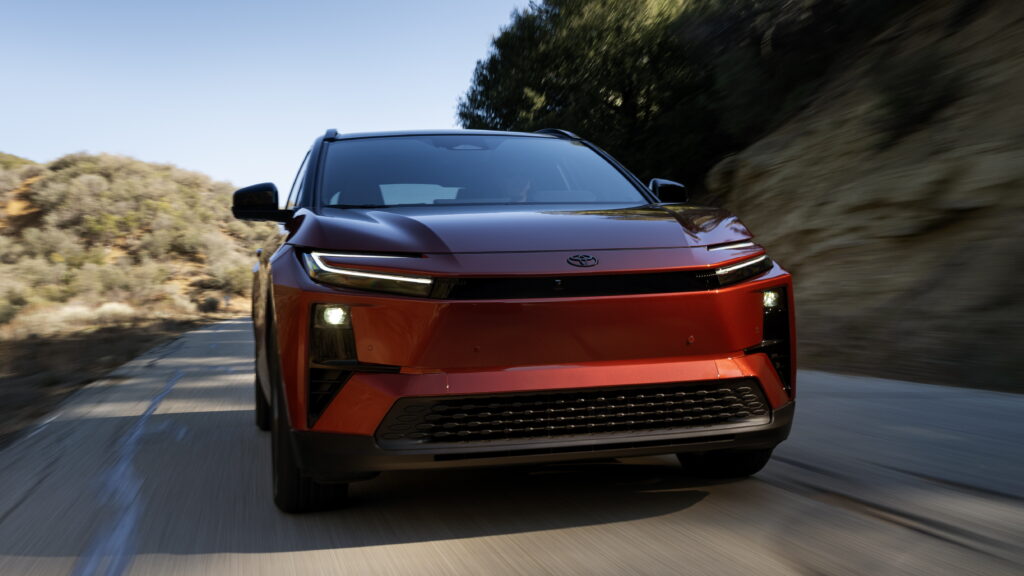
The low battery placement lowers the center of gravity, and the chassis feels stable in corners. The handling is light but precise enough to make you want to push a little harder than you expected. There is a maturity in the tuning. It is balanced, predictable, and inspires confidence. The brakes are also excellent.
Regenerative braking paddles allow for on-the-fly adjustment of braking, adding a level of driver engagement often missing from mass-market EVs. It’s not revolutionary, but it makes the driving experience more interactive.
The ride quality also strikes a good balance. It’s firm enough to feel sporty but doesn’t punish you on rough surfaces. The C-HR doesn’t feel like a small SUV trying to be sporty. It simply feels like a well-tuned electric car with real character. No, it’s far from a Hyundai Ioniq 5 N or Tesla Model Y Performance, but this is the EV from Toyota I would choose if driving feel were the only criterion.
From a more practical standpoint, the maximum range is 287 miles for the SE trim, decreasing slightly with larger wheels. Charging speed reaches 150 kW on DC fast chargers. This is enough to charge the battery from 10 to 80 percent in about 30 minutes under ideal conditions. As we’ve seen before, ideal conditions are rare, but having a Tesla NACS port should help.
Competitors
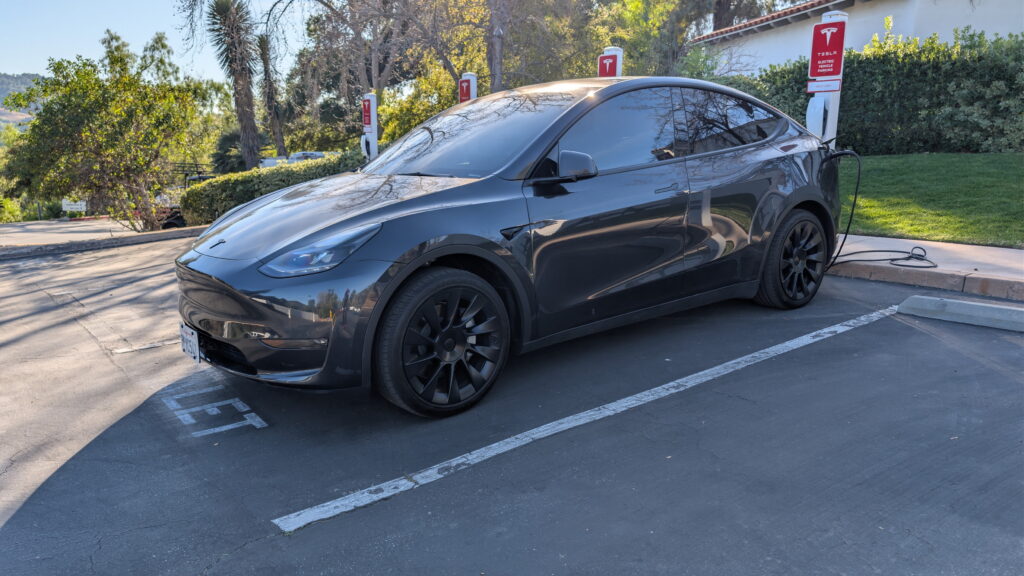
The C-HR enters an increasingly crowded segment, but its character, like that of the bZ Woodland, gives it a unique angle. The Tesla Model Y remains the benchmark for space and convenience. It is more spacious, more versatile, and easier to live with if rear passenger comfort is important. The Model 3, although technically a sedan, also surpasses the C-HR in rear seat comfort despite smaller dimensions.
Frankly, on-paper comparisons with most cars in the segment make the C-HR a middling choice at best. Even comparing it to the technically similar Subaru Uncharted, it costs more and is not available with front-wheel drive, which offers greater range. On the other hand, I’m not going to start complaining that we need more front-wheel-drive cars.
However, the key is where the C-HR stands out. All-wheel drive is what many people want or need where they live. Secondly, it is probably the easiest car in the segment to park thanks to excellent visibility and one of the shortest wheelbases. That matters.
No, it’s not the fastest, not the cheapest, and