 by
by A New Beginning for Nissan in India
Nissan’s return to the Indian market begins with a new budget offering. The Gravite is a seven-seat subcompact minivan with crossover-like design, heavily based on the recently updated Renault Triber. The differences between the two models are limited to minor styling changes.
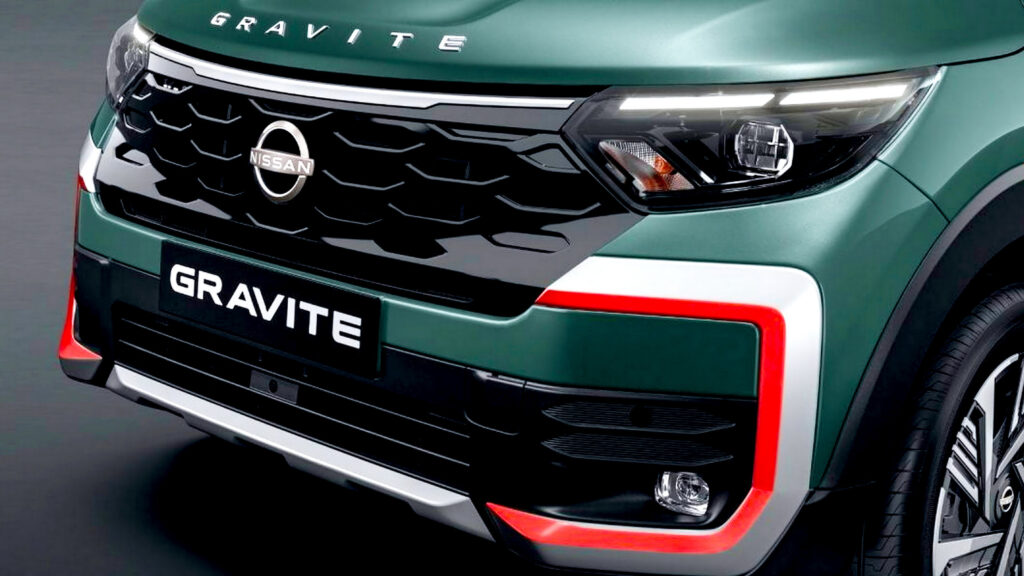
Despite an announcement campaign focused on the car’s length, the Nissan Gravite looks like a typical example of badge engineering. The most noticeable change compared to its Renault twin is the redesigned front bumper with a larger honeycomb-shaped grille. It is complemented by horizontal air intakes in the bumper, framed by vertical C-shaped elements, as well as slightly modified daytime running lights.
The car’s profile is identical to the Triber, except for a new set of alloy wheels and an updated color palette that includes a Forest Green shade inspired by the Patrol model.
Space for the Whole Family
The rear features a new bumper with more robust lines and the Gravite badge on the tailgate. The image shows the Launch Edition, limited to 1,001 units, distinguished by orange accents and special decals.
Despite a length of just 3,991 mm, the model offers a three-row, seven-seat layout. The third row of seats is standard but can be completely removed to obtain a truly useful luggage compartment with a capacity of up to 625 liters.
The dashboard is also borrowed from Renault, including an 8-inch multimedia system screen and a 7-inch digital instrument cluster in higher trims. The flagship version offers buyers a dual dashcam, a JBL audio system, ambient lighting, an air purifier, neck pillows, LED lighting, and roof rails. Safety is the same across the entire range: six airbags and ESP are standard.
Budget Platform and Specifications
The Nissan Gravite is built on the CMF-A+ architecture, which it shares with the Magnite crossover, as well as the Renault Triber, Kwid, and Kiger models. Under the hood is a naturally aspirated 1.0-liter three-cylinder engine producing 71 hp and 96 Nm of torque.
Power is sent to the front axle via a five-speed manual gearbox or an EZ-Shift automated transmission. Its performance is hardly impressive, but that was never this car’s main goal.
Aggressive Pricing Strategy
Nissan’s strongest card with the Gravite is not the design, but the price-to-value ratio. The price starts from 565,000 Indian rupees, which is approximately $6,200, making it cheaper than the Renault Triber, which starts at 576,300 rupees.
Even the top Gravite Tekna Launch Edition trim with an automatic transmission and full equipment costs 893,500 rupees, keeping it in the budget car category.
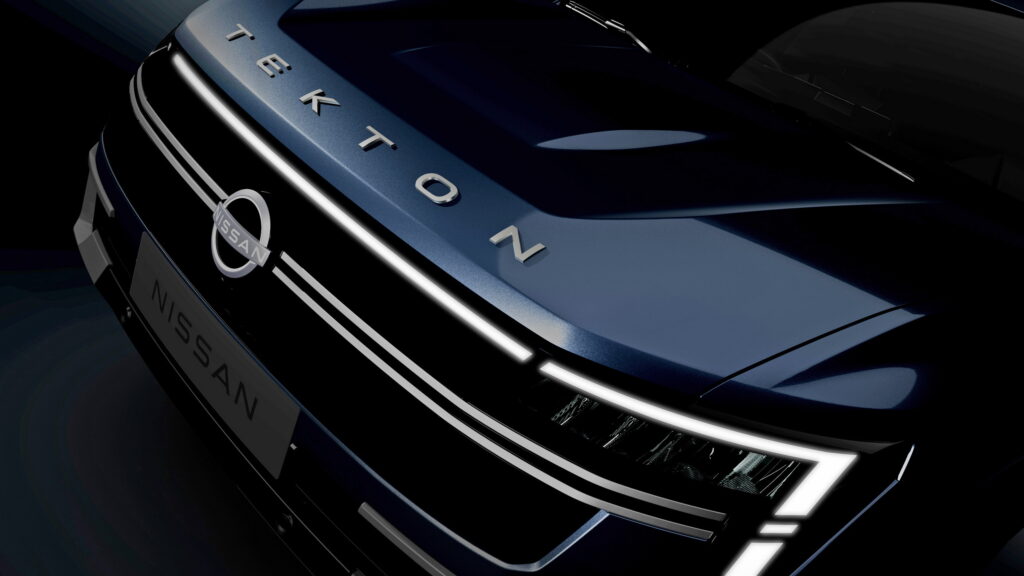
This crossover-minivan will soon be joined by two new Nissan models for India: the Tekton based on the Duster, whose debut is scheduled for later this year, and a larger SUV based on the Bigster, expected in early 2027.
The launch of the Gravite clearly demonstrates Nissan’s strategy for developing markets: to offer the most affordable products possible by utilizing shared platforms and technologies within the alliance. This allows for quickly filling the model lineup without major development investments. In simple terms, it’s a smart business move, especially in price-sensitive segments like India’s. The success of this model will likely depend not so much on its uniqueness, but on the reliability of the dealer network and the perception of the Nissan brand by local buyers after a period of relative quiet.