 by
by First Look at the Design
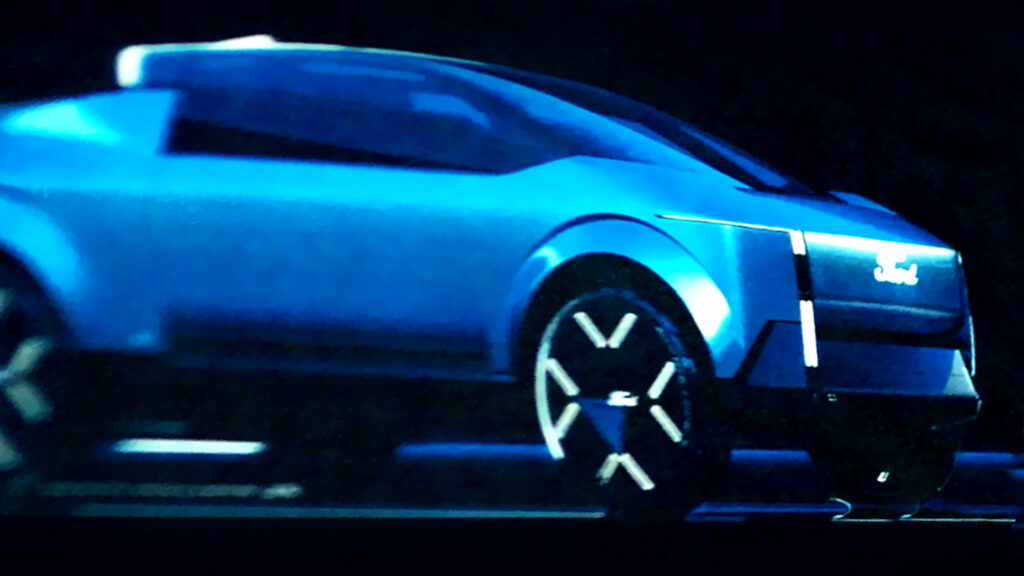
Ford continues to reveal details of its so-called “Universal Electric Vehicle” project, which aims to bring a completely new mid-size electric pickup to market for $30,000 in 2027. The technical review presented in a 14-minute teaser contains a lot of interesting information, but it’s the design sketches that attract the most attention, offering the first idea of what this vehicle might look like in sheet metal.
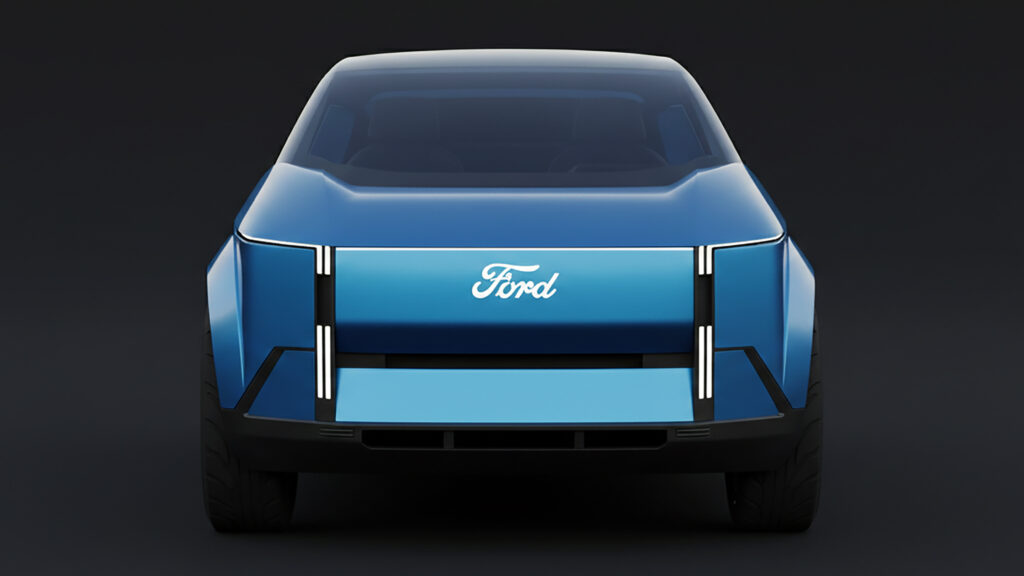
According to these early drawings, which also align with blurred images that have already appeared, the pickup looks streamlined and futuristic. It resembles a softer, more rounded version of the large Tesla Cybertruck, without the origami folds and raw edges, not to mention a significantly more sensible starting price. At the front, one can see thin vertical LEDs, an illuminated Ford logo, and horizontal air intakes integrated into the bumper.
The windshield extends deep onto the hood and flows smoothly into an integrated rear spoiler on the roof. Despite the futuristic contours, this is likely a Ford Ranger-sized pickup with a traditional crew cab layout. Practicality has also found its place here.
Aerodynamics as a Priority
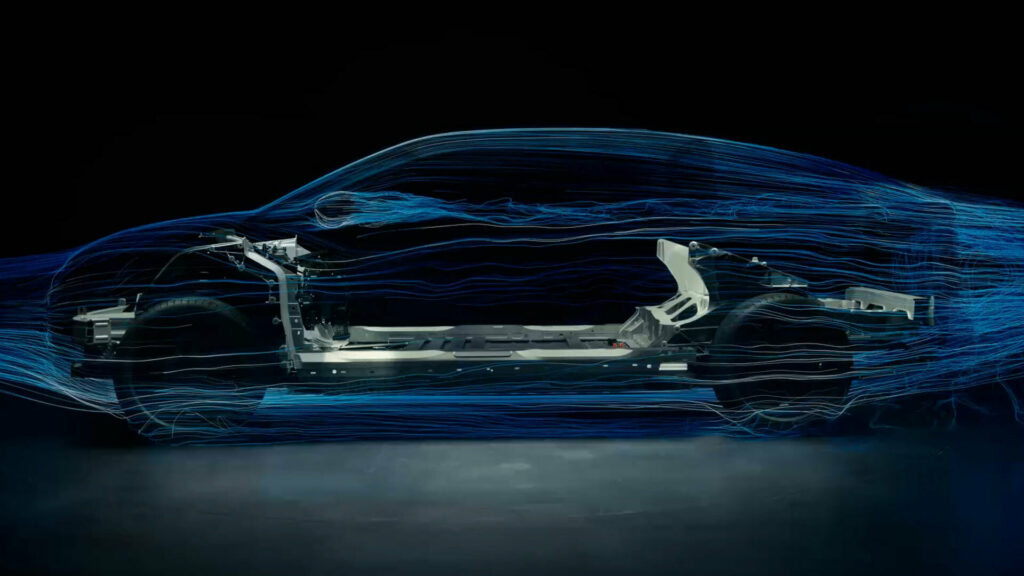
Unsurprisingly, the team of aerodynamicists had a major influence on shaping this pickup. Former Formula 1 experts were involved to achieve maximum efficiency. The task was simple: drastically reduce aerodynamic drag so that smaller batteries could provide the necessary range, keeping production costs under control.
The curved roof, according to the company, reduces turbulence typically created by a pickup truck body. The side mirrors are 20 percent smaller than standard, adding 1.5 miles (2.4 km) of range, while specially designed underbody panels add another 4.5 miles (7.2 km).
Overall, Ford estimates that these measures provide an additional 50 miles (80 km) of range compared to a similarly sized pickup with a more traditional shape. This is not trivial.
Reducing Production Costs
Aerodynamics is only half the story. Ford has also focused significant effort on reducing production complexity. The company will use large aluminum single-piece castings, similar in principle to Tesla’s gigacasting method. The number of structural components will be reduced from 146 pieces in the current Ford Maverick to just two, and the overall weight, according to the company, will be 27 percent lower than that of competing offerings.
Fewer parts and fewer connections mean fewer robots on the line, which, Ford claims, provides a “tangible gain” in both assembly quality and production efficiency.
It also seems that Ford engineers have taken lessons from reverse-engineering Chinese and Tesla electric vehicles. The new pickup’s wiring is 4,000 feet (1.2 km) shorter than that of the Mustang Mach-E crossover, allowing for the removal of 22 pounds (10 kg) of weight. It will run on prismatic lithium-iron-phosphate (LFP) battery cells and a separate 48-volt system for auxiliary functions.
The special projects team behind Ford’s next generation of electric vehicles is led by former Tesla executive Alan Clarke, who brought with him 12 years of experience working at the rival company.
As for the name, Ford remains silent for now. A recent patent application hints at a possible return of the Ranchero badge, although nothing is confirmed. The affordable pickup is expected to appear in 2027, to be followed by other affordable electric vehicles, among which, according to rumors, is a sedan.
The planned launch of this $30,000 pickup could become a real milestone for the electric truck market, which is currently dominated by more expensive models. The success of this project could force other manufacturers to reconsider their strategies and accelerate the development of more affordable electric commercial vehicles. The focus on aerodynamics and production simplification demonstrates a pragmatic approach aimed at overcoming the main barriers to mass EV adoption—price and range.