 by
by Pros: Impressive turbo performance, excellent handling, interior
Cons: Lack of a manual transmission, high price, stiff suspension
The Last of Its Era
Over the past decade, Lotus has undergone a significant transformation that could confuse many of the brand’s enthusiasts. In 2021, it simultaneously discontinued the iconic Elise, Exige, and Evora models, and entered the world of fully electric sedans and SUVs with the Eletre and Emeya, preparing for the launch of hybrids.
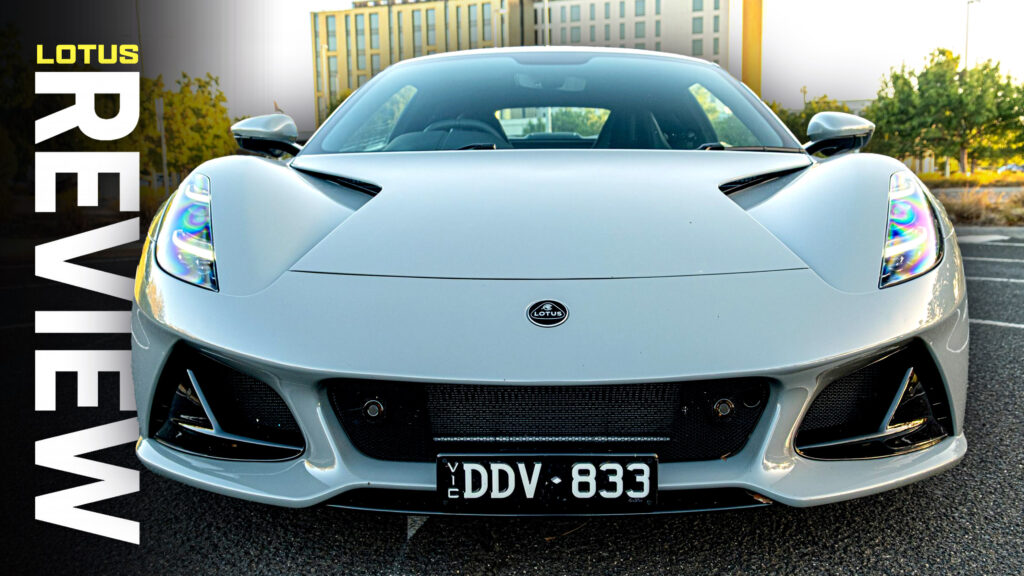
However, one Lotus remains, created for those who value the feel of the steering wheel more than the size of the screen. We are, of course, talking about the Emira. As the brand’s last pure internal combustion engine car and the model meant to replace three legends at once, it carries a great responsibility. Can it truly be a worthy successor?
For Lotus, the Emira is more than just another model launch. It is a boundary. It is what the company considers a true sports car: lightweight, communicating with the driver through the steering wheel, and truly exciting, even as the entire industry chases batteries, software updates, and acceleration times.
Technical Specifications
*According to manufacturer data
Heart from AMG
Unlike the Evora, which was sold exclusively with the Toyota 2GR V6 engine in naturally aspirated and supercharged versions, the Emira has a different design. The supercharged V6 remains an option, but now the Mercedes-AMG M139 engine is also offered — a 2.0-liter turbocharged four-cylinder.
This engine, used in models like the CLA 45, A 45, and even the controversial C 63 S E Performance hybrid, is the most powerful production four-cylinder engine. In the base Emira, it produces 265 kW (360 hp), slightly less than the standard 281 kW (382 hp) for AMG. Importantly, the Turbo SE has a refined version of the M139, which delivers 294 kW (400 hp) and 480 Nm (354 lb-ft) of torque.
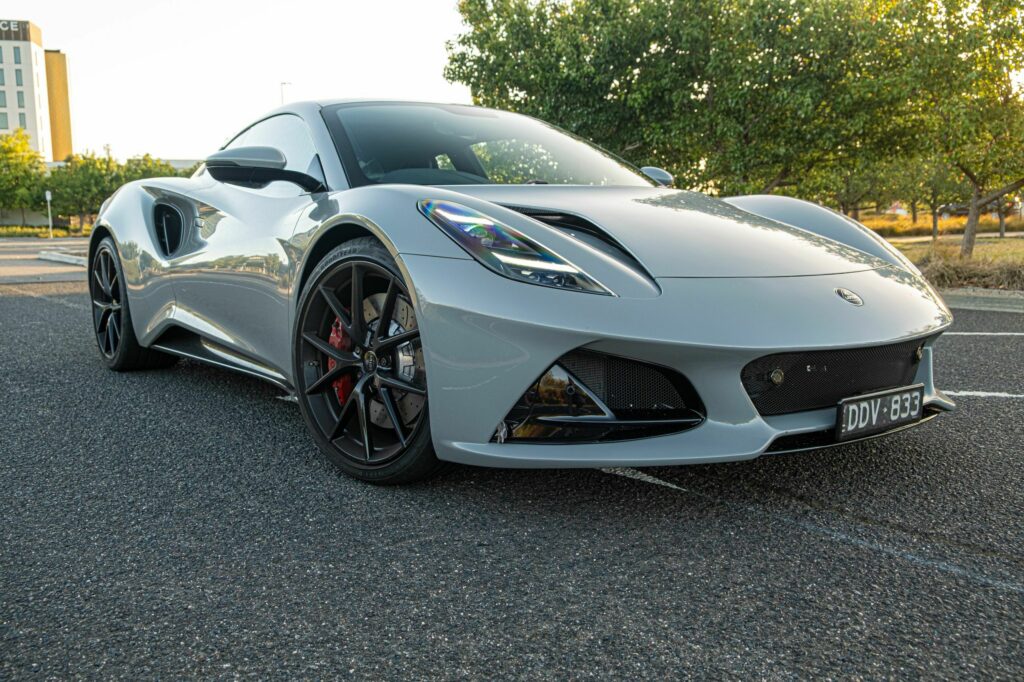
The four-cylinder engine, paired with an eight-speed dual-clutch transmission from AMG, is currently the only version offered in Australia. Several hundred models with the supercharged V6 engine and a six-speed manual transmission were sold in previous years before Australia exhausted its allocation limit.
However, due to Trump administration tariffs, which raised prices in the US and reduced demand, Lotus has committed to producing more right-hand-drive V6 models for Australia, updated to meet the latest 2026 ADAS requirements.
Australian versions of the 2025 Lotus Emira Turbo SE start from just over AU$210,000 ($148,400), although the car we tested was priced at AU$214,840 ($151,874) excluding on-road costs. This is about the same as the Porsche Cayman GTS 4.0 cost before it was discontinued.
True Driving Pleasure
Can a car like the Emira, equipped with a turbocharged four-cylinder engine, make sense? While it might seem that such an engine is unsuitable for a mid-engine sports car, in reality, it is not.
The engine largely shapes the first impressions of driving the Emira Turbo SE. During startup and at idle, it sounds quite plain and not particularly inspiring. However, it comes alive when you press the accelerator pedal.
The Mercedes-AMG M139 engine uses a twin-scroll turbocharger with a ball-bearing core, providing amazing response and an epic sound. Oh, that sound… Lift off the throttle, and you’ll hear the characteristic whistle and noise that only a ball-bearing turbo can create, along with the aural pleasure of the electronically controlled blow-off valve.
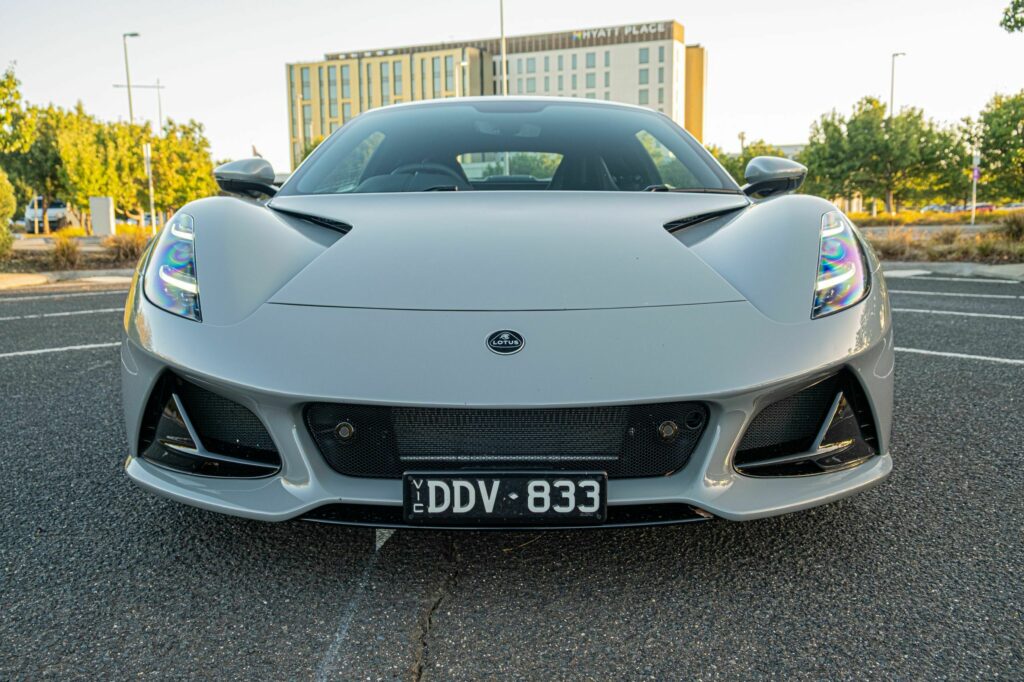
Under load, it sounds even better thanks to the air intake location in the left-side vent, which sucks in air, making the sound resemble a JDM rally hero with an additional air intake, rather than a mid-engine exotic car.
The engine also offers plenty of power, although modern safety requirements mean the Emira Turbo SE weighs about 1,457 kg (3,212 lbs), almost 200 kg (441 lbs) more than the old Evora. Lotus claims the model accelerates to 100 km/h in 4.0 seconds, but we recorded repeatable results of 3.8 seconds using GPS.
Has the Handling Magic Remained?
The first ingredient is the steering. Although this is a modern Lotus, the company uses a traditional hydraulic power steering system instead of electric power steering, making this car one of the last of its kind. It is a true pleasure.
The weighting is perfect and provides excellent connection to the road. Hit a bump, and the steering wheel will tremble in your hands, something not found in most cars. This means you can feel every part of the asphalt and changes in the road surface mid-corner, allowing you to precisely place the Emira where you want it.
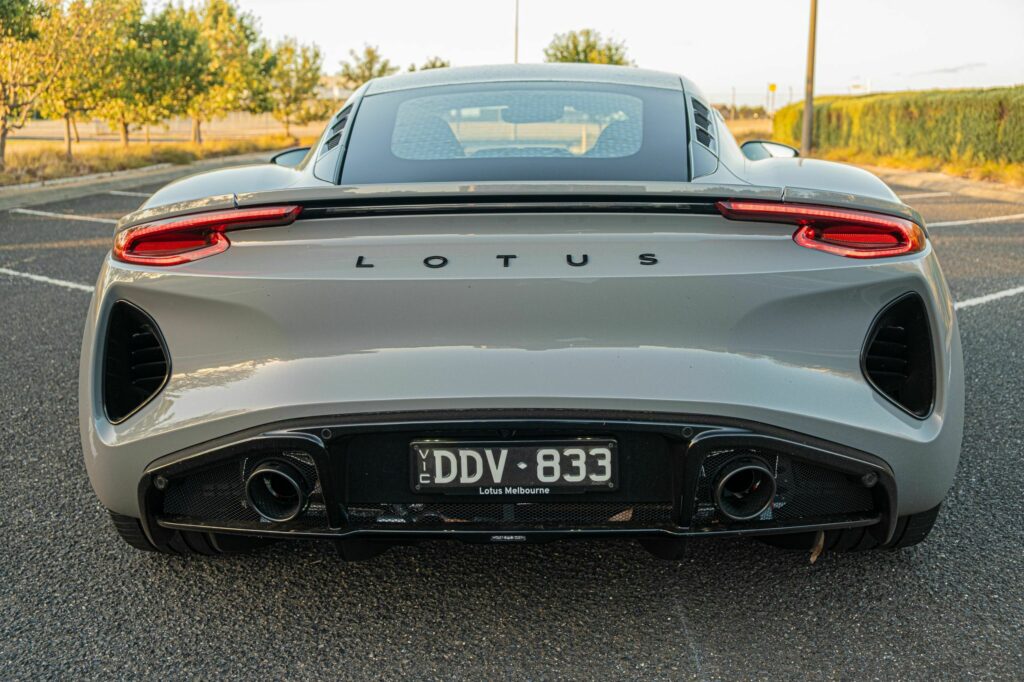
Lotus sells all Emira versions with either Tour or Sport suspension. The Sport has springs that are 10 percent stiffer and comes standard with Michelin Pilot Sport Cup 2 tires, while the Tour has Goodyear Eagle F1 tires. Most Australian cars come with the Sport chassis, like our test car, although it was equipped with Goodyear tires instead of Michelins, making it something between Tour and Sport.
On urban and rural roads, the Emira Turbo SE is undoubtedly stiff, although we argue that this is how a sports car should be. It is never uncomfortable and is more than suitable for journeys, although daily use might be a bit tiring.
Road grip is exceptional, and the handling balance is beautifully neutral, allowing the Emira Turbo SE to tackle narrow, winding roads with impressive speed. It transitions smoothly between corners with incredible precision and composure, and truly comes alive in Track mode with ESC partially off, allowing the rear to slip out a bit. Together with exceptional brakes, the Emira’s dynamics are hard to criticize.
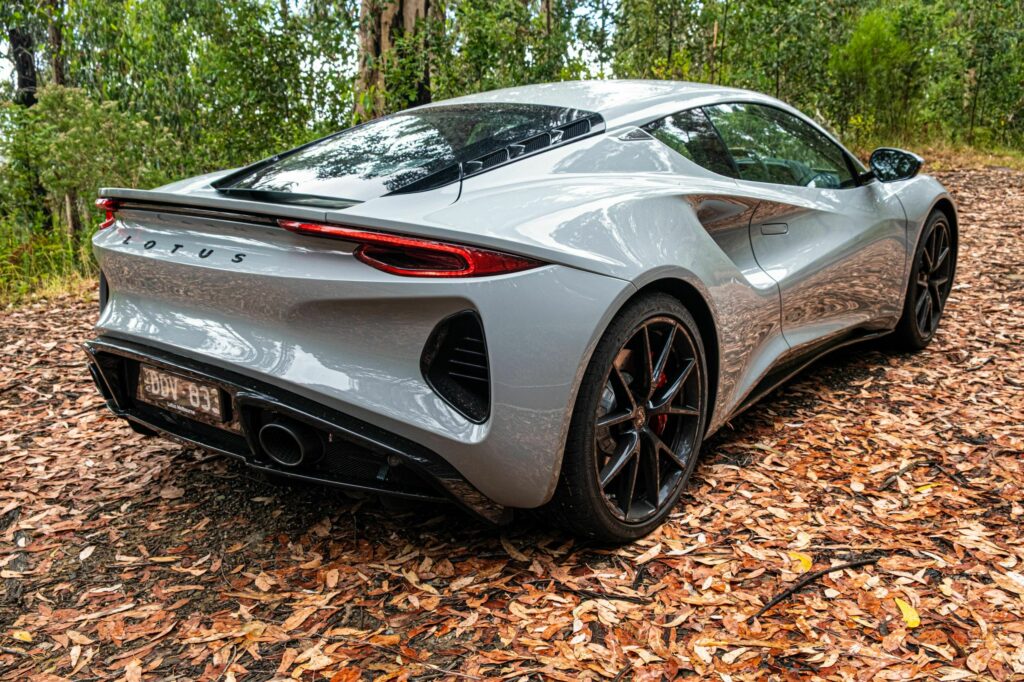
The eight-speed transmission from AMG is also excellent. It provides almost seamless gear changes and is surprisingly smooth at low speeds. It’s a shame there is no six-speed manual transmission for the four-cylinder engine, as it is only offered with the supercharged V6 engine.
Does the Interior Feel Special?
The Emira’s interior feels much more premium than some older Lotus sports cars and is shockingly spacious.
Compared to the Corvette C8, which is significantly larger on the outside than the Emira, the Lotus cabin is much more capacious. Despite my height of 6’2″, I had at least an inch of headroom in a comfortable seating position.
In front of the driver is a 12-inch display, and in the center console is a 10.25-inch multimedia system screen. Accordingly, the multimedia display is quite simple, without fancy graphical effects or endless menus. It also includes wireless Android Auto and Apple CarPlay and responds quickly to commands, making it convenient to use. There are also several physical controls for the climate control.
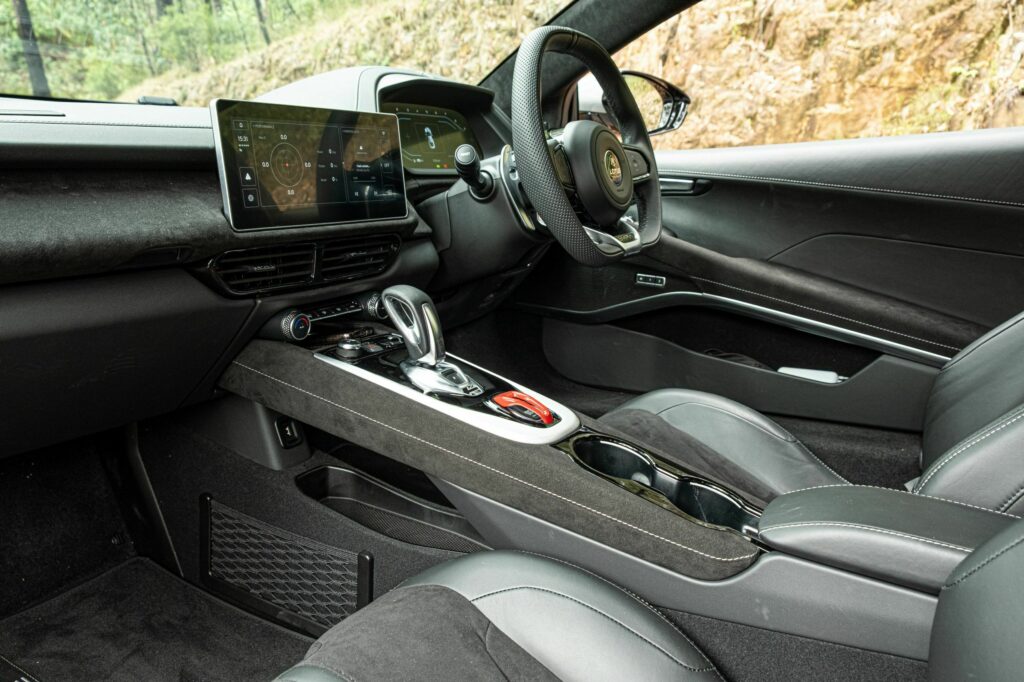
Unsurprisingly, Lotus has nailed the shape and size of the steering wheel. The plastic buttons on the wheel feel a bit cheap, but they offer a lot of functionality, especially the controls on the right side.
On the transmission tunnel is a Lamborghini-inspired engine start/stop button under a red panel that needs to be lifted up, and a leather-wrapped gear selector. The seats are not bad, featuring heating functions and adjustable lumbar support, but in my opinion, they could be improved with more developed side and thigh support.
Overall, the build quality and finish are pleasant, with a welcoming combination of leather and Alcantara surfaces.