 by
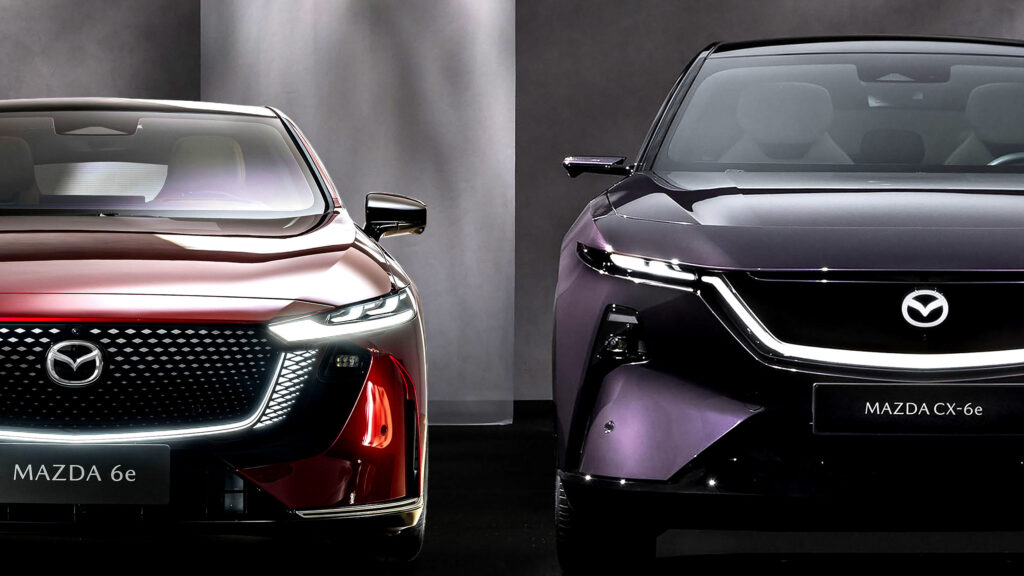
by Mazda has left behind the niche MX-30 crossover and updated its lineup of fully electric vehicles for the Chinese market and some global regions, excluding North America. The new models are the 6e sedan and the CX-6e SUV. Although these technically related electric vehicles appeared almost simultaneously, a Mazda Europe executive notes that there is a noticeable difference in their development level. This is due to the complex learning process that had to be undergone in partnership with the Chinese company Changan.
Beginning of Collaboration and Challenges
Christian Schultze, Director of Technology Research at Mazda Europe, explained this process in an interview. Both models are largely based on the Deepal L07 sedan and S07 SUV from Changan’s electric brand, adapted for global markets by the Mazda joint venture.
“I would say we made another half-step forward. The 6e was the first joint development with our partner Changan Mazda Automobile for a car to be sold in Europe. It was a huge experience for them because they had never developed a car specifically for the European market before. It was also a learning experience for us because we suddenly had to explain much more than we were used to when communicating with Hiroshima.”
Schultze explained that while the development center in Hiroshima works seamlessly with the European team, involving Changan Mazda Automobile changed the dynamic. The shared understanding needed for such projects had to be built from scratch, and this process took more time and effort than expected.
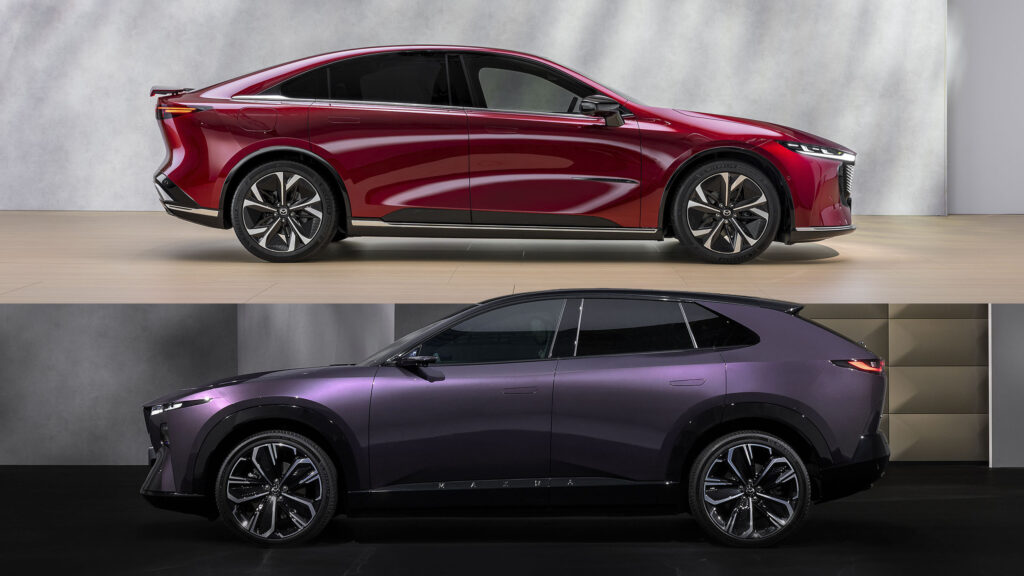
Despite the nearly identical appearance of the Chinese versions, the Mazda EZ-6 and EZ-60, the European models had to meet different standards. This proved to be a complex task for engineers unfamiliar with European requirements.
“When we develop a car together with Hiroshima, we essentially get about 98 percent of what we need right away. Then only fine-tuning remains. With Changan Mazda Automobile, we had to go much further back to the basics. For example, they had never created a configuration for European radar systems. We had to explain the requirements and why they are important. We liked how quickly they responded and how willing they were to understand. But first, we have to convey that understanding.”
The SUV as a More Refined Model
Despite the initial difficulties, the knowledge gained within the 6e program helped Mazda refine the CX-6e.
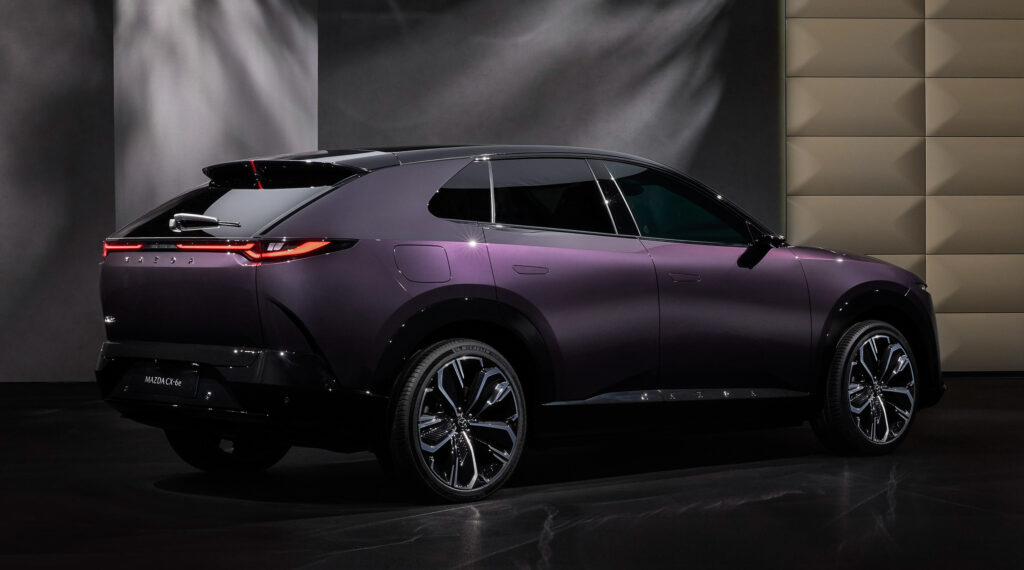
Schultze noted that the SUV’s electric motor is a “further development,” offering “greater efficiency and higher sustained power” compared to the sedan. This aligns with Mazda’s philosophy of making each new model improved.
The Mazda 6e sedan, now on sale in continental Europe and the UK, produces 255 hp in the Standard Range version and 241 hp in the Long Range version. The CX-6e retains higher power in the configuration with the large 80 kWh battery.
Experience for Future Projects
Schultze confirmed that the lessons learned from the joint venture with Changan will influence future electric vehicles built on an architecture developed by Mazda itself.
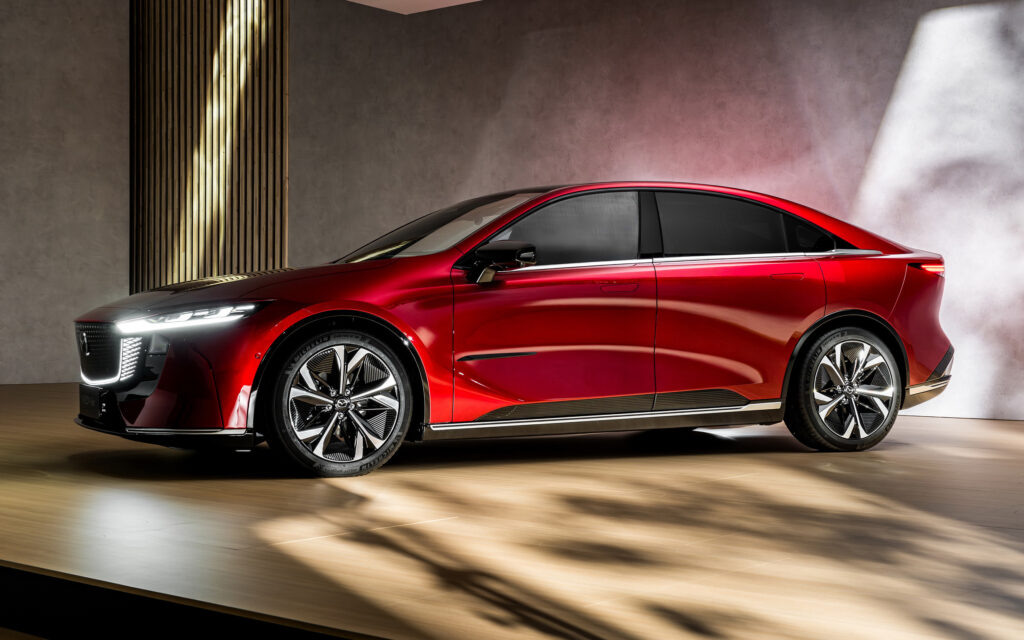
“We follow a strategy where we collaborate with partners, for example, in the field of electric vehicles, and simultaneously develop our own electric models. Our roadmap shows that one of the next electric vehicles will be based on a fully proprietary Mazda platform. Furthermore, our knowledge is growing every day, including thanks to feedback from the market. For example, we learned a lot from the reaction to the Mazda 3, and this knowledge was incorporated into our internal goals. The same applies to the lessons we are now receiving from the CX-6e.”
He also emphasized that modern technologies allow for continuous improvements without waiting for a facelift or model change.
“A great advantage of today’s world is that many systems are digital or electronic. This means we can implement improvements even during current production. Previously, in a purely mechanical world, if a switch was too stiff, it remained that way for four years, until the next model change. Fortunately, those times are over.”
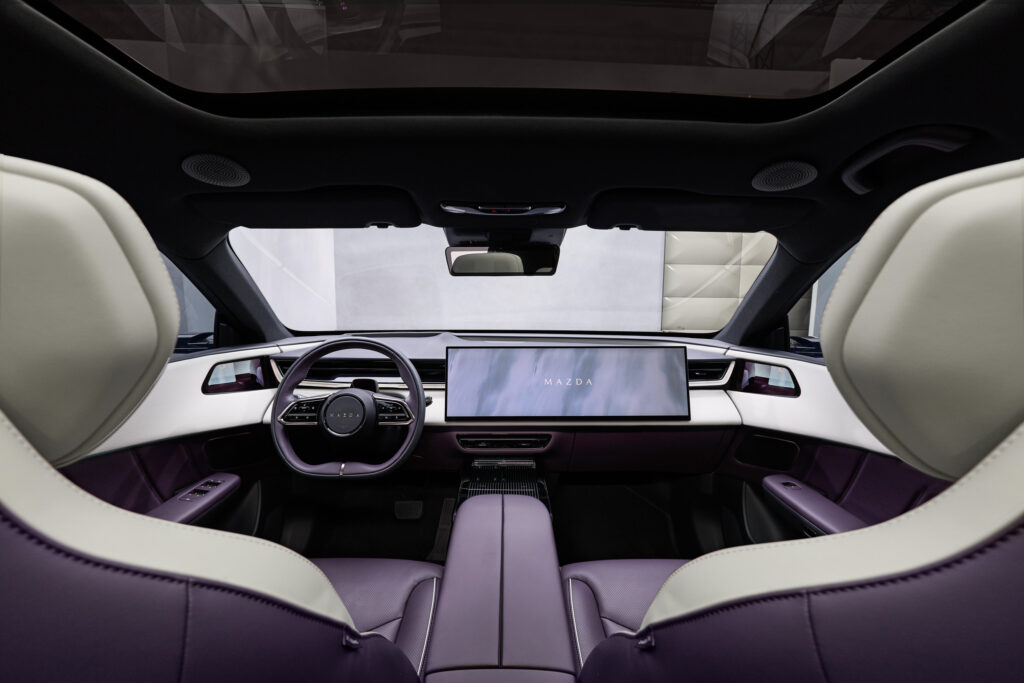
This stage of collaboration with the Chinese partner proved to be not only a necessary step for a quick entry into the electric vehicle market but also a unique opportunity for Mazda’s engineering culture. The need to explain in detail the technical and regulatory requirements of the European market likely led to a deeper internal analysis of its own processes. The gained experience in cross-cultural engineering communication and product adaptation could become a key advantage for Mazda in conditions where global automotive markets, despite technological unification, retain their specific characteristics. The ability to improve cars via software, without stopping the assembly line, opens new horizons for customer service and product support throughout the entire lifecycle, which is critically important for competing in the era of connected cars.