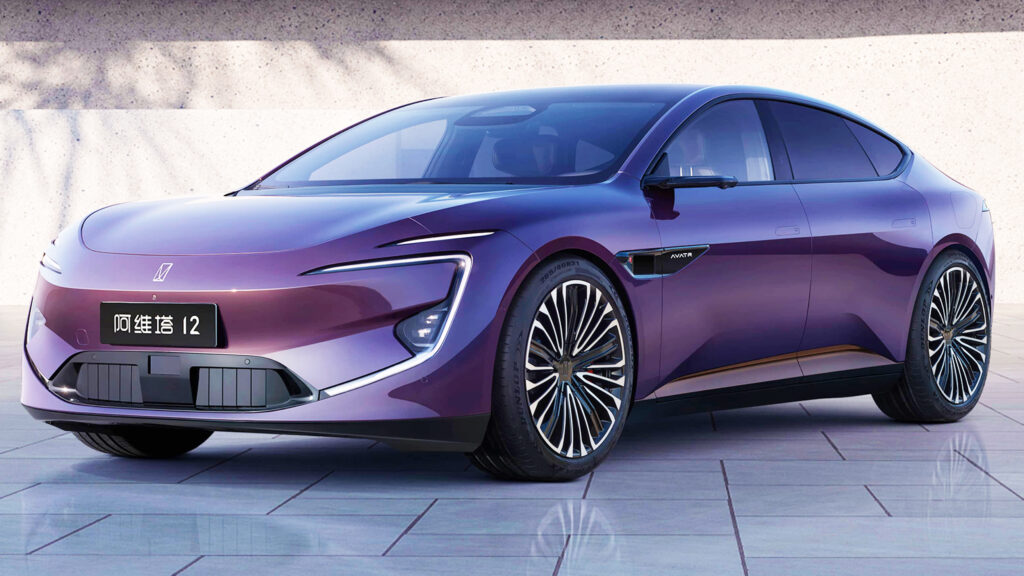
 by
by The Chinese automaker Changan has announced its readiness to launch mass production of revolutionary solid-state batteries. The main features of the novelty:
The Beginning of a New Era for Electric Vehicles
Solid-state batteries, which have been talked about for many years, are finally becoming a reality. As early as the third quarter of this year, Changan will begin installing its new solid-state batteries on robots and electric vehicles, with full-scale mass production scheduled for 2027.
According to Chinese media, Changan claims that its new solid-state battery has an energy density of 400 Wh/kg, which will allow electric vehicles to travel over 1500 kilometers without recharging. While such a range may seem excessive, it will make future Changan models ideal for long trips to remote areas where charging infrastructure is still underdeveloped.
Breakthrough in Energy Density
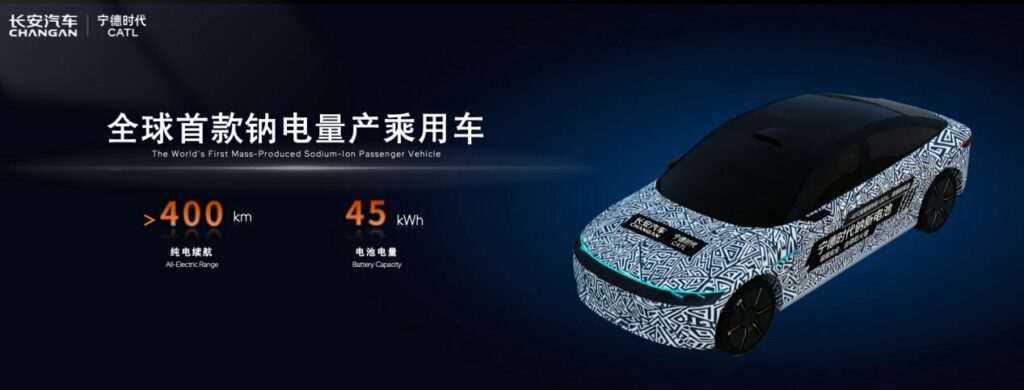
The battery is named “Golden Bell.” In addition to high energy density, it is reported to be 70 percent safer than a conventional electric vehicle battery. Since this is 2026, it also uses artificial intelligence for remote diagnostics. Smarter batteries have apparently become part of the overall plan.
Changan will produce these batteries under its new solid-state battery brand, Jingzhongzhao. The company intends to produce fully solid-state batteries, as well as release liquid and semi-solid-state batteries that use a liquid electrolyte.

China’s Push for Solid-State Technology
Changan is not alone in this race. Other Chinese brands are also getting closer to making solid-state batteries mainstream. Earlier this year, Dongfeng Motor began testing its own solid-state battery in extreme cold conditions. Its energy density is 350 Wh/kg, and the claimed range exceeds 1000 kilometers. The company also plans to launch them in mass-produced cars this year, targeting September.
BYD, Chery, SAIC, GAC, and CATL are all striving for similar breakthroughs. They are joined by automotive veterans such as Mercedes-Benz, Volkswagen, BMW, Toyota, Nissan, Hyundai, and Honda. After years of promises and laboratory achievements, solid-state batteries may finally be approaching something tangible. If they deliver even half of these promises, internal combustion engines will have another reason to worry.
The planned market launch of the technology could significantly change the balance of power in the global automotive industry. Chinese manufacturers, who already dominate the production of traditional lithium-ion batteries, have a chance to solidify their technological advantage in the next generation of powertrains. The success of solid-state batteries will depend not only on their laboratory characteristics but also on cost, charging speed, and durability in real-world operating conditions. If these parameters also prove to be excellent, the transition to electric vehicles could accelerate much faster than anticipated.