 by
by Australia’s Car Market: China Overtakes Japan for the First Time
Australia, which no longer has its own car manufacturing industry, is quickly adapting to the growing wave of cars from China. New data indicates the achievement of a significant milestone. In February, China became the largest source of new cars sold in Australia in a single month for the first time in history.
Since 1998, Japan has been the main supplier of new vehicles to the country, but the balance of power is shifting. In February, 22,362 new Chinese cars were sold in Australia, slightly ahead of Japan’s figure of 21,671 vehicles. Thailand took third place with 19,493 cars, and South Korea accounted for 11,913 units.
Overall, sales of Chinese-made cars increased by 50.5% compared to the same period last year, while sales of Japanese cars fell by 31.3%, and Korean cars by 2.9%. These figures also include vehicles produced in China by non-Chinese brands, such as Tesla and Kia, which are increasingly manufacturing models there for export markets.
Chinese Brands Dominate the Top 10
Chinese car brands have become so prominent in Australia that four of the country’s ten most popular brands now originate from China. The leader is BYD, which sold 5,323 cars in February. This result is 62.2% higher than last year’s figure for the same month.

This figure represents a 5.9% market share and places the brand almost alongside Hyundai, which recorded 6,266 sales. Since the beginning of the year, BYD has sold 10,324 cars in Australia, giving it a 5.8% market share.
Next after BYD is GWM, or Great Wall Motor. The company has sold 9,198 cars in the local market since the beginning of the year, including 4,689 in February alone. This result gives it a 5.2% market share and puts it ahead of Mitsubishi, making it the seventh most popular brand in the country.
Chery has also secured a place in the top 10, taking the ninth position with 7,718 sales since the beginning of the year. The brand delivered 3,938 cars in February alone, which is a 93.2% increase compared to last year. MG rounds out this group as Australia’s tenth most popular brand, registering 6,377 sales in January and February.
Model Sales Leaders
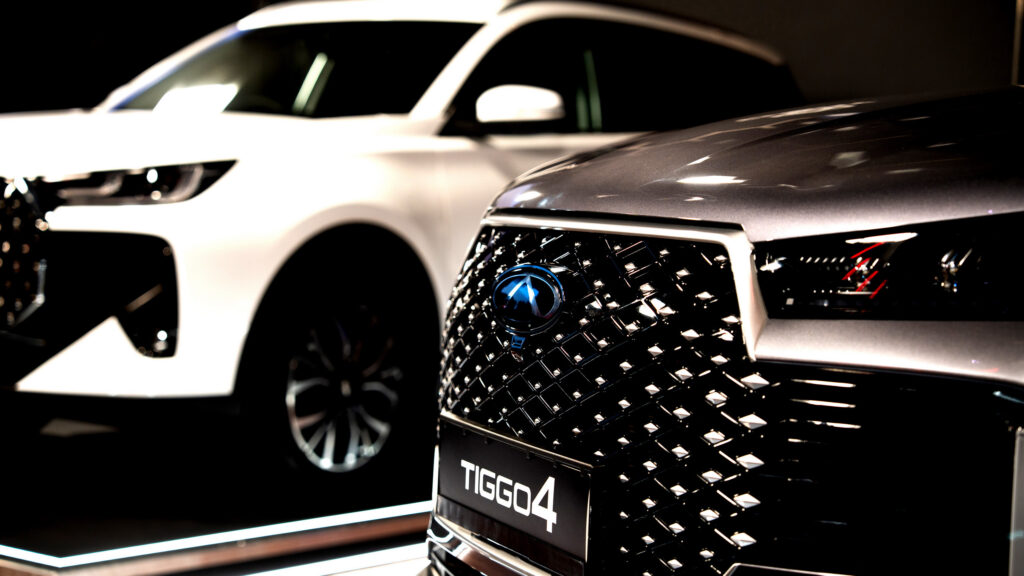
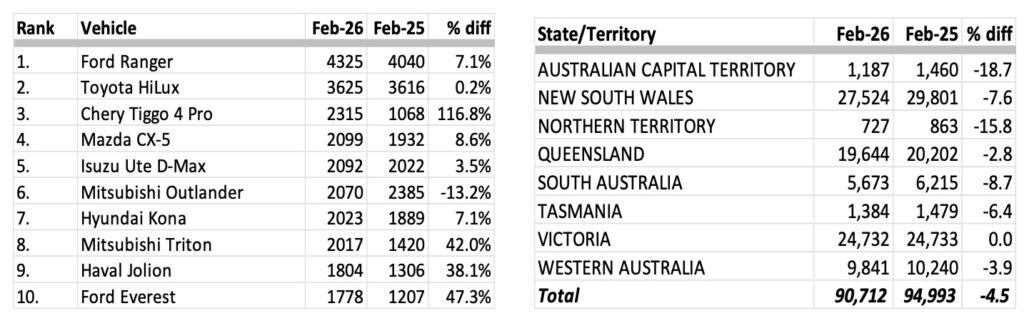
Unsurprisingly, the Ford Ranger remains the best-selling new car in Australia with 4,325 sales last month, ahead of the Toyota Hilux. In an unexpected third place was the Chery Tiggo 4 Pro with 2,315 units sold. This figure has sharply increased compared to the 1,068 cars delivered in February of last year.

Meanwhile, the Toyota RAV4 showed unusually weak numbers. Typically one of the best-selling models in Australia, it recorded only 723 sales last month, which is 83.6% less than the 4,405 units delivered in January 2025. Importantly, this decline does not seem to reflect a drop in demand. Instead, inventories of the current model are shrinking as dealers prepare for the arrival of the new-generation RAV4 later this month.
These market changes clearly demonstrate how global supply chains and competitive pricing policies are rewriting the rules of the game in the automotive industry. The success of Chinese brands like BYD and Chery is based not only on affordable prices but also on the rapid introduction of electric and hybrid technologies, which are increasingly valued by Australian consumers. This trend is expected to intensify as traditional leaders, such as Japanese manufacturers, face logistics challenges and may focus on updating their lineups. The future of the Australian market seems to be taking shape in Asia, and the availability of new models and types of transport for buyers will only increase.