 by
by Hyundai Verna Update for the Indian Market
Although the Hyundai Accent has disappeared from many markets, its successor continues to live on in India under a different name. Locally known as the Verna, the compact sedan has received a mid-lifecycle update, three years after its debut. The update includes minor design changes and a number of new features characteristic of larger and more expensive models.
Key changes of the updated model include:
Exterior and Design
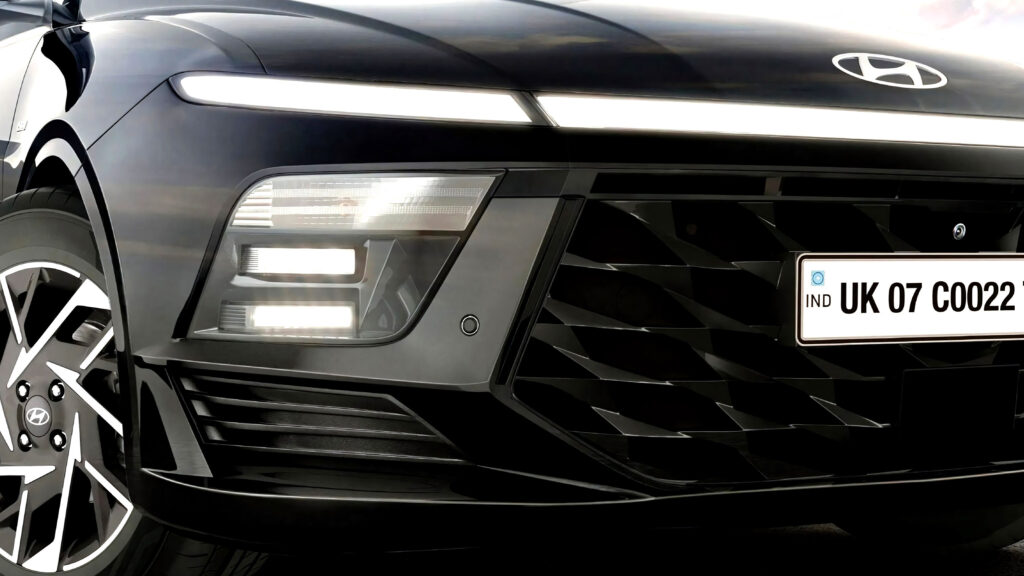
Externally, the Verna received an updated front bumper with a black chrome radiator grille and sportier air intakes. The full-width LED light strip remains, and the lower part of the split headlights has become slightly larger. The car’s profile is unchanged, however, the rear bumper now features a more pronounced diffuser with a metallic accent, which can be paired with an optional rear spoiler. The color palette has been enriched with two new shades: Classy Blue and Titan Grey Matte.
Updated Interior and Technologies
Inside, the layout remains familiar, but an updated steering wheel has appeared. The dual 10.25-inch screens, although smaller than the 12.3-inch displays in the Venue model, according to Hyundai, remain the largest in their segment.
The manufacturer advertises a number of innovations to enhance comfort, appearing for the first time in this segment. Among them are a premium eight-speaker Bose audio system, a dashcam, rear sunshades, and a smart trunk. In more expensive trims, an eight-way adjustable driver’s seat with memory and ventilation, wireless charging, leatherette upholstery, and an electric sunroof are also available.
The company also emphasizes that the sedan offers the longest wheelbase (2670 mm) and the largest trunk (528 liters) among its competitors.
Regarding safety, the Verna is equipped with up to seven airbags, six of which are standard, and a Level 2 ADAS system is also available.
Technical Specifications and Engines
The powertrain lineup remains unchanged and includes two non-electrified petrol engines. The base naturally aspirated 1.5-liter engine produces 113 hp, while the turbocharged version produces 158 hp. Power is sent to the front wheels via a six-speed manual or automatic transmission, which varies depending on the engine. The base model uses a CVT, while the turbo engine is paired with a seven-speed dual-clutch transmission.
Pricing and Competitors
The updated Hyundai Verna is already available for order in India. Prices start from 1,098,400 Indian Rupees (approximately $11,900 USD) and go up to 1,825,400 Rupees (about $19,800). In Hyundai’s lineup for India, there is also a smaller and cheaper sedan, the Aura, based on the i10, with a starting price of 599,990 Rupees (about $6,500). In the Indian market, the Verna competes with models such as the Volkswagen Virtus, Skoda Slavia, and Honda City.
The Verna update demonstrates Hyundai’s strategy to strengthen its position in key markets where sedans are still popular. Adding premium features, such as the Bose audio system and advanced safety systems, in the compact segment could be a significant argument for buyers looking for more comfort at an affordable price. Retaining familiar powertrains helps maintain competitive pricing, while technological updates in the interior enhance its appeal. Market conditions, where the Verna faces European and Japanese competitors, require constant improvement, and this update is a logical step to maintain interest in the model.