 by
by The Honda Civic is expected to transition to a new generation as early as 2027. The hybrid version will receive sharper styling and improved handling. The new platform will allow for a reduction in the car’s weight while simultaneously increasing body rigidity.
Expected Design of the Twelfth Generation
The Civic has long remained one of the leaders in the compact segment. Despite this, Honda is already working on refining the formula for the future model. The twelfth generation is expected next year, and the combination of early official details and speculative renderings already gives a reasonable idea of what the new model might look like.
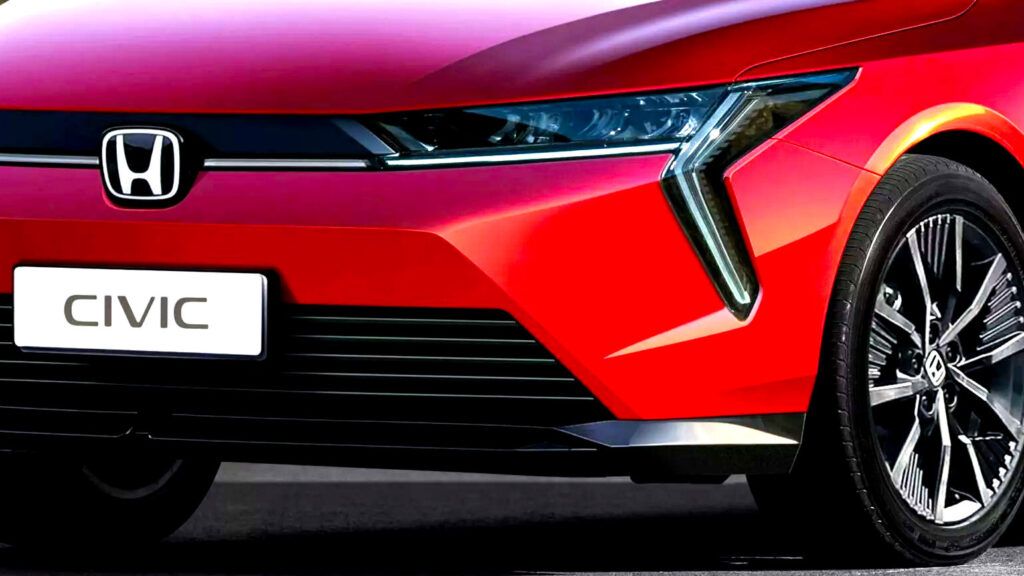
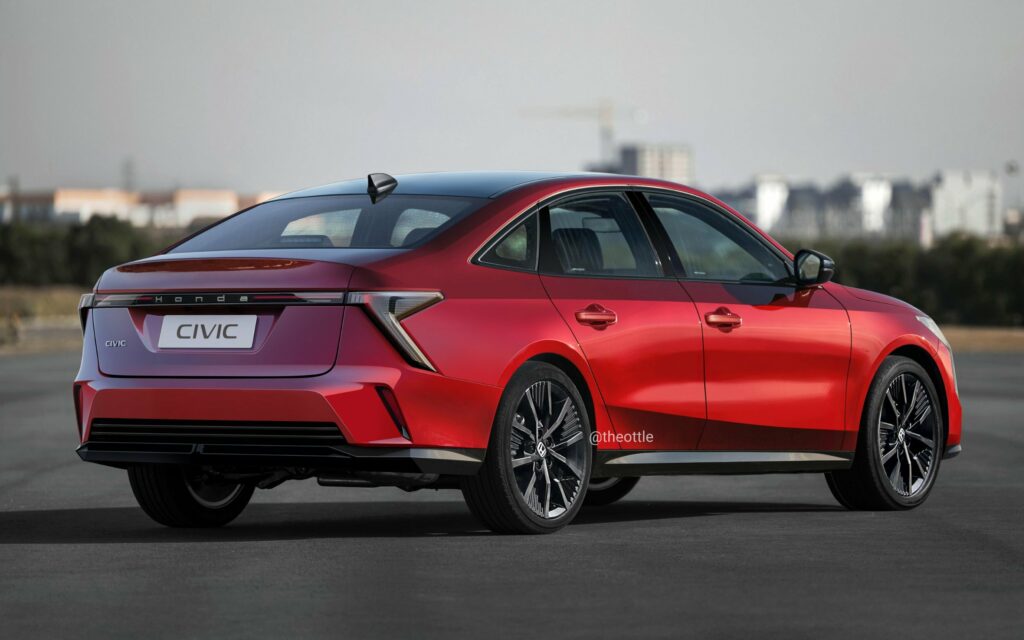
Honda recently published photos of a test prototype of the future Civic. The prototype had the body of the current generation under thick camouflage, which revealed little about the final design. This did not stop independent digital artist Theophilus Chin, who attempted to remove the masking and imagine the finished product, using Honda’s latest design language.
The artist took the existing Civic as a base and then added stylistic elements from the Honda e:NS2 electric crossover for the Chinese market. This electric car recently appeared in Japan under the name Insight, and its design elements translate surprisingly well.
Illustrations by Theophilus Chin
In the render, sharp LED lighting and redesigned bumper shapes transition to the sedan, giving the imagined hybrid more refined and, perhaps, more attractive proportions.
On the side, Chin took an unexpected turn. The body surface echoes the current BMW 5-Series sedan, which is an unusual benchmark for the Civic. However, the result is still convincingly recognizable as a Honda. The only somewhat odd moment is the rear, where the taillights wouldn’t look out of place on a car with a General Motors logo.
New Architecture for the Next Civic
Moving away from speculative styling, Honda has already revealed several important details about what lies beneath the body. The next Civic will be built on a refreshed architecture that will shed 188 pounds (90 kg) compared to the current model. Lower mass is only part of the story. Honda also promises greater structural rigidity, along with sharper steering response and more composed road behavior.
Along with a stiffer structure and wider track, the next Civic will introduce a new motion management system paired with an updated version of Agile Handling Assist. The system now includes roll control, helping the car remain more stable and balanced when cornering.
Updated Hybrid Powertrain
Regarding the powertrain, Honda is preparing the next evolution of its e:HEV hybrid system. The design combines a 2.0-liter four-cylinder engine with a pair of electric motors, and the company expects approximately a 30-percent improvement in fuel efficiency along with higher overall performance.
The Civic will also adapt the “Honda S+ Shift” system, first introduced on the Prelude coupe. It relies on software rather than hardware, simulating gear shifts through carefully controlled modulation of sound and torque, despite the lack of a traditional transmission in the powertrain.
Shared Components and Launch Timeline
Honda is also relying heavily on parts sharing. Approximately 60 percent of the Civic’s components will be shared with other future models, including the HR-V, CR-V, and Accord. The idea is simple: reduce research and development costs while accelerating the time to market for new models.
The twelfth-generation Honda Civic is expected to appear in late 2026 or early 2027, as a 2027 or 2028 model year vehicle. When it does, it will face a familiar group of competitors, led by the Toyota Corolla, which is preparing for its own generational change, as well as the Hyundai Elantra, Kia K4, and the increasingly outdated Mazda3.
The move to a new platform and the emphasis on hybrid technology clearly indicate Honda’s strategy to adapt to modern demands for efficiency and environmental friendliness, while preserving the Civic’s sporting spirit. This model’s success has always been based on a combination of reliability, practicality, and a certain dose of driving pleasure, and it seems the new generation aims to develop precisely these traits. Competition in the segment is intensifying, and the Civic will have to prove that it can offer not just economy, but also a progressive driving experience.