 by
by Bentley’s Strategy Shift
The automotive industry is undergoing a massive transformation, and the British luxury brand Bentley is also changing its plans. The company, which previously announced an ambitious strategy for a full transition to electric power, is significantly delaying these intentions. Instead of five fully electric models by 2035, now only one will appear by 2030. The rest of the model range will continue to use traditional gasoline or hybrid powertrains.
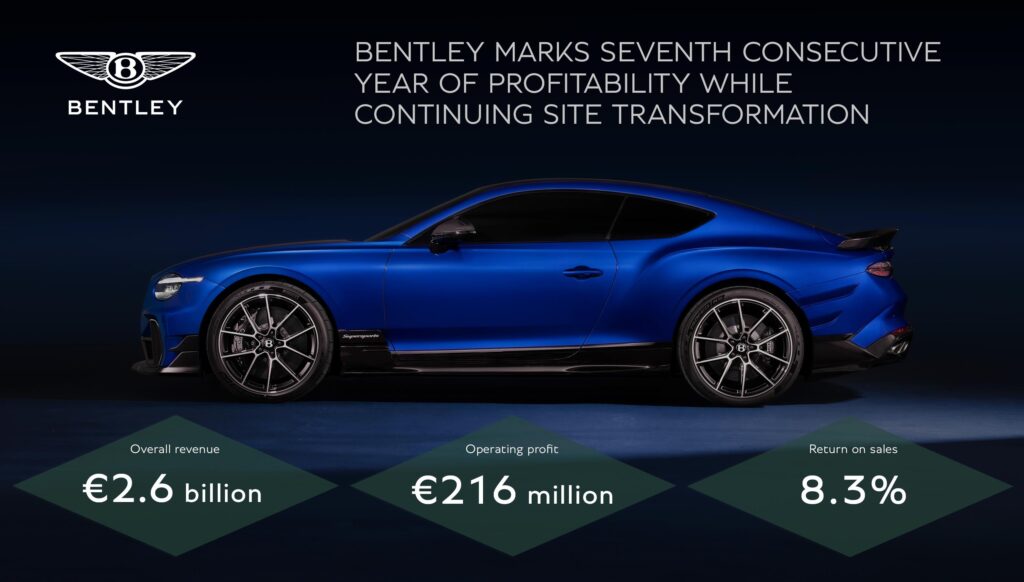
This decision was made against the backdrop of Bentley reporting its seventh consecutive profitable year, despite a sharp 42 percent drop in profit compared to last year, as well as company cutbacks.
Future Electric SUV
The first and only confirmed electric Bentley, resembling an SUV, is expected in 2027. It is planned to be unveiled by the end of this year. The car will be built on the Volkswagen Group’s Premium Platform Electric (PPE) architecture, which will also underpin other future luxury electric vehicles. Four additional electric models being developed on the now-cancelled platform led by Porsche will not be realized.
Priority on Hybrid Technologies
Instead of rapidly expanding the electric family, the brand will focus on plug-in hybrids and gasoline engines. It is possible that traditional models with internal combustion engines will remain in the lineup longer than expected. This provides an additional layer of exclusivity for future buyers.
Bentley CEO Frank-Steffen Walliser stated that the company had to rethink the entire product development plan due to market changes. This is partly dictated directly by customer demands.
Recent plug-in hybrid versions of the Continental GT and Flying Spur have been well received. The company believes these models with electrified V8 engines can meet future environmental standards without sacrificing the performance buyers expect. Walliser also confirmed that retrofitting ready-made electric vehicles for hybrid or gasoline powertrains is not part of the company’s strategy due to technical feasibility limitations.
Reasons for Caution and Structural Changes
The reasons for Bentley’s caution are quite clear. Despite the seventh profitable year, deliveries fell by five percent, with weak demand in China cited as the main factor. The 42 percent drop in profit forces the company to be selective in its investments. Bentley is also cutting about 140 jobs in the UK. According to Walliser, the total number of reductions could reach 275 employees, mostly office workers.
Part of the changes is related to decisions by the parent Volkswagen Group, which abandoned the development of the Scalable Systems Platform led by Porsche. Several future Bentley products were supposed to be based on it. Without this platform, the brand had virtually no choice but to abandon its plans. Nevertheless, a full transition to electric power remains a long-term goal, but it will not happen soon.
This situation with Bentley is a vivid example of how even the largest and wealthiest automakers face the unpredictability of the market transition. On one hand, there is pressure from regulators and the long-term trend towards decarbonization; on the other, there are real economic indicators and customer preferences, which are not always ready for radical changes. The success of Bentley’s hybrid models shows that for the luxury segment, combining traditional values, such as engine power and sound, with elements of electrification may be the most balanced path for the coming years. This calls into question the universality of transition timelines for the entire industry and points to the possible formation of different speeds and paths for different price and product niches.