 by
by Three Years of Evolution: How Toyota Built the Mid-Engine Prototype
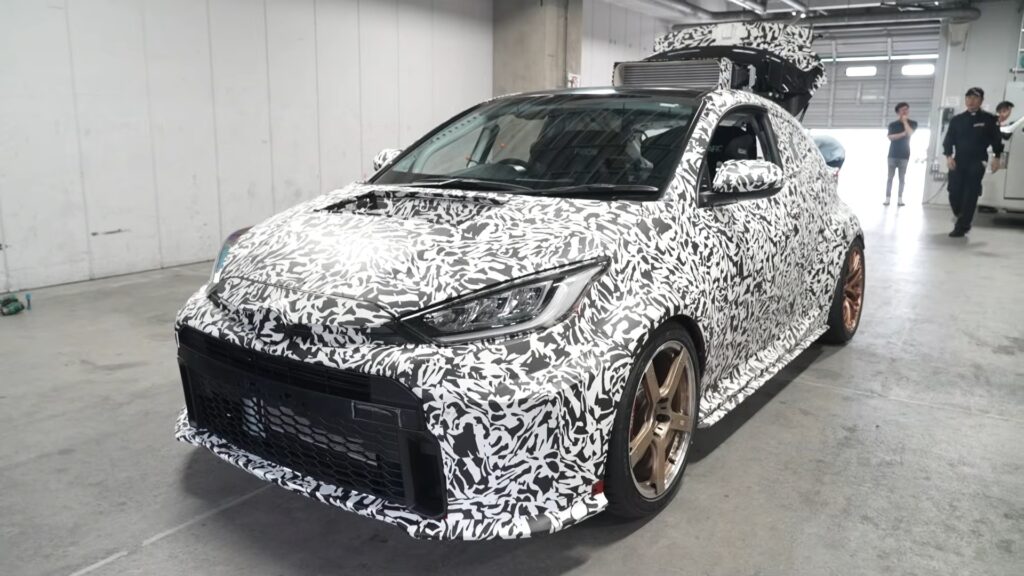
Three years have passed since the Toyota Gazoo Racing team began building a mid-engine prototype of the GR Yaris. The main goal of this project is to master such a layout perfectly before launching a production model. Now the work is nearing completion, paving the way for focusing on entirely new MR2 and Celica models. According to numerous rumors, both of these cars will share the same mid-engine chassis after their debut.
Openness Instead of Secrecy
Automakers usually keep such projects completely secret, but Toyota did the opposite. Over the past three years, the company has regularly published materials about the difficulties and achievements in the process of building such a car. Recently, a 90-minute documentary film was released, detailing the entire development journey. This provides a fascinating insight into one of Gazoo Racing’s most ambitious projects to date.
Endurance Testing
Toyota tested the mid-engine layout in the Concept M racing concept, built on the basis of the GR Yaris. Over three years, the car underwent a series of improvements as the company struggled for the perfect operation of all systems. The culmination was the prototype’s participation in a 24-hour endurance race—the most stringent reliability test.
Technical Features of the Layout
The new layout is a mirror image of the GR Corolla and GR Yaris configuration. All-wheel drive is retained, but now it uses front and rear Torsen limited-slip differentials. The driveshaft goes from the rear-mounted transmission to the front axle. Engineers claim the car can send all of its torque to the rear axle or up to half to the front. They also experimented with a 70/30 split favoring the front, but this led to severe understeer.
New Engine: More Power from Smaller Displacement
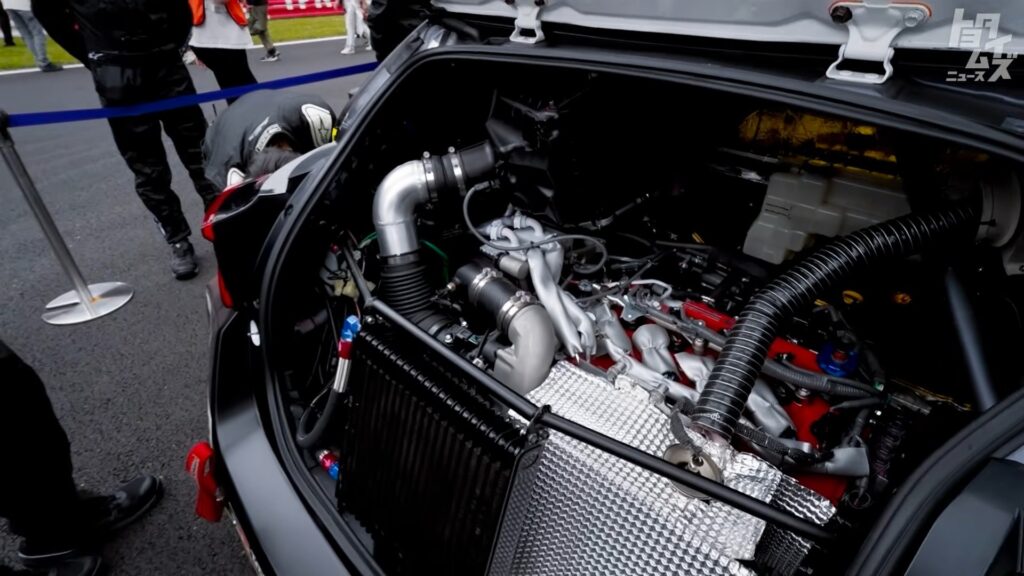
The heart of the Concept M prototype, which is expected to debut in the new MR2 and Celica, is the new Toyota G20E engine. This is a 2.0-liter turbocharged four-cylinder engine with direct injection. It is set to replace the 1.6-liter turbocharged three-cylinder engine used in the GR Yaris and GR Corolla. The idea is that the new unit will be more powerful and compact than the 2.4-liter turbo engine installed in other Toyota models, including SUVs and pickup trucks. It is expected that the engine will eventually produce over 100 horsepower per cylinder.
Overcoming Cooling Difficulties
Ensuring proper cooling for this engine became one of the key challenges for the GR team. This issue appears to have been resolved. In total, six different generations of prototypes were developed. The latest, the sixth, recently took part in a 24-hour race in the Super Taikyu series at Fuji Speedway.
Project Scale and Future Plans
Chief GR engineer Naohiko Saito reported that plans include at least 14 additional iterations of the all-wheel drive test platform. At least 500 Gazoo Racing employees are involved in the program. This is a very exciting time for Toyota fans. Early feedback from those who have already tested the new 2.0-liter turbo engine in the mid-engine GR Yaris is very positive. This bodes well for future small sports models, such as the revived MR2 and Celica, which have been talked about for years and now seem very close to production.
It is worth noting that such a large-scale and open approach to development indicates the seriousness of Toyota’s intentions to return to the affordable sports car segment. An investment of 500 engineers and 14 future prototype iterations is not just an experiment, but a clear signal to the market. If the new G20E engine truly lives up to expectations and produces over 400 horsepower, and the mid-engine chassis proves its reliability in 24-hour races, then the new MR2 and Celica could become a real sensation, offering supercar performance at a much more accessible price. This also demonstrates that Toyota is serious about competing not only in the hybrid and electric segments, but also in the world of “hot” gasoline sports cars.