 by
by Quiet Debut at Goodwood
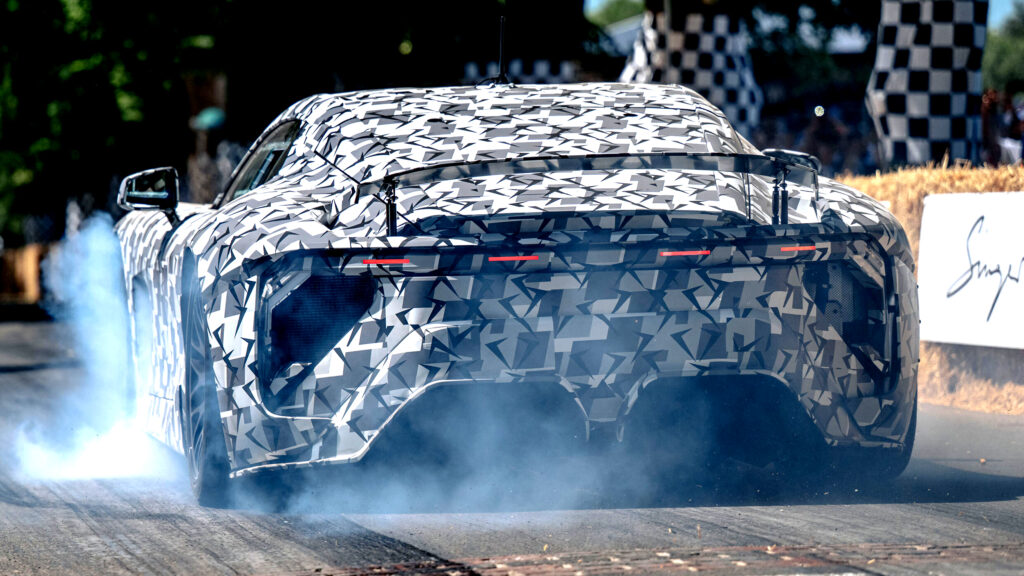
Among countless high-revving supercars and hypercars with large engines at the Goodwood Festival last week, the future Lexus LFA made an inconspicuous and very quiet dynamic debut. The successor to the company’s iconic supercar will be fully electric.
Shared Architecture with Toyota GR GT
Lexus unveiled the prototype of the new LFA back in December, showing it alongside the Toyota GR GT, which shares an aluminum architecture. However, while the GR GT uses a powerful V8 engine, the new LFA will be electric — a far cry from the original car with its screaming, Yamaha-tuned V10 engine.
First Lexus with Solid-State Batteries
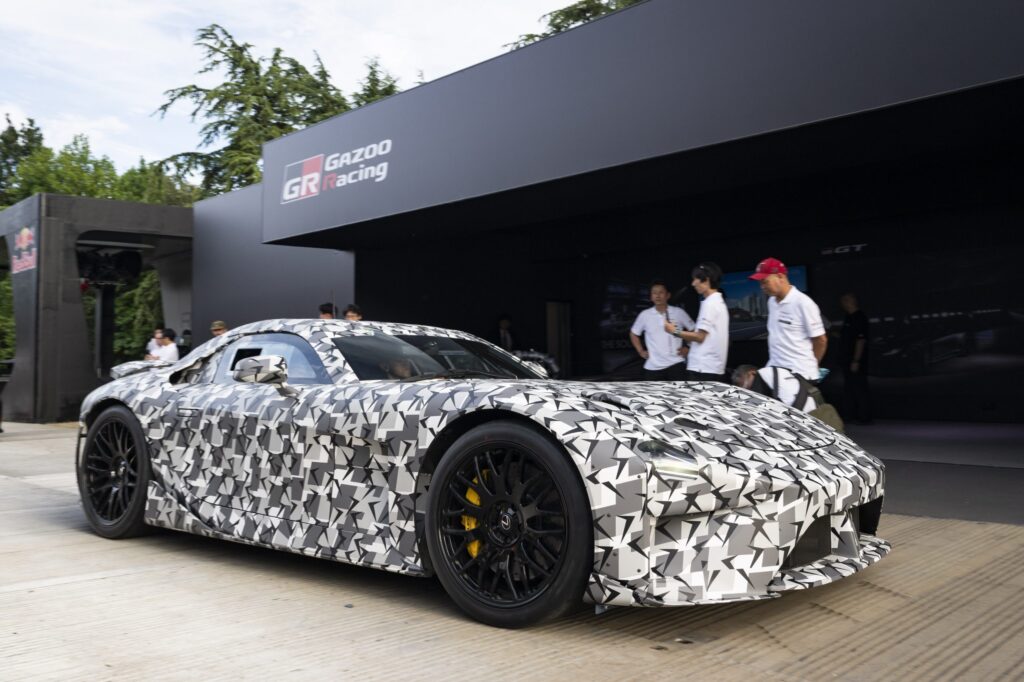
According to Autocar, the new LFA will be the first production Lexus to utilize advanced solid-state batteries. Toyota has spent years developing them, and they are now nearly ready for road use. Solid-state cells store more energy in less space than conventional liquid batteries, which is their key advantage.
New Approach to Design and Sound
Shogo Kasamatsu, designer of the LFA concept, noted that Lexus wants to change people’s perception of performance EVs. The restrained look of the concept recalled the original LFA, which he described as “a very modest design, very artistic, and based on true function.” The car was created to convey this message, not to keep pace with current Lexus design.
Yukihiro Yukita, LFA program general manager, said Lexus wants to convince supercar buyers to choose the LFA over conventional internal combustion engine vehicles. He acknowledged that weak demand for expensive performance EVs is the biggest obstacle for the program, but Lexus intends to lead the transition from fuel-powered supercars to electric ones.
Genuine Feel Without Simulation
Yukita stated:
“What I get from the market is that BEVs are a fake because we imitate the sound [of an internal combustion engine], but that’s not what we want to do.”
Lexus is not interested in following Porsche, Hyundai, and Mercedes-AMG by simulating gear shifts or adding engine noise. Yukita wants drivers to “feel as if they are driving with an engine” without cheaply copying it.
He added:
“We don’t just want to reproduce the sound of an engine; we want to redesign the sound itself.”
The engineering teams will remove unnecessary noise and vibration, then rework what remains, sharpening the sensory experience rather than creating an artificial one. He acknowledged that EVs lose the sound and vibration that appeal to a driver, but electric motors offer responsiveness and linearity that no internal combustion engine can provide.
This sounds quite exciting, but it is hard to imagine how Lexus can come even close to the feeling of the old V10.
In conclusion, the new LFA promises to be not just another electric vehicle, but a true breakthrough in the perception of electric supercars. The rejection of sound imitation and gear shifting in favor of an authentic experience, combined with the use of solid-state batteries, could make it a unique player in the market. However, whether it can compete with the emotional appeal of traditional internal combustion engines remains an open question, which only time and customer reaction will decide.