 by
by Why automakers are changing their approach to audio
Many automakers still improve audio systems in a simple way: they add more speakers. Some cars now come off the assembly line with more than 30 speakers, and the Nio ES9 has 47 speakers — a record among modern production cars.
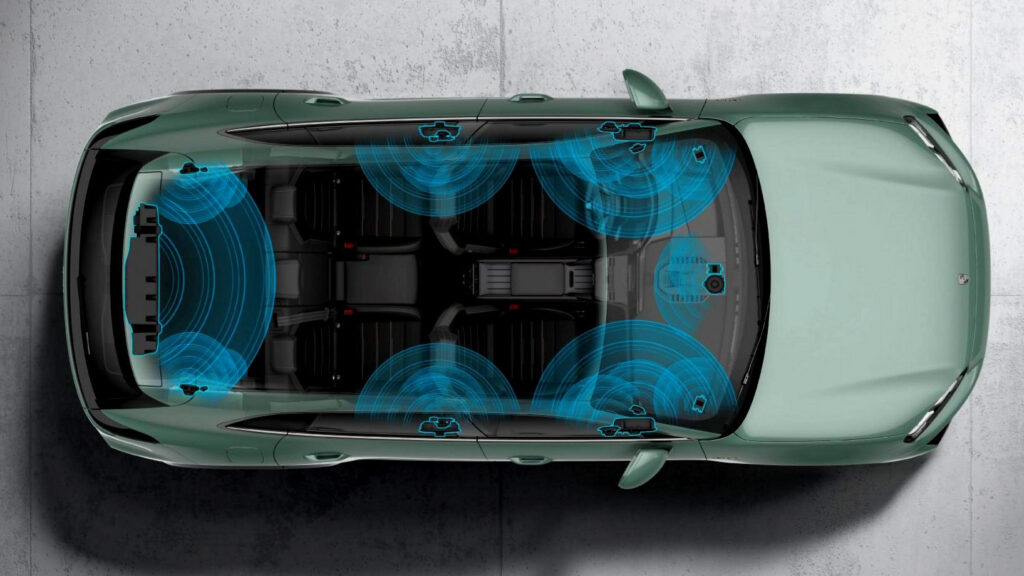
However, Porsche chose a different path. Together with the University of Stuttgart, the company developed a new audio system using gallium nitride (GaN) semiconductors. The technology has already been patented and will hit the market next year.
What GaN semiconductors provide
Gallium nitride chips are typically used in USB chargers. They make devices smaller, consume less energy, and do not overheat as much as traditional chargers with silicon chips. In its speakers, Porsche uses GaN semiconductors to reduce energy losses and minimize heat generation. This makes cooling radiators about 20 percent lighter.
This makes the amplifier lighter and more compact, and also allows the size of passive components to be reduced. In addition, GaN transistors provide higher operating frequencies and significantly lower switching losses. Moreover, reducing the amount of aluminum needed for radiators allows Porsche to cut CO₂ emissions in production.
When the technology will arrive in production cars
The first system to receive GaN technology will be the Burmester 3D High-End Surround Sound offered in several Porsche models. The new chips will be used to convert the voltage needed to power the 400-watt subwoofer amplifier. Work on the technology began in mid-2023, and in the future GaN chips could be used in other vehicle systems.
“GaN is ideal wherever power is converted,” said Dr. Lars Heiken, head of strategic semiconductor management at Porsche. “Many areas of application are possible in Porsche sports cars, and we are exploring them in more detail. For example, the semiconductor can be used to convert energy in high-voltage systems. This makes GaN particularly interesting for high-voltage systems in electric sports cars. Quality and tangible customer benefits are the foundation of all our considerations.”
What this means for future Porsches
The shift to GaN could go far beyond audio systems. Reduced heat generation and increased energy efficiency make this technology very promising for electric Porsche models. If GaN begins to be used for power electronics in high-voltage systems, it could help reduce component weight and improve the overall efficiency of electric vehicles.
In addition to technical advantages, the environmental aspect is also important. Reducing the use of aluminum in radiators shrinks the production footprint. So the technology that debuts in sound systems has every chance of becoming the foundation for wider adoption in future models, including electric sports cars.