 by
by The biggest software transformation in R1 history
One of the main arguments for a software-defined vehicle is that the car in your garage can become significantly better a few years after purchase. Rivian has decided to put that promise into practice by introducing the largest software update for the R1. Importantly, the new version will also reach first-generation models.
The manufacturer has already started rolling out update 2026.31, which moves all R1T and R1S models to RivianOS 2. The company is not leaving early customers behind: both the first and second generations of the R1 are moving to the same software platform along with the new R2.
Interface and graphics
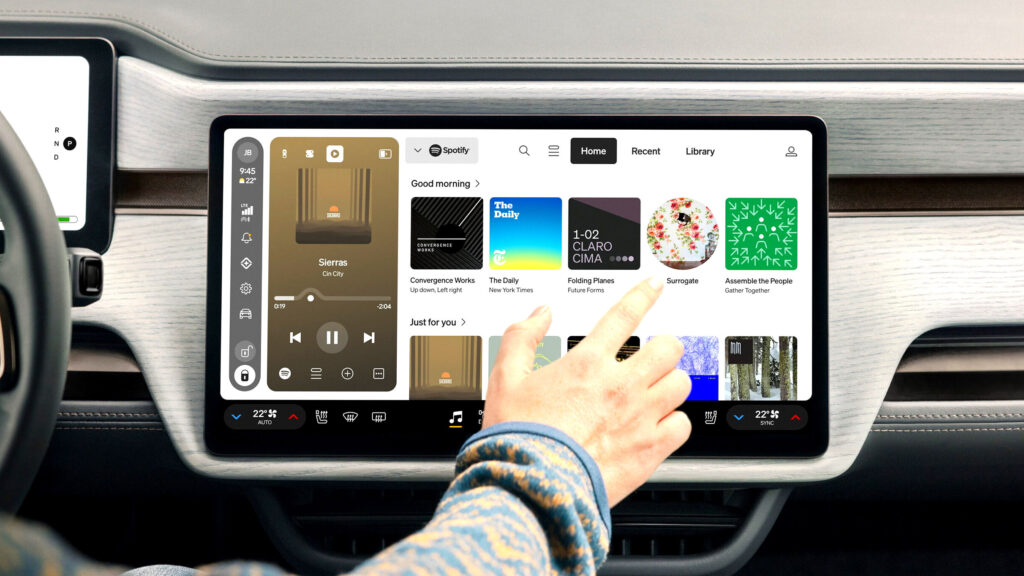
The most noticeable changes relate to the screen layouts. Rivian has redesigned the interface, adding configurable quick controls and a media player that can be placed to the left or right of the central display. There is also a vertical status bar and a significantly updated settings menu with universal search and contextual options.
The graphics have also been redesigned, although this is where differences in hardware begin to show. Second-generation R1 models and the R2 use Unreal Engine 5 for 3D rendering of the vehicle and its surroundings. First-generation R1 models remain on Unreal Engine 4. Rivian says this helps maintain performance on older displays. That seems like a reasonable compromise: owners of early models cannot get new hardware, but they still get many useful features.
Navigation with Google Maps and Waze data
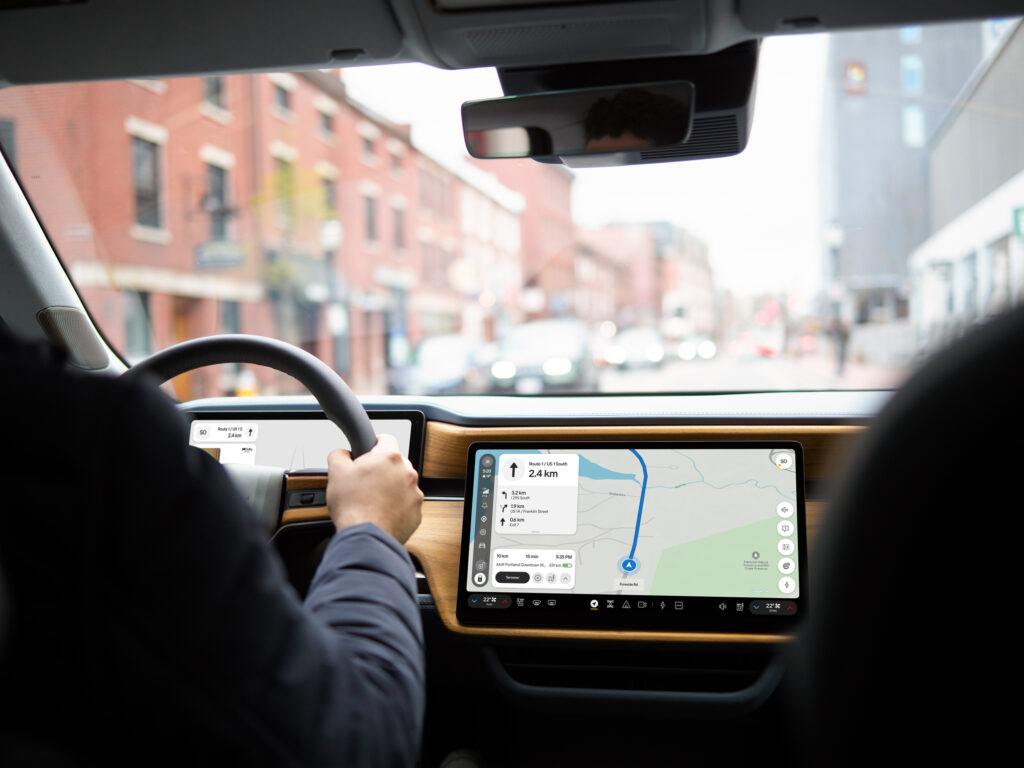
Arguably more useful than the fancy graphics are the new navigation alerts. Rivian has integrated Google Maps data about police presence and speed cameras directly into the navigation system. The information can come from local authorities and third-party sources, as well as real user reports from Google Maps and Waze.
In addition, Connect+ subscribers get even more capabilities. A separate weather app has been added with current conditions, air quality data, and a ten-day forecast. You can also create, view, and modify active trip routes through the Rivian mobile app.
All of this runs on the platform Rivian calls Unity Intelligence. Second-generation R1 and R2 have enough computing power to process data locally, while both generations of R1 get enhanced cloud-based voice features and an updated driver display layout.
Privacy under control
Despite the active implementation of artificial intelligence, Rivian has not forgotten about privacy. Owners can turn off hot-word voice activation, limit location sharing, and change driver profile data settings.
Why this matters for the first-generation R1
The most interesting part of this update is not even the individual features, but the fact that the first-generation R1 receives virtually the same design language as the brand-new R2. This is exactly what OTA updates should provide, and it is far more compelling than an update that merely moves a few icons around.
Update 2026.31 is already starting to reach eligible R1 and R2 models. Rivian notes that availability may depend on the specific vehicle.
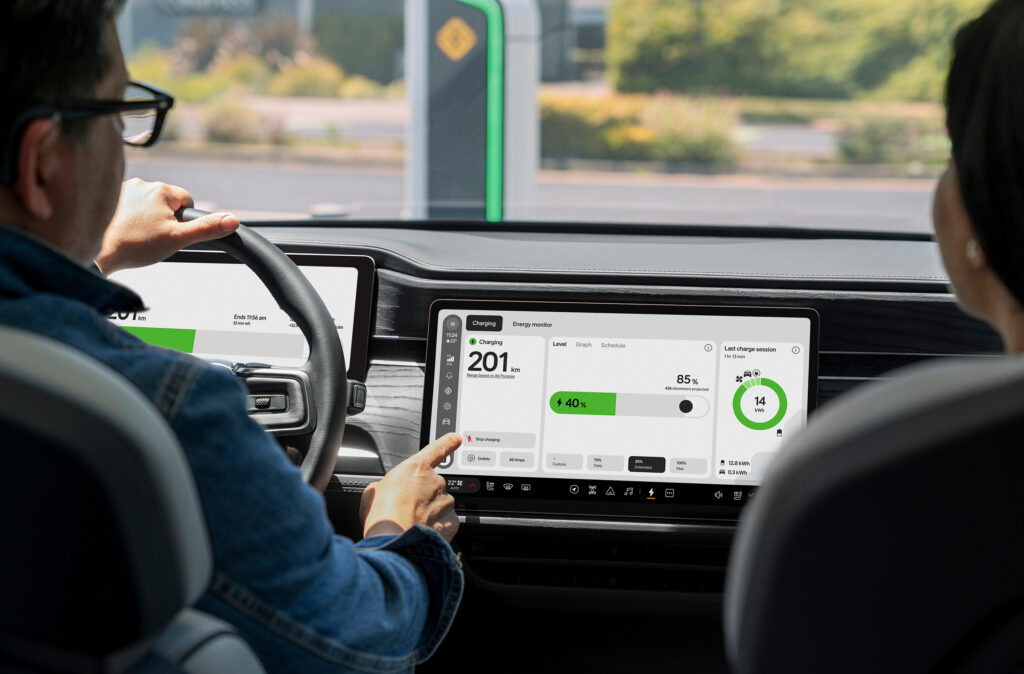
Photo: Rivian
This approach shows that Rivian takes support for already-sold vehicles seriously, not just new models. Many automakers promise long software support, but in practice older generations often receive only minor fixes. Here, the first-generation R1 gets access to the same digital ecosystem as newer cars, even if some capabilities, such as heavy 3D graphics, remain limited by older hardware.
Also noteworthy is the deeper integration with Google Maps and Waze. It makes in-car navigation more lively and useful in the real world. And the flexible privacy settings let drivers decide for themselves how much data to send to the cloud. This kind of balance between new technology and owner control will likely help Rivian retain customer trust in the long run.