


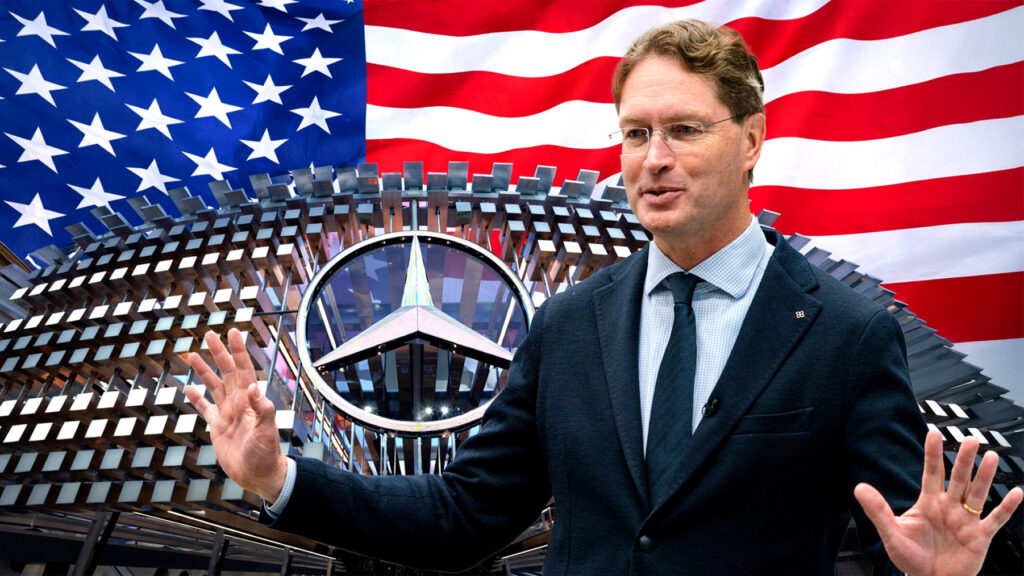
Mercedes Rejected Trump Administration’s Proposal to Move to the U.S.
Mercedes-Benz CEO Ola Källenius revealed that the administration of former U.S. President Donald Trump tried to persuade the automaker to relocate its headquarters to the United States. However, the German conglomerate rejected this idea.
According to Källenius, Commerce Secretary Howard Lutnick offered the company tax breaks and other incentives to attract it to America. Similar proposals can be effective in persuading companies to move from one state to another, but when it comes to foreign corporations, the situation becomes significantly more complicated.
Källenius made it clear that he did not even consider the proposal, stating: “The three-pointed star has been a global company for over 100 years, but our roots are in Swabia. These roots cannot – and should not – be torn from the ground.”
Context and Consequences of Trade Policy
The proposal, according to reports, was made almost a year ago, indicating an early period of Trump’s second administration. Although the exact circumstances remain unclear, it is known that the U.S. actively pressured automakers to open production in America, using high tariffs for this purpose.
Despite Mercedes having a huge plant in Tuscaloosa, Alabama, the trade war forced the company to announce plans to start production of the GLC model in the U.S. from 2027. This model will be produced alongside the GLE, GLE Coupe, GLS, EQE SUV, and EQS SUV.
Investments in the American Economy
In addition to production facilities, the company also announced the creation of a new research and development center in the state of Georgia. It will be located near Sandy Springs and will be part of the conglomerate’s multi-million dollar investments in this region.
This story well illustrates how global corporations balance pressure from governments, economic feasibility, and their own identity. Mercedes’ decision to remain in Germany, despite attractive financial offers, underscores the importance of historical roots and brand for such companies. At the same time, expanding production and opening an R&D center in the U.S. demonstrates a pragmatic approach to the global market and a response to protectionist policies. Such steps allow companies to reduce risks associated with trade barriers while preserving their cultural and corporate heritage.