


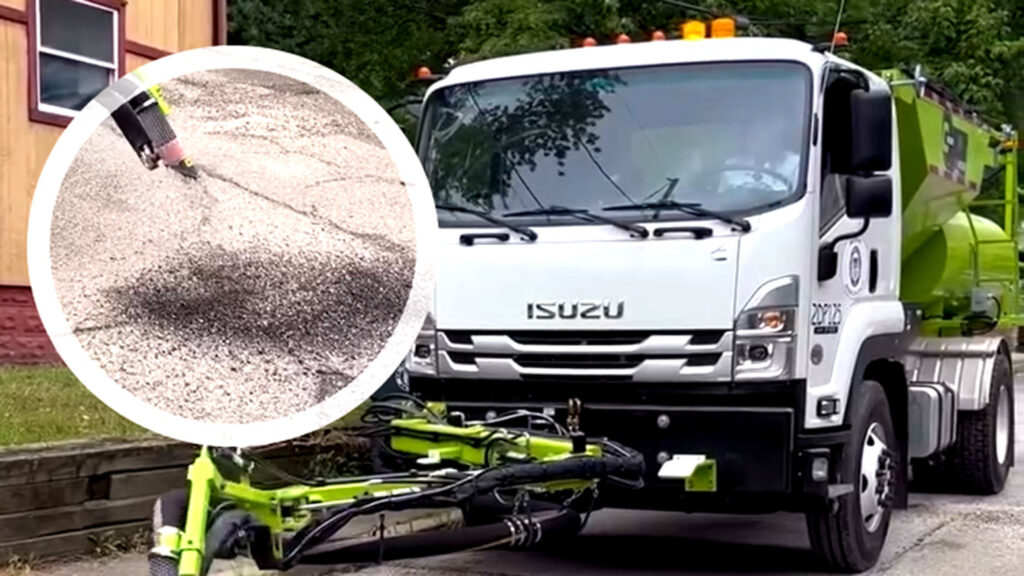
Akron implements an innovative method to combat potholes
Pothole season has arrived in many regions of the United States, and the city of Akron, Ohio, has acquired a new tool to fight them. Instead of traditional crews that block roads for hours to excavate and fill material, the P5 Durapatcher device is now used. It allows one person to repair a pothole in less than two minutes. Each such unit costs the city $300,000, but according to officials, the investment is already paying off.
Efficiency compared to traditional methods
Previously, as on many roads today, repairing a single pothole required up to five workers. They would remove debris, fill in new material, and compact it. However, such patches often proved short-lived. The new DuraPatcher machine allows one operator to perform all the work in two minutes without leaving the cab.
The operator performs four steps: first, uses compressed air to remove debris from the hole, then sprays a liquid for better adhesion, next injects a mixture of asphalt aggregate and binding materials, and finally adds a layer of dry stone on top, creating a surface ready for traffic. The entire process is controlled by a joystick from the cab.
Advantages and technologies
Unlike conventional patches, which might last a season if lucky, Akron claims this method provides a permanent repair. The spray-and-injection method is considered more durable because the material tightly bonds with the existing pavement, rather than just lying on top.
DuraPatcher can operate at temperatures as low as 5 degrees Fahrenheit (approximately -15°C) thanks to a 300-gallon heating tank that keeps the material in a workable state. This allows for repairs almost year-round.
Positive changes in the city
Akron has significantly increased road restoration volumes: instead of 20 miles annually, now 50–60 miles are repaired. This is serious progress in solving a problem that troubles both drivers and road workers.
The implementation of such technologies not only speeds up the process but also potentially reduces long-term road maintenance costs. The ability to work in cold weather expands the window for conducting work, which is critically important in regions with harsh winters. The success of this initiative in Akron could serve as an example for other cities seeking effective solutions for infrastructure maintenance.