


Results of the New Test
A small Finnish startup, Donut Lab, which claims to be developing the first solid-state battery for electric cars, has published the results of a new test. The goal was to dispel doubts about the nature of their technology. According to the company, their battery retains 97.7 percent of its charge after ten days of inactivity. However, skeptics may still require additional proof.
Response to Criticism
This third test follows a recent demonstration by Donut Lab of the charging speed of their solid-state cells. It aims to refute the assumption that the company created not a real battery, but merely a supercapacitor. To address these claims, Donut Lab, in collaboration with the Finnish Technical Research Centre (VTT), measured how slowly the cell loses charge in standby mode.
Methodology for Measuring Loss
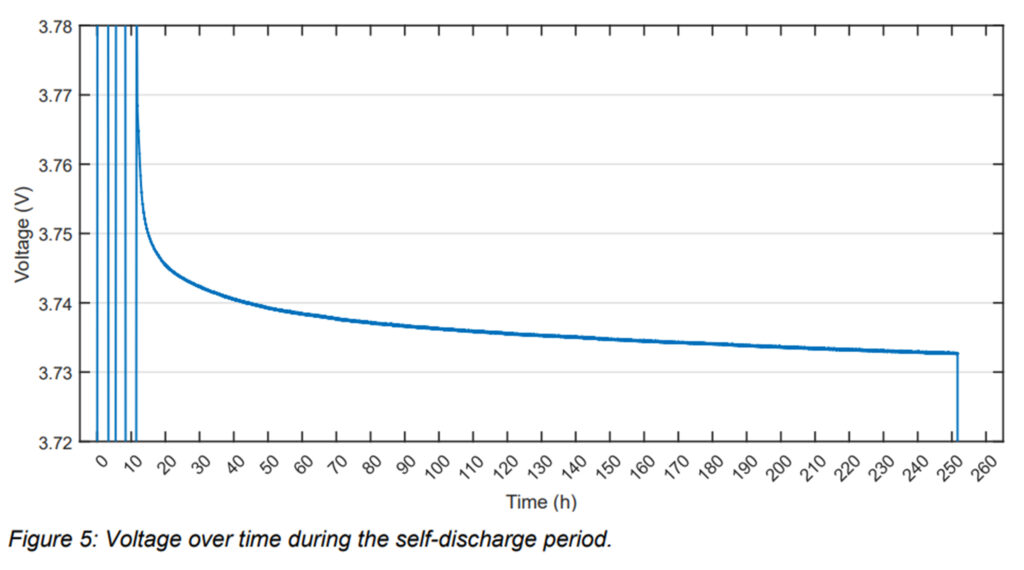
For the self-discharge test, the cell was charged to approximately 50 percent and left idle for 240 hours. During the test, the temperature fluctuated within 22-28°C, and the cell voltage was recorded every 10 seconds.

Data Obtained
The results turned out to be interesting. During the first hour, the battery voltage dropped by 103 mV, although the company explains this primarily as voltage relaxation rather than true self-discharge. By the end of the 240-hour test, the voltage had dropped by another 12 mV, resulting in a total loss of 2.3 percent over the ten-day period.
While this is a good result, it is not incredible. Typical lithium-ion batteries can lose about 5 percent of their charge in the first 24 hours, after which the self-discharge rate usually slows to 1-2 percent per month. Donut Lab insists that the obtained data still proves that their technology is not a supercapacitor, which would lose significantly more charge when idle.
Developer’s Position
Since the Donut battery was introduced, there have been many assumptions and theories about whether it is a supercapacitor. In its simplicity, this test proves it is a battery. Supercapacitors charge and discharge quickly, but they also lose charge quickly when not in use. The Donut battery behaves like a battery and can hold its charge significantly longer.
This opinion was expressed by Donut Lab’s Technical Director, Ville Piipopo.
Further independent trials and the publication of full technical reports will be key to finally confirming the claimed characteristics. Donut Lab’s success could become an important step for the entire industry, as solid-state batteries promise higher energy density, safety, and charging speed compared to traditional lithium-ion solutions. However, the path from a laboratory sample to mass production meeting automotive standards remains long and warrants justified caution from experts.