


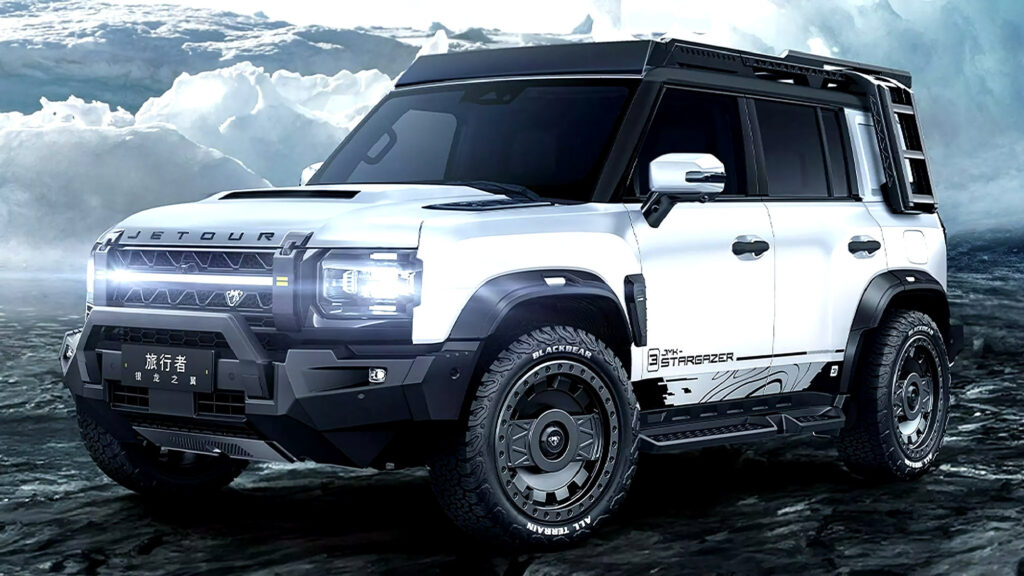
A deep divide in attitudes toward Chinese automotive brands is observed in the American market. On one hand, a significant portion of buyers shows interest; on the other, dealers demonstrate strong resistance. Price may be a key factor for buyers, but the issue of trust remains decisive.
Theoretical Advantages vs. Real Barriers
In online discussions, one can often see someone citing an example of an advanced Chinese electric car, claiming it is better than American counterparts. However, there is a huge “but”: such a car is practically not available in the US market.
It is not federally certified, not sold through American dealers, lacks a service network in the country, and its price does not include tariffs. It is a theoretical alternative, not a real one.
New research helps understand why this happens: Americans form opinions about Chinese automakers without ever having seen their cars with their own eyes.

Consumer Divide and Generational Difference
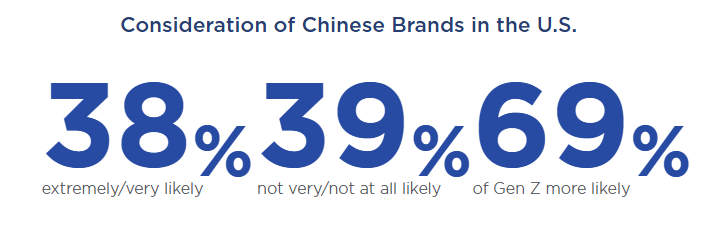
According to Cox Automotive research, consumers are sharply divided. About 38% of buyers state they are extremely or very likely to consider a Chinese brand. Another 39% say the opposite—that it is extremely unlikely. Among Generation Z buyers, openness rises to an impressive 69%, so if Chinese brands do enter the market, their marketing will likely be youth-oriented.
Such a divide means any initial success will be concentrated in certain demographic groups, not spread across the entire market, creating both opportunities and risks for existing players.
Awareness and Knowledge Gap
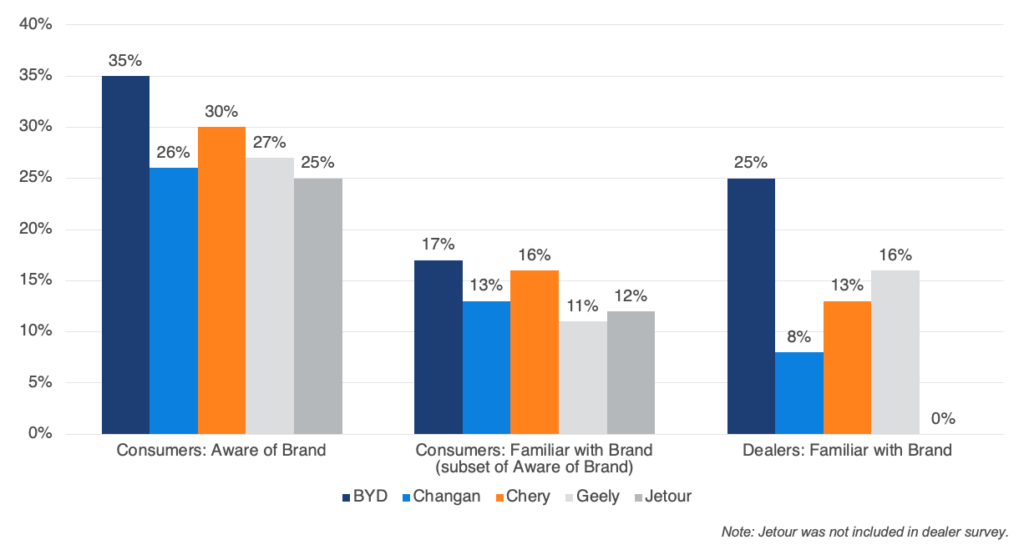
At the same time, actual awareness remains low. Almost half of the surveyed stated they are familiar with Chinese brands, but specific knowledge about brands drops sharply. BYD is the most well-known brand, known by just over a third of respondents. Only 17% stated they have deeper knowledge about it. This is a significant information gap.
Dealer awareness is even lower: only about a quarter reported any familiarity with BYD, reminding us how preliminary these conversations remain at the retail level.

Buyers vs. Sellers: A Difference in Desires
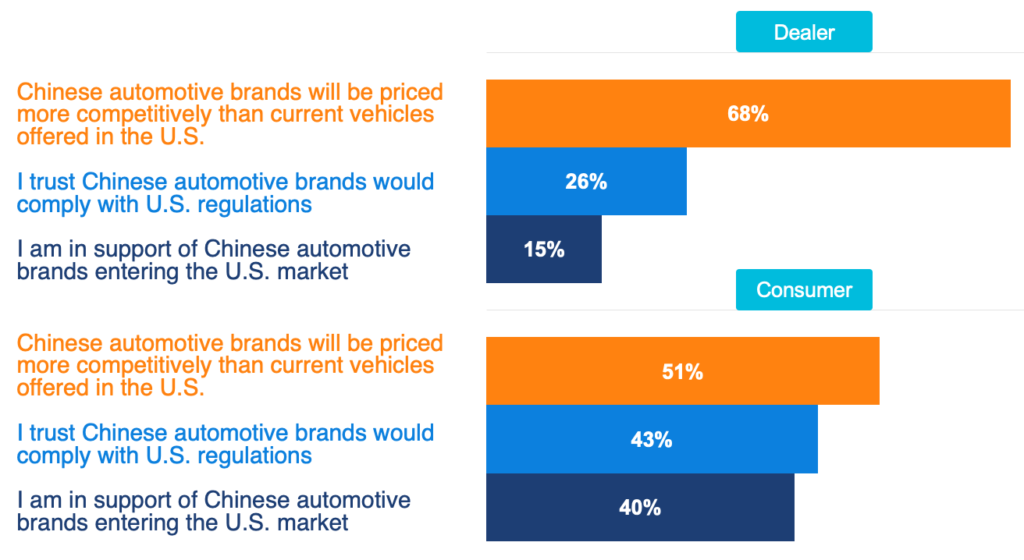
While about 40% of consumers express interest in the appearance of Chinese brands in America, dealers, who hold real power, are much cooler toward the idea. Only 15% said they would like to see these brands in the US. Moreover, 92% of dealers expressed concern about selling Chinese cars. They cited various reasons: from reliability and safety to the long-term viability of the brands. This hesitation matters even more than the fact that about 60% of buyers are uninterested.
The research also showed that about 70% of dealers would change their business strategy if Chinese brands entered the market, indicating that behind the skepticism may lie preparation.
Partnerships could change the equation. When consumers were asked to consider a Chinese automaker partnering with a well-known American brand, purchase interest sharply increased to 76%. This indicates that brand alliances can influence acceptance as strongly as price or product.
What Attracts Buyers to Chinese Cars
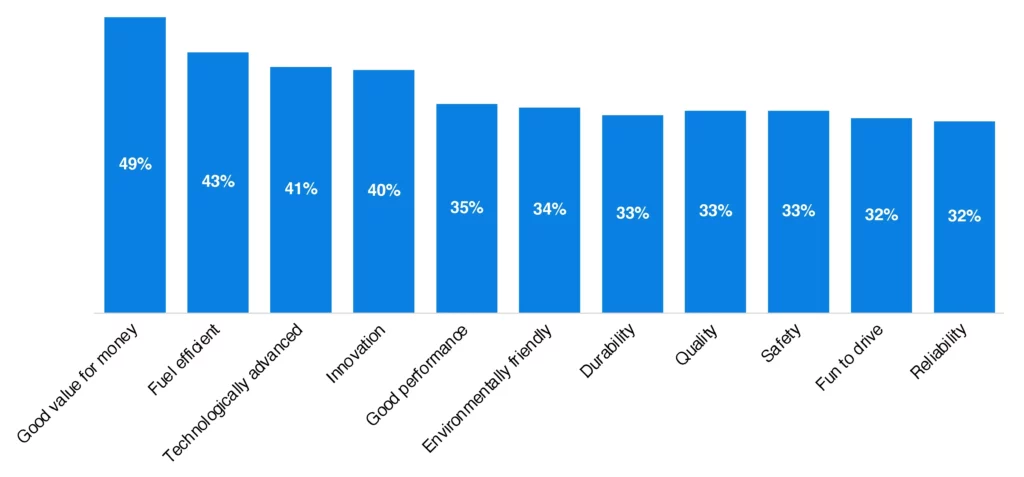
Interest seems not to depend on technology, design, or practicality. It all comes down to price. Almost half of consumers rate them positively for affordability, and 35% give high marks for performance. Undoubtedly, we have seen how prices for Chinese cars are significantly lower than practically all other brands. However, ratings for durability, safety, quality, and reliability remain lower, and it is precisely these fundamental characteristics that define mass-market purchases.
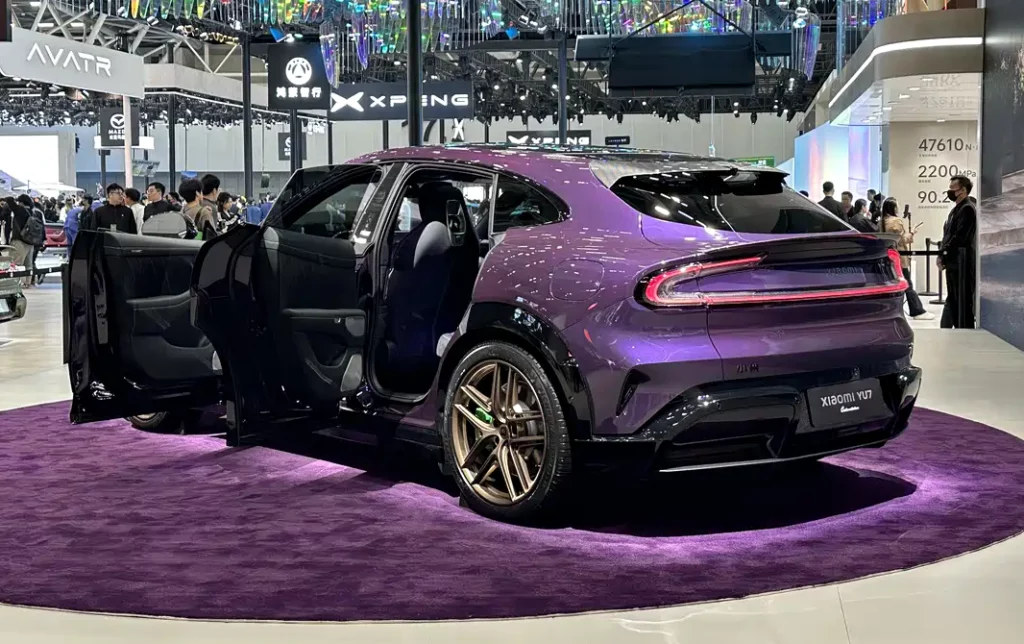

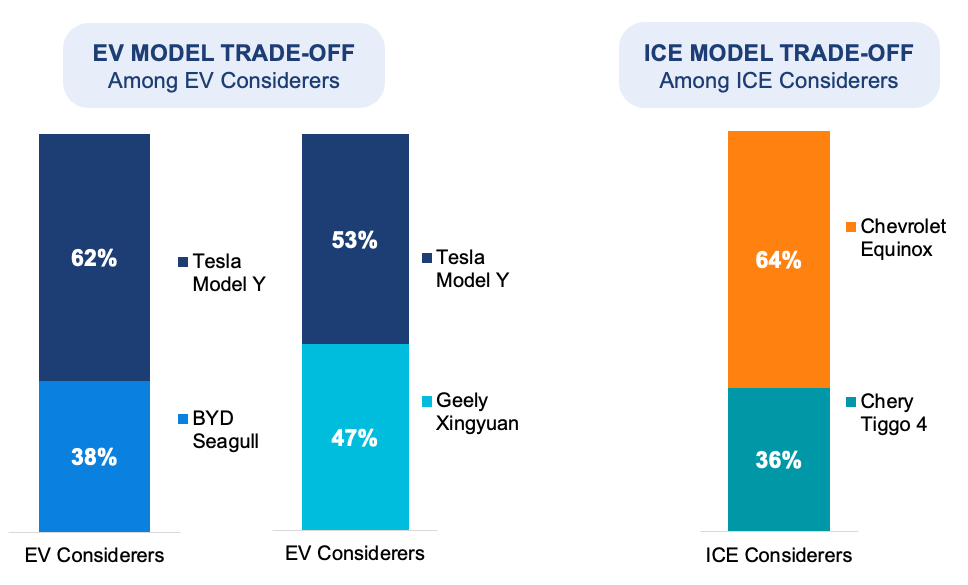
When consumers directly compared specific models, the Tesla Model Y maintained a clear advantage among EV buyers, and the Chevrolet Equinox led among ICE vehicles, highlighting the strength of established brands’ positions.
However, when significant price discounts were added to the comparison, a substantial portion of buyers indicated they would change their choice, especially among lower-income and more price-sensitive groups.

The Advantage of Trust and Familiarity
Established American brands still hold an advantage, supported by trust and familiarity. Price can narrow this advantage, especially among more cost-sensitive buyers, but not destroy it. This is why those people in the comments advising others to buy a BYD Dolphin instead of what is actually available may have to wait a long time before such advice makes sense.


The research data clearly outlines the path Chinese brands must take to succeed in the US. It is not just a matter of officially entering the market, but also years of work building reputation, investing in a service network, and overcoming dealer skepticism. Generational dynamics give them some hope for the future, but the current gap between price attractiveness and quality perception is a critical barrier. The situation could change faster if major American auto giants begin deeper cooperation with Chinese companies, lending them their “shield” of trust. For now, the US market remains a fortress, the storming of which requires not just an attack with low prices, but a long siege.