


Leadership Changes in Jaguar Land Rover Design
Jaguar Land Rover has reportedly fired its chief designer and creative director, Gerry McGovern. This decision is part of significant organizational changes at the automaker.
Key facts of the situation:
Circumstances of Dismissal Remain Unclear
The details of the event are not yet complete. According to information, McGovern was informed of his dismissal on Monday. Some sources even report that he was “escorted from the office,” which may indicate a tense atmosphere.
The automaker refuses to comment on the reasons for this drastic step. However, it occurred shortly after other management changes: CEO Adrian Mardell stepped down, and his place was taken by P. B. Balaji, the former CFO of the parent company Tata Motors. This has led to speculation that the owner is seeking greater direct control over Jaguar Land Rover’s operational activities.
Untimely Move Ahead of Brand Relaunch
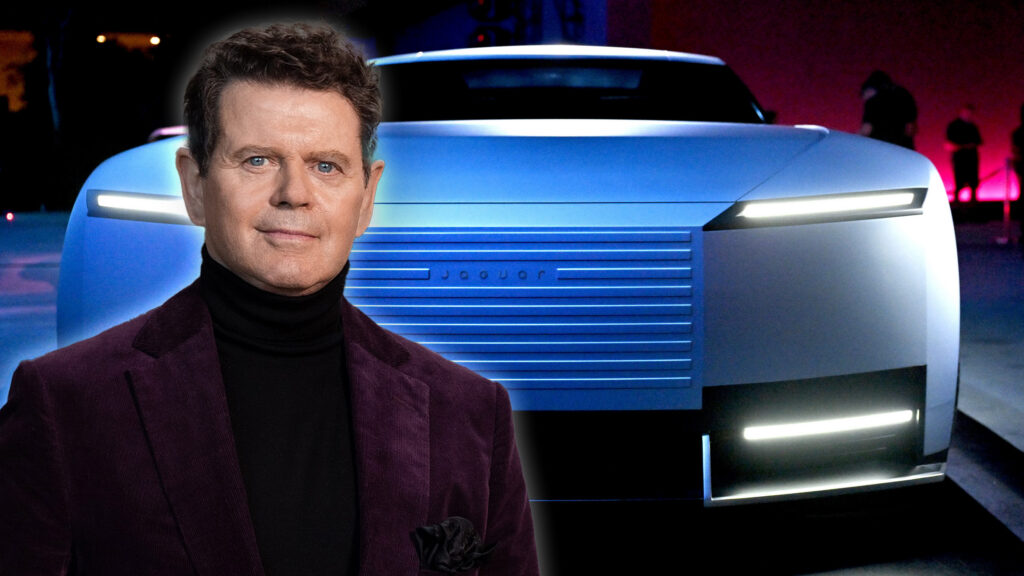
The change at the highest creative level is happening at a critical moment for the company. Jaguar is preparing for a global relaunch, the main symbol of which is to be the electric Gran Turismo, whose concept (Type 00) has already been presented to the public. The production version of the car, expected to cost around $130,000, is set to debut next year.
McGovern, who was responsible for the creative direction of all the group’s brands—Range Rover, Defender, Discovery, and Jaguar—was the architect of this rebranding. His departure raises questions about the future of the visual identity, especially of the Jaguar brand, whose relaunch has already sparked controversy.
He was responsible for the creative direction and curation of the brands – Range Rover, Defender, Discovery, and Jaguar.


Long Career in the Automotive Industry
Gerry McGovern has deep roots in automotive design. He earned a degree in industrial design from Coventry University and later a master’s degree from the Royal College of Art in London. His career included work at Chrysler, Peugeot, Rover, and Ford.
Returning to Land Rover in 2004, he played a crucial role in the brand’s transformation. He is credited with the successful reimagining of the Defender model, as well as expanding the lineup with such successful models as the Range Rover Evoque and Range Rover Velar, which found their audience.


Dismissing a key figure on the threshold of a brand’s new life stage is always a risky move. The success of the Jaguar relaunch, built on a radically new design vision, is now in question. The new leader, whoever it may be, will inherit a clearly defined but not yet implemented strategy and will have to not only bring it to life but also, perhaps, defend it before stakeholders. The stability of design leadership is often key to brand recognizability, and this sudden change could affect the perception of Jaguar as an innovative and reliable force in the premium electric vehicle market.