


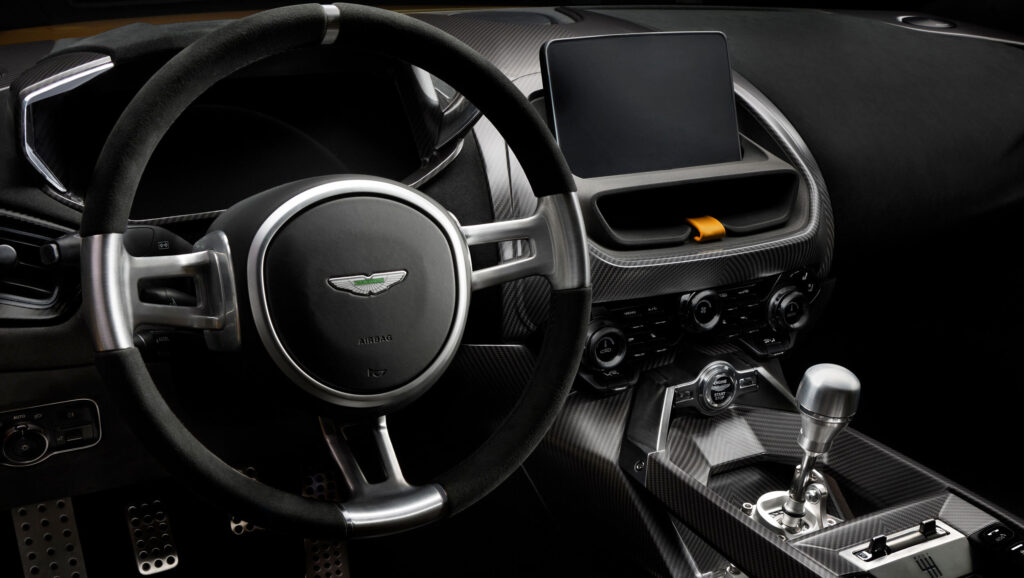
Manual supercars are trending again
If this year’s Monterey Car Week had a main theme, it was the return of supercars with a manual gearbox. Manuals are being offered in several new models at once, including the GMSV S1, McLaren McL 6GT, Spyker C8 Preliator XXV, and Kode89.
New Aston Martin Valen: power without a manual
Aston Martin went against this trend with the new Valen model, which it calls:
“The world’s most powerful front-engined production car.”
The car is equipped with a twin-turbocharged 5.2-liter V12 producing 838 hp (625 kW / 850 PS) and 737 lb-ft (1000 Nm) of torque. This allows the model to accelerate from 0 to 60 mph (0-96 km/h) in exactly three seconds, while the top speed is electronically limited to 214 mph (344 km/h).
Related: Aston Martin Valiant is a track weapon with a six-speed manual
These figures are impressive, but the car uses an eight-speed automatic gearbox. That is fine for a grand tourer, but enthusiasts want more involvement in the driving process.
Why bringing back a “manual” is difficult
Unfortunately, Aston Martin CEO Adrian Hallmark said adding a manual is easier said than done. Although the company has a long history of offering manual gearboxes, he told Road & Track that previous decisions were based on the old car architecture and their electronics. He explained:
“The problem is not getting a manual gearbox, but getting an electronic and modified system capable of working with the manual.”
Electronics as the main obstacle
This is largely related to modern safety and driver assistance systems. They are great, but some technologies are not very compatible with cars equipped with a manual gearbox. Hallmark specifically mentioned adaptive cruise control and collision avoidance systems. He noted that removing these features or making modifications could cost more than developing a new manual.
Is there demand?
However, some companies offer advanced driver assistance systems along with manual gearboxes. All versions of the Toyota GR86 have adaptive cruise control, as does the Honda Civic Type R. These examples show that it is possible, but the question of demand remains, and whether a manual will provide a good return on investment.
Ferrari-style: fake manual
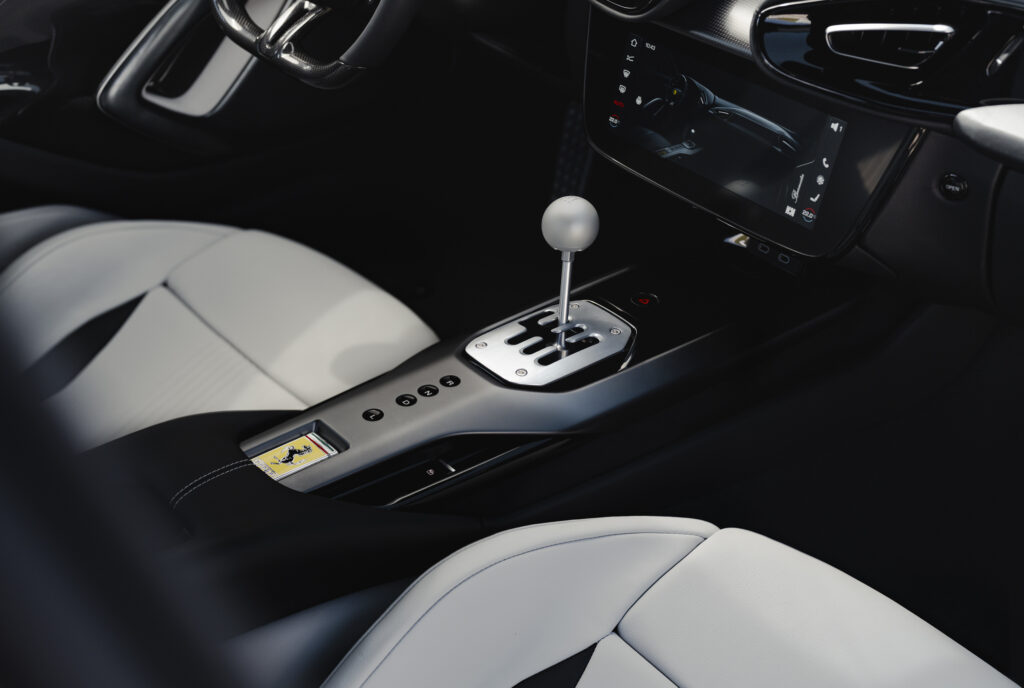
Hallmark also mentioned the “fake” gear shift lever in the Ferrari 12Cilindri Manuale. It is essentially an eight-speed dual-clutch automatic that has a six-speed manual selector and a clutch pedal. He suggested Aston Martin could potentially do something similar, but gave no concrete promises.

What’s next?
The return of manuals in modern supercars is not just nostalgia, but an attempt by manufacturers to attract buyers looking for driving emotions. However, for Aston Martin, such a move is complicated not only by engineering challenges but also by economics. Developing a new gearbox or adapting existing electronic systems to a manual requires significant funds, and demand for such versions is often limited.
Ferrari’s solution with a “manual” robotic gearbox could become a compromise for brands that want to preserve modern safety and comfort technologies while still giving drivers the feel of mechanical control. For Aston Martin, this would be a way to remain relevant in the eyes of enthusiasts without giving up electronic systems. However, whether it’s worth doing remains to be seen by time and the market.