


Audi’s sales forecast for the U.S. in 2026 looks grim. The company expects its results to continue falling, while competitors reap the harvest of success.
Situation Worsens After a Tough Year
For Audi, 2025 in the U.S. was a tough year: sales fell by 16 percent, continuing the disappointing trend of 2024. The golden growth years of the mid-2010s are now a distant memory. Hopes for recovery have not yet materialized, and for 2026, the company does not forecast a turnaround. Instead, it is preparing for another double-digit decline.
A Forecast That Became Known Through Court
This forecast was not publicly released. It became known in connection with a lawsuit. Audi is suing dealer Luxury Autos of Smithtown on Long Island, which claims that the brand unfairly put its two dealerships at a disadvantage through margin programs tied to sales volumes. In a February court document related to the case, Audi forecast it would sell 144 thousand vehicles this year.
If this figure is confirmed, it would be 13 percent less than the 164,942 cars Audi delivered in the U.S. last year. It would also mean a 37 percent drop compared to the record 228,550 cars sold by the brand in 2023.


The Worst Result in Many Years
According to Auto News, the 2026 forecast would make this year the weakest for Audi in the U.S. since 2012, when 139,310 cars were sold. The brand exceeded the 200,000 annual U.S. sales mark for five consecutive years, from 2015 to 2019, showing how sharply volumes have fallen.
Factors Influencing the Decline
Audi’s problems are exacerbated by its vulnerability to President Donald Trump’s tariffs, as, unlike BMW and Mercedes-Benz, it does not have production capacity in the United States. Additionally, the company implemented several price increases for 2026 models.
The parent company Volkswagen Group previously suggested that a decision on potential Audi production in the U.S. would be made by the end of 2025, but no commitments followed. In January, VW Group CEO Oliver Blume stated that plans for an Audi plant in the U.S. were frozen as tariffs continue to pressure profits.

Competitors’ Success Amid Audi’s Problems
The brand’s problems arise against the backdrop of its competitors’ prosperity. BMW sold a record 388,897 cars in the U.S. last year, marking the seventh consecutive year of growth, and forecasts a further increase this year. Mercedes-Benz increased sales by 0.5 percent to 303,200 cars and forecasts 7 percent growth this year to approximately 325 thousand units.
Lexus also had a record year, delivering 370,260 cars, which only reinforces the feeling that Audi is increasingly falling out of the overall picture of luxury segment development.

Audi’s Plans for the Future
As for how Ingolstadt plans to respond, that part of the picture remains unclear. Recent months have brought updated versions of the A5, Q5, A6 e-tron, Q6 e-tron, and the conventional A6 with an internal combustion engine.
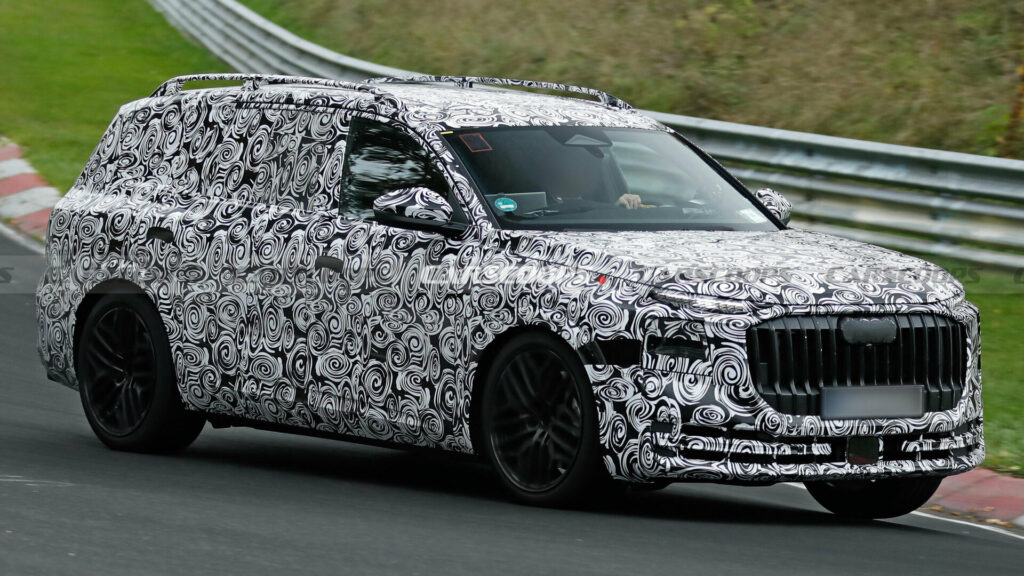
Outside of update cycles, Audi conducted a redesign of the Q5, started production of the new-generation Q3, and plans an updated Q7 in 2026. Also expected in 2026 is the new flagship Q9 crossover, created with a clear focus on U.S. buyers. Whether this will be enough to reverse the trend remains the key question.
Audi’s attempts to rectify the situation through model range updates face systemic challenges, such as the lack of local production in the context of trade wars. At the same time, the success of competitors who have plants in the U.S. and stronger market positions shows that the problem may not only be with specific models but also with the brand’s overall strategy in a key market. The success of new electric models like the Q6 e-tron and the future flagship Q9 will be critically important for restoring consumer and dealer network confidence.