


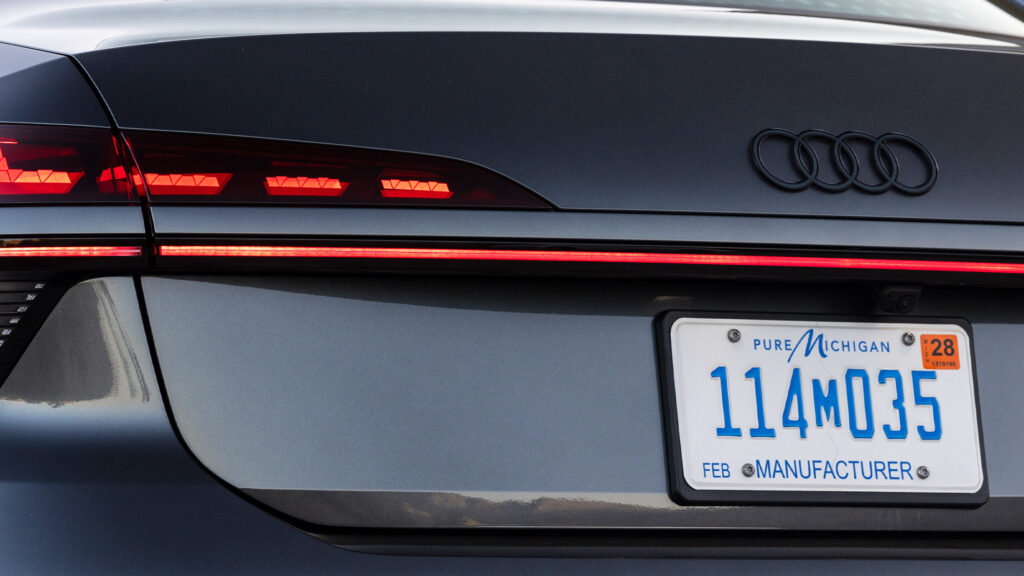
Sharp Decline in Audi Sales in the US
Despite its participation in Formula 1 from 2026, Audi’s road car sales in the US have experienced a significant drop. According to data for the first quarter of 2026, the brand sold only 29,886 cars, a full 30 percent less than in the same period last year. The company explains this as being due to the impact of tariffs and a cooling market, yet competitors are showing significantly better results.
Crisis in the SUV Segment and Unexpected Rise of Sedans
The biggest problems are observed in the heart of the model range — the SUV segment. Although the Q5 remains the sales leader with 10,100 units, its results still fell by 26 percent. Other off-road vehicles also showed negative dynamics: Q3 (discontinued) — minus 20%, Q7 — minus 30%, and Q8 — minus 25%.
At the same time, sedans demonstrated unexpected growth. The A5 model improved its figures by 6 percent, and the A6 by 9 percent, indicating sustained demand for this body type. The results for the A7 and A8 look less optimistic, having fallen by 72% and 43% respectively, which is partly related to their upcoming discontinuation.
Sales of the electric e-tron models collapsed sharply against the backdrop of cooling demand for EVs in the US.
Catastrophic Failure of the e-tron Electric Lineup
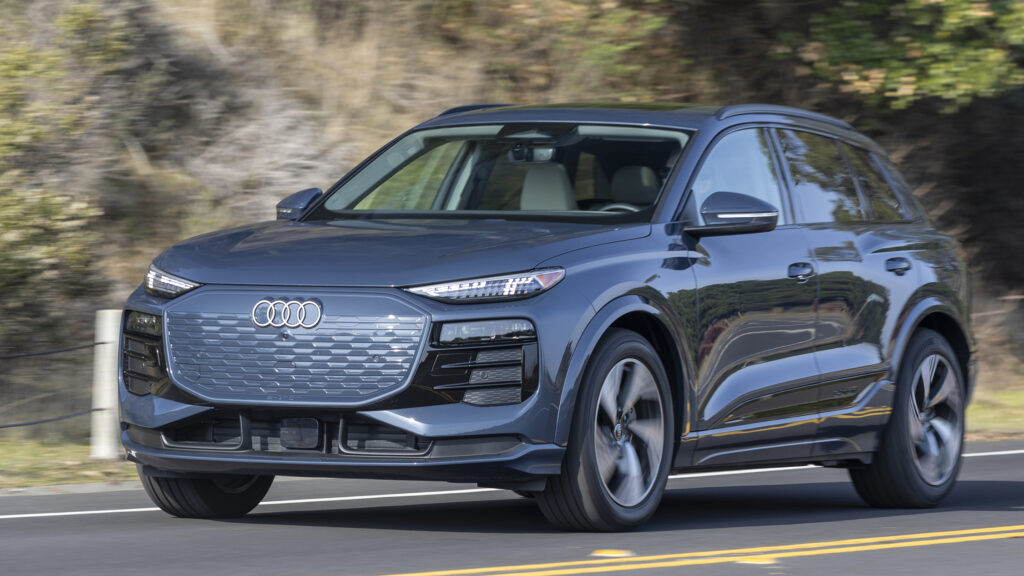
Audi’s electric direction is experiencing a real crisis. Sales of the e-tron GT fell by 75% (to just 63 cars), the Q4 e-tron by a staggering 93% (90 cars), and the Q6 e-tron by 90% (309 cars). Some new variants, such as the A6 e-tron, are only beginning their journey, but for now, the brand’s electric program is significantly underperforming its plans.

Contrast with Competitors and Search for Positives
Comparison with key competitors only emphasizes the scale of Audi’s problems. BMW sold 84,231 cars (a decline of only 3.9%), Mercedes — about 70,000 (minus 3%), and Lexus — 80,952 units (a decrease of 2.5%). The only bright spot can be considered the 6% growth in sales of certified pre-owned cars, to 12,820 units. This indicates that demand for the brand remains, but customers are increasingly choosing more affordable, used options.
Audi is pinning its hopes on model range updates, such as the new Q3, as well as the upcoming Q7 and Q9. However, these new arrivals will have to be waited for, and the situation requires immediate solutions.
Detailed Sales Statistics by Model
The table below shows the complete breakdown of Audi sales in the US for the first quarter of 2026 compared to the same period in 2025.
| Model | Q1 ’26 | Q1 ’25 | Change YoY |
| A3 | 2,273 | 2,260 | 1% |
| A4 | 1 | 403 | -100% |
| A5 | 4,372 | 4,121 | 6% |
| A6 | 2,026 | 1,866 | 9% |
| A6 Sportback e-tron | 164 | — | — |
| A7 | 176 | 622 | -72% |
| A8 | 201 | 355 | -43% |
| e-tron GT | 63 | 250 | -75% |
| Q3 | 4,256 | 5,347 | -20% |
| Q4 e-tron | 90 | 1,361 | -93% |
| Q4 Sportback e-tron | 6 | 513 | -99% |
| Q5 | 10,100 | 13,659 | -26% |
| Q6 e-tron | 309 | 3,246 | -90% |
| Q6 Sportback e-tron | 9 | — | — |
| Q7 | 3,554 | 5,104 | -30% |
| Q8 | 2,285 | 3,065 | -25% |
| Q8 e-tron | 0 | 405 | -100% |
| Q8 Sportback e-tron | 1 | 130 | -99% |
| R8 | 0 | 3 | -100% |
| Total | 29,886 | 42,710 | -30% |
The overall picture indicates serious structural challenges for Audi in the American market. The decline has affected almost the entire lineup, with the exception of a few sedan models. The almost complete halt in sales of models such as the A4, Q8 e-tron, and R8 is particularly striking. Only the launch of new electric modifications, such as the A6 Sportback e-tron, can be considered conditionally positive, but their volumes are still too small to impact the overall statistics. The success of future new arrivals, such as the Q9, will be critically important for regaining lost ground and competing with BMW, Mercedes, and Lexus, which are demonstrating significantly greater resilience.