


Unexpected Consequences of Trade Policy
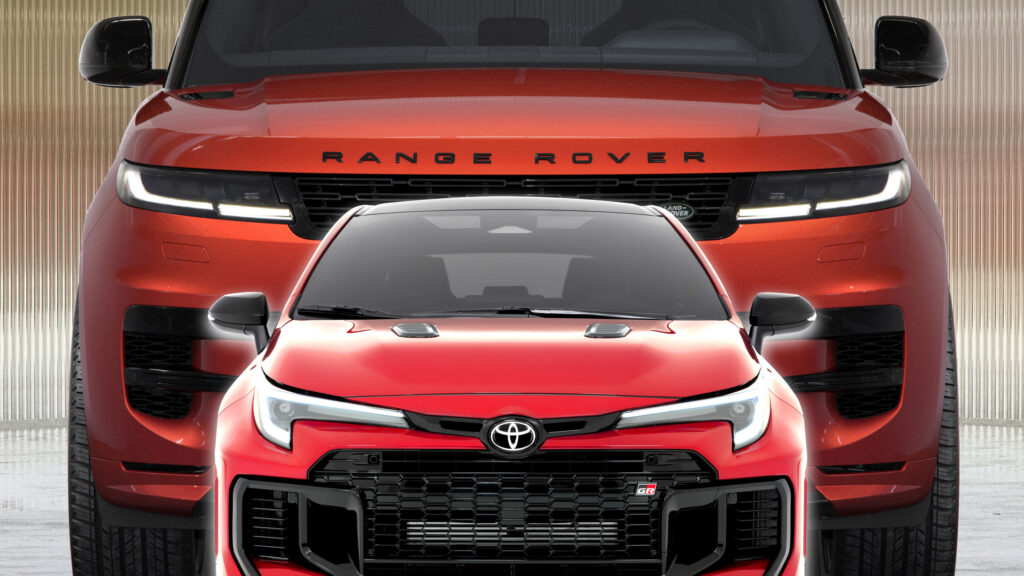
Trade policy often leads to strange alliances. At first glance, the Toyota GR Corolla and the Rolls-Royce Phantom have almost nothing in common. The former is a noisy, rally-bred hot hatch with flared wheel arches and a six-speed manual gearbox. The latter is a six-figure palace on wheels designed for owners who prefer to be chauffeured rather than touch a gear lever. However, thanks to the fine print of global trade policy, the little Toyota could inadvertently drive up prices for British luxury in America.
How the Import Quota Works
Under the trade agreement between the US and the UK, British-built cars imported into the US have a tariff rate of 10 percent, but only up to a certain limit. Once imports exceed 25,000 vehicles per quarter or 100,000 per year, the rate jumps to 27.5 percent.
Historically, this quota hasn’t been a major problem. Brands such as Aston Martin, Bentley, Land Rover, Lotus, Mini, McLaren, and Rolls-Royce collectively sold just under 98,000 British-built vehicles in the US last year. They were already approaching the limit but still had some room to maneuver. However, Toyota could accidentally disrupt this balance.
The Role of the Toyota GR Corolla
Toyota plans to start production of the GR Corolla at its plant in Burnaston, Derbyshire, this summer and export up to 10,000 units annually to the US market. Last year, Toyota sold 5,816 GR Corollas in America. Moving production from Japan to the UK potentially reduces the company’s own tariff risks. The Japanese version currently carries a 15 percent tariff, and Toyota reportedly paid a staggering $9 billion in customs duties last year.
Logistical Roulette and Risks
But here is where it gets strange. Adding up to 10,000 additional vehicles to an already crowded quota system could push the total volume of British exports over the annual threshold of 100,000 units. This means someone will ultimately be forced to pay 27.5 percent instead of 10. And currently, there seems to be no clear system for determining exactly who.
Industry experts told Automotive News that the UK lacks an organized export management strategy to coordinate shipments between automakers. Theoretically, manufacturers could rush to send inventory to ports at the beginning of each quarter, trying to beat the quota. But US Customs applies tariffs when vehicles are processed at ports, not when they leave Britain, turning timing into a high-stakes game of logistical roulette.
Additional Market Pressure
Pressure is also mounting from other sides. JLR is expected to launch electric Range Rover models, and a revived lineup of luxury Jaguar EVs looms on the horizon. These new models could further strain the quota. And this creates one of the strangest automotive domino effects in recent history. A turbocharged Toyota hot hatch could potentially influence whether someone gets exactly the Range Rover, Mini, or Bentley they wanted at the price they expected.
This situation vividly demonstrates how one manufacturer’s decision, driven by a desire to optimize its own costs, can have unpredictable and far-reaching consequences for entire market sectors. The lack of a coordinated export policy in the UK creates a risk for all British automakers operating in the US market. If the quota is exceeded, the most expensive models could become significantly more expensive, affecting demand and potentially forcing brands to reconsider their pricing policies or logistics chains. Thus, a relatively inexpensive hatchback becomes a kind of catalyst that could change the rules of the game for the premium segment.