 by
by The position of license plates on the Alfa Romeo Junior remains different for different markets
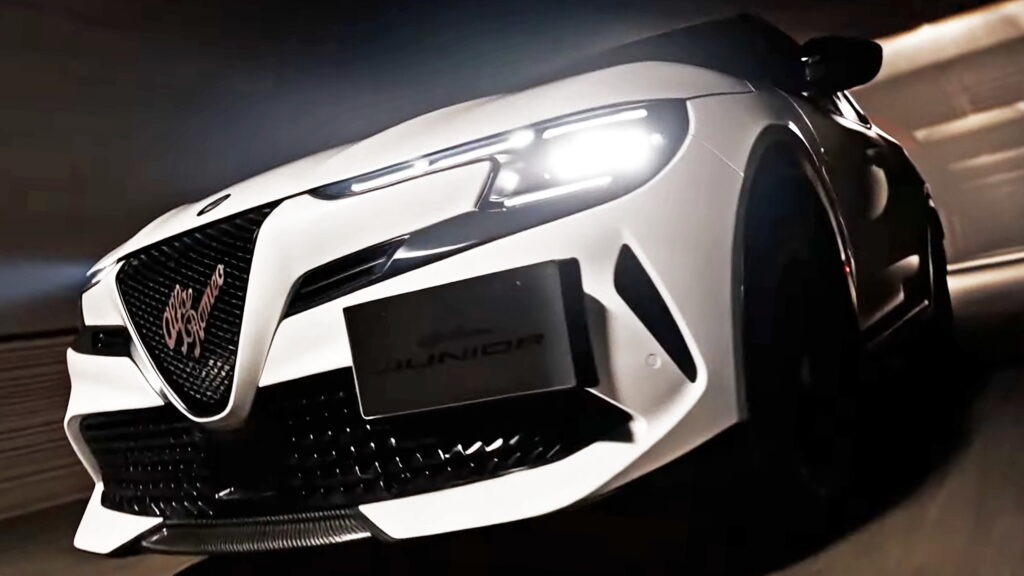
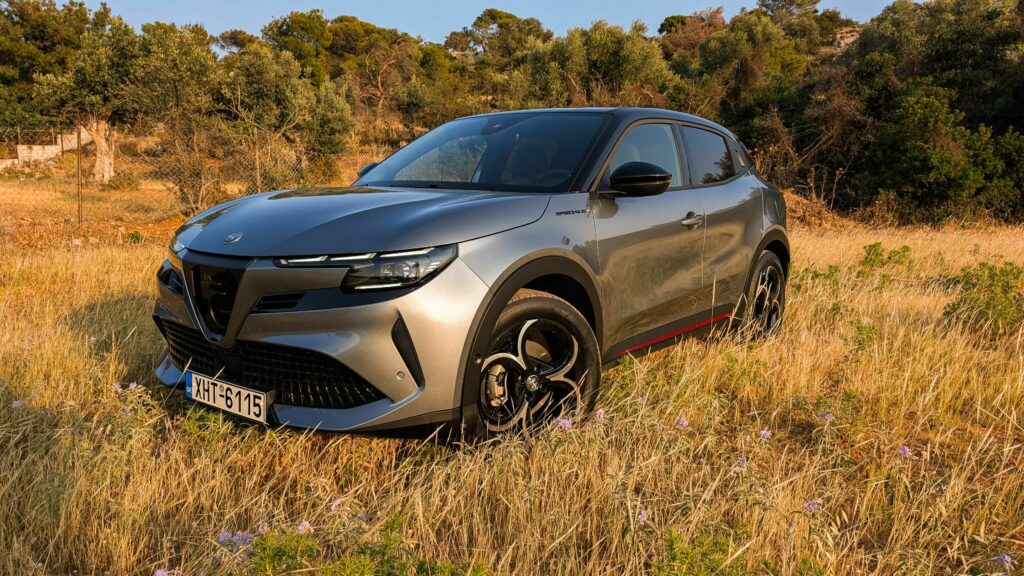
The new Alfa Romeo Junior became the first model of the brand to abandon the classic side placement of the license plate, after which this change was also received by the updated Tonale. However, not all markets followed this path. In some regions, particularly in Japan and Australia, the compact crossover continues to be offered with an offset license plate.
Why is it different in Japan and Australia?
There is no official explanation for this difference, but for the Japanese market the reason seems quite simple. Japanese license plates are taller than European ones, making it impossible to place them in the center of the bumper without blocking the ADAS system sensor.
For the Australian specification, there is no such technical problem, as most states use narrower license plates of the European type. In this case, the offset placement may be a matter of design preference rather than necessity.
The transition from offset to central placement of license plates was officially confirmed in 2024 by Alfa Romeo’s design chief Alejandro Mesonero-Romanos, who cited pedestrian safety regulations as the decisive factor.
He also admitted to being “one of those who loves the license plate in the middle,” which, at the very least, puts an end to the debate about symmetry in his own studio.

Currently in Europe, only the Giulia and Stelvio continue to wear side license plates. This feature is unlikely to be retained in their successors, the launch of which has been delayed.
New special series for Japan
For the Japanese market, Alfa Romeo introduced the Junior in the “Edizione Bianco” trim, limited to 120 units. The car is painted white and fitted with 18-inch alloy wheels with the traditional five-spoke “telephone dial” design with aerodynamic covers. Other details include carbon fiber coating on the front splitter and mirror caps, a matching key fob, and “Leggenda” grille trim.
The interior features two 10.25-inch screens, heated seats upholstered in techno-leather and fabric, automatic climate control, a six-speaker audio system, ambient lighting, aluminum pedals, wireless charging, a full suite of ADAS systems, and the familiar DNA drive mode selector.
Specifications and price
The series is equipped with a standard mild-hybrid 1.2-liter three-cylinder engine producing 134 hp and 230 Nm of torque. Power is sent to the front wheels via a six-speed dual-clutch automated transmission, as in the regular Ibrida version.
In Japan, the special series costs 4,990,000 yen (approximately $32,000). This is 640,000 yen ($4,100) more expensive than the base Core trim with the same engine, but 90,000 yen ($580) cheaper than the top Intensa version.
This license plate situation clearly demonstrates how global automakers must adapt car design and construction to the specific requirements of local markets. From technical regulations, such as license plate dimensions in Japan, to subjective design decisions, as in the case of Australia. The limited “Edizione Bianco” series for Japan is also an example of a strategy aimed at maintaining interest and exclusivity in a market where the brand may not be mainstream. This shows that even in the era of platform unification and globalization, local characteristics continue to play a key role in the automotive industry.