


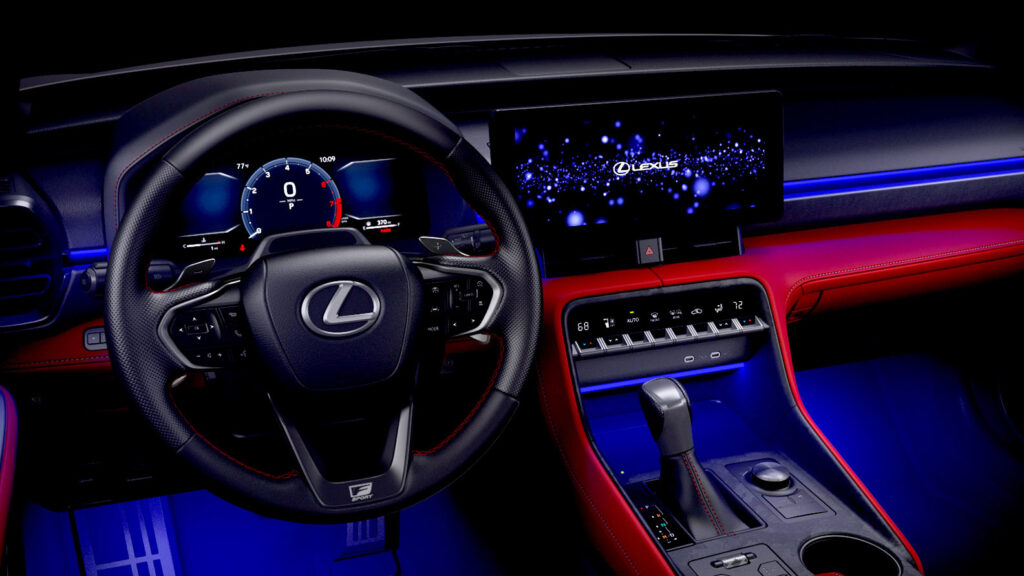
The modern car offers much more than just a means of transportation. It is a moving network of screens, sensors, processors, and wireless connections designed to make operation easier and ownership smarter. However, as technology implementation deepens, reliability appears to be decreasing.
Reliability Study Data
Fresh data from JD Power indicates that the reliability of new vehicles has taken a step back, with failures in infotainment systems and over-the-air software updates playing a major role in this.
The latest study surveyed 33,268 owners of 2023 model-year cars regarding 184 specific problem areas across nine main categories: climate control, driver assistance systems, driving experience, exterior, features, controls and displays, infotainment, interior, powertrain, and seats.
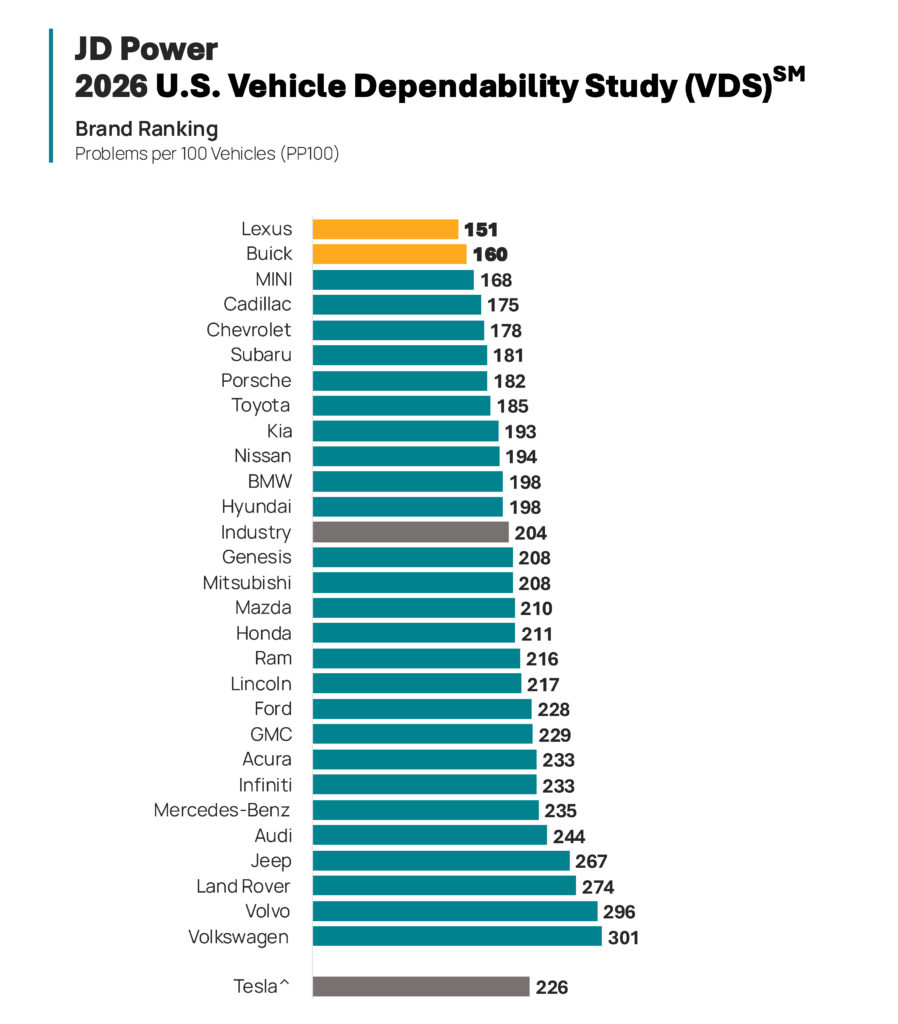
After three years of ownership, the number of reported problems increased by 2 problems per 100 cars compared to the 2025 results, raising the industry average to 204 PP100. This is the highest recorded problem level since JD Power revamped the study in 2022, continuing a three-year decline in long-term reliability.
Are Screens Undermining Reliability?
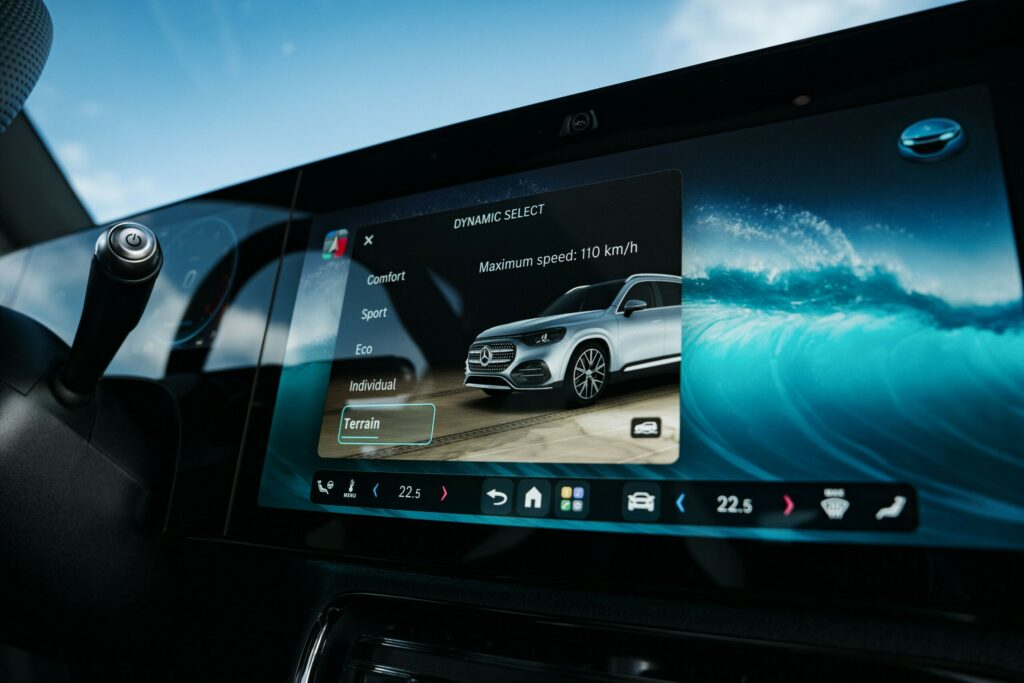

Infotainment systems generate the most complaints, accounting for 56.7 PP100. Four out of the five most common industry problems relate to phone integration. Problems with Apple CarPlay and Android Auto connectivity lead with 8.9 PP100, followed by built-in Bluetooth systems with 5.5 PP100, wireless phone charging with 5.1 PP100, and connectivity via manufacturer-branded apps with 4.7 PP100.
Complaints related to the exterior rank second among all categories with 27.5 PP100, with abnormal noises and issues with the tightness of part connections also contributing to the overall increase in problems.
Limitations of Remote Improvements

Over-the-air software updates are also causing concern. Among survey respondents, 40 percent stated their car had received such an update in the last 12 months, but only 27 percent noticed an improvement afterward, while 58 percent said they felt no noticeable difference.
More than half of these updates were delivered remotely, and the cars that received them showed a noticeable increase in reported problems. The promise of seamless improvement does not always translate into a smoother ownership experience.
“As owners keep their cars longer, the long-term ownership experience matters more than ever,” noted Jason Norton, Director of Automotive Benchmarking at JD Power, emphasizing that many drivers report persistent issues with phone integration and limited visible benefits from software updates.
Which Powertrains Prove to Be the Most Reliable?
The JD Power study also found that cars with plug-in hybrid powertrains have the most problems among all types – 281 PP100, a full 39 PP100 more than last year. Problems related to electric vehicles and hybrids also increased by 14 PP100 each, to 237 PP100 and 213 PP100 respectively.
In contrast, cars with gasoline engines slightly improved by 2 PP100, to 198 PP100, making them the least problematic powertrain category in the study.

The Most Reliable Cars
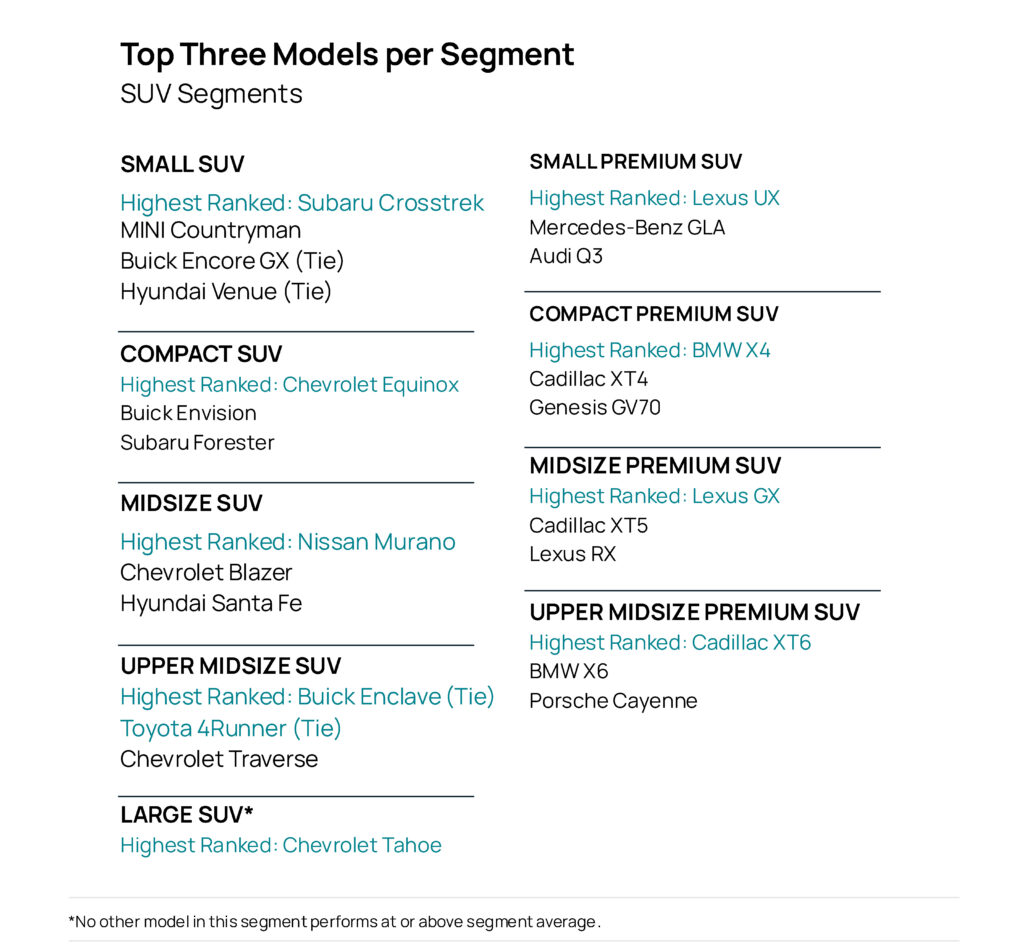
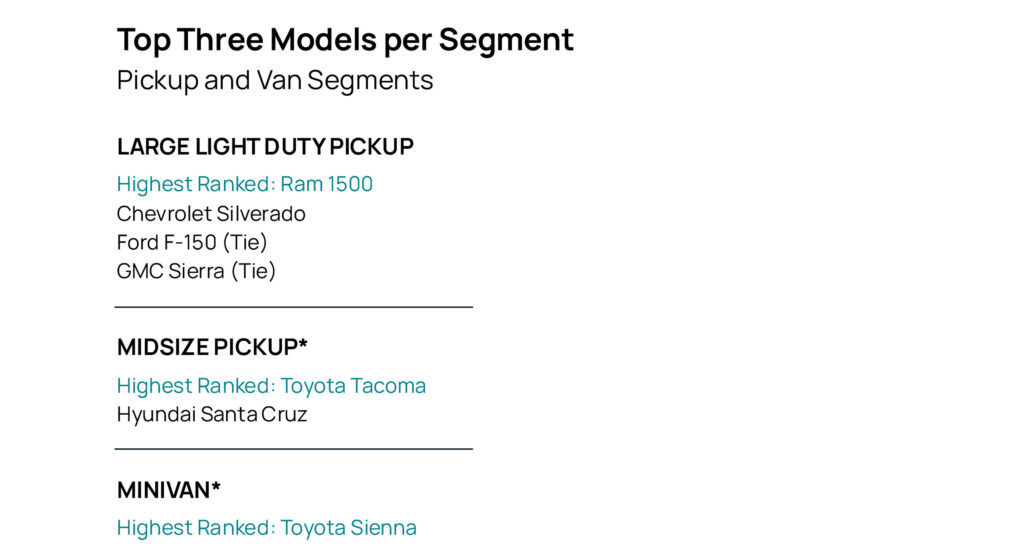
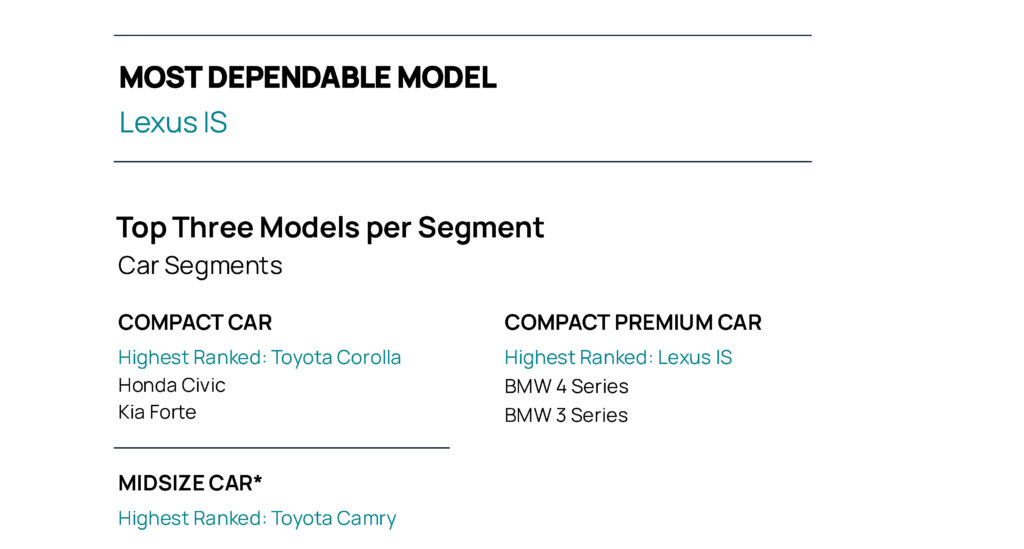
Among the analyzed brands, Lexus ranked highest in reliability with a score of 151 PP100, significantly below the industry average. The Lexus IS was also recognized as the most reliable individual car after three years of ownership, while other strong performers included the Honda Civic, Kia Forte, and Toyota Camry. Toyota received the highest accolades in eight vehicle categories.
Besides Lexus, which performed significantly above the industry average, other brands demonstrating solid reliability were Buick, Mini, Cadillac, Chevrolet, Subaru, Porsche, Kia, Nissan, BMW, and Hyundai.
Notably, premium brands as a group performed worse than mass-market brands this year, widening the gap between the two segments after a period of relative stability.
At the other end of the ranking were VW, Volvo, Land Rover, Jeep, Audi, Mercedes-Benz, Infiniti, Tesla, and Acura, all of which recorded higher levels of reported problems.


This data clearly points to a paradox in the modern automotive industry: drivers are getting more features at their disposal, but this is often accompanied by an increase in technical malfunctions, especially in electrified models. Traditional gasoline cars, despite criticism for environmental friendliness, continue to demonstrate the best long-term stability. This poses a serious question for manufacturers about how to integrate complex technologies without sacrificing the fundamental principle of a car – to be a reliable means of transportation. The performance of brands like Lexus and Toyota proves that combining innovation and quality is possible, but it requires a careful balance between new capabilities and proven component reliability.