


Record Car Costs
Car buyers in the United States are facing one of the most expensive markets in recent times, and data is beginning to show just how steep this climb has been.
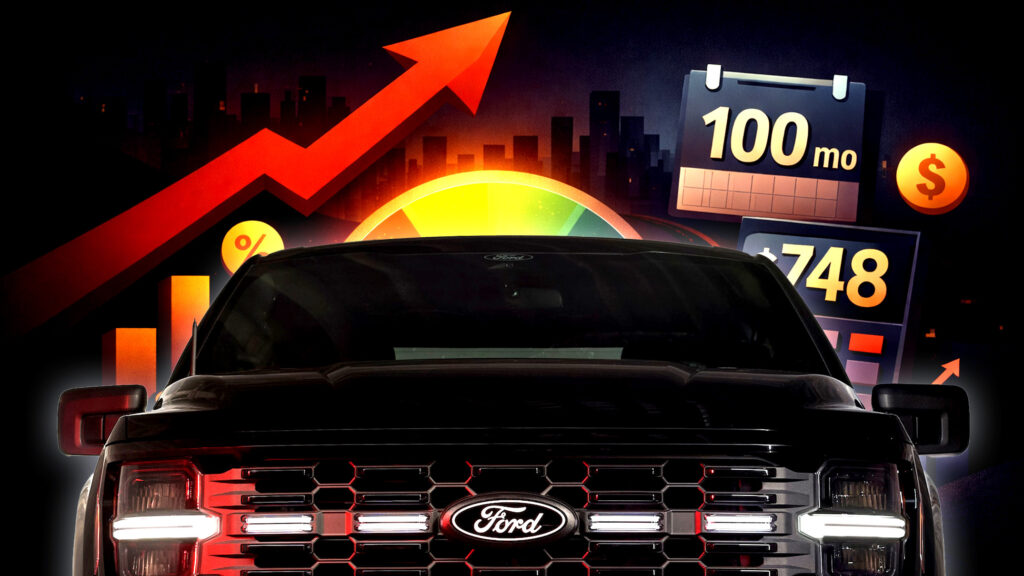
Over 80 percent of new car buyers were forced to finance their purchase, and in the last quarter, the average monthly payment was a staggering $748. Recently published data from Experian sheds light on how significant the financial burden of car ownership can be, even for the millions who opt for used models.
The average price of a new car crossed the $50,000 threshold for the first time in history.
Prices for new vehicles have risen sharply over the past five years, with the average transaction price increasing by more than 30 percent since 2020. In September, this figure crossed the $50,000 threshold for the first time. This increase has altered the structure of monthly payments even before factoring in interest rates.
What a Typical Auto Loan Looks Like Now
The latest Experian data focuses on average auto loans in the third quarter, comparing new and used cars across the United States. A typical new car loan is $42,332, with buyers paying an average of $748 per month and facing an interest rate of 6.56 percent.
Even a 1 percent change in the interest rate can noticeably affect monthly payments. For a $40,000 loan over 72 months, this difference typically adds or subtracts about $20-25 per month.

Some Buyers Now Face 100-Month Loans
And that’s not the worst of it. As we have reported, in an attempt to cope with rising prices, buyers are increasingly stretching loan terms far beyond traditional norms. Loans with 72-month, or six-year, terms have become commonplace, while an increasing share now exceed 84 months, or seven years, with some even reaching 100 months or more than eight years.
A shocking number of Americans are taking out 84-month loans to afford cars.
Extending the loan term can lower monthly payments, but the total cost increases sharply. A $40,000 loan paid over eight years instead of five can reduce the monthly payment by several hundred dollars, but also adds thousands of dollars in interest over the life of the loan.
Used Car Payments Are Lower, But Interest Rates Are Rising
As one might expect, typical monthly payments for used cars are generally lower, although interest rates are significantly higher. The average monthly payment is $532, loan amounts hover around $27,128, and average interest rates are 11.4 percent.
Loan terms also do not differ much from those for new cars, with the average used car loan being just under 67 months. On the other hand, only 35.48 percent of used car buyers financed their purchase in the last quarter.
Credit Scores Also Play an Important Role
Credit scores also play an important role in average monthly payments. For new cars, borrowers with excellent credit scores from 781 to 850 have average payments of $727, while those with prime ratings (661-780) pay $754.
Interestingly, the data shows that borrowers with very low credit scores, from 300 to 500, have lower average monthly payments of $748. But this figure does not tell the whole story.
Americans trading in cars owe more than ever, and the situation is only getting worse.
These borrowers typically take out smaller loan amounts, which explains the reduced payments. For example, while a prime borrower finances an average of $44,480 for a new car, the average for a borrower with a very low credit score drops to just $35,286.
Furthermore, those with low credit scores are likely to receive much higher interest rates. In fact, while the average interest rate for a super prime borrower was 4.88 percent in the last quarter, for a near-prime borrower with a credit score from 601 to 660, it was 9.77, and for a very low-score borrower, a colossal 15.85 percent.
The trend of extending loan terms to eight years and more is a direct consequence of the rapid rise in prices, which has outpaced the increase in household incomes. This creates long-term financial vulnerability for millions of families, as a rapidly depreciating car can remain under lien significantly longer than its actual market value. This situation also limits future purchasing power, as significant monthly payments for a depreciating asset consume a budget that could be directed towards other needs or savings. The question of the sustainability of such a consumption model in the face of potential economic fluctuations remains open.