


Looking for a very good deal on a new car? Perhaps you should steer clear of Toyota and Lexus dealerships and visit brands owned by the Stellantis conglomerate. Their car inventories are simply off the charts, and they are probably very keen to “unload” their parking lots.
An Uneven Market Picture
This conclusion suggests itself after reviewing the latest report from Cox Automotive, which highlights the huge differences in the availability of new cars at dealers across the entire U.S. automotive industry in the last month of 2025.
The total U.S. inventory ended December at approximately 2.77 million vehicles. This represents a 76-day supply, sharply down from 92 days and 3 million cars just a month earlier.
Strong year-end sales helped sell off many 2025 models and left many dealers in early January with much “emptier” lots than they expected.
Winners and Losers

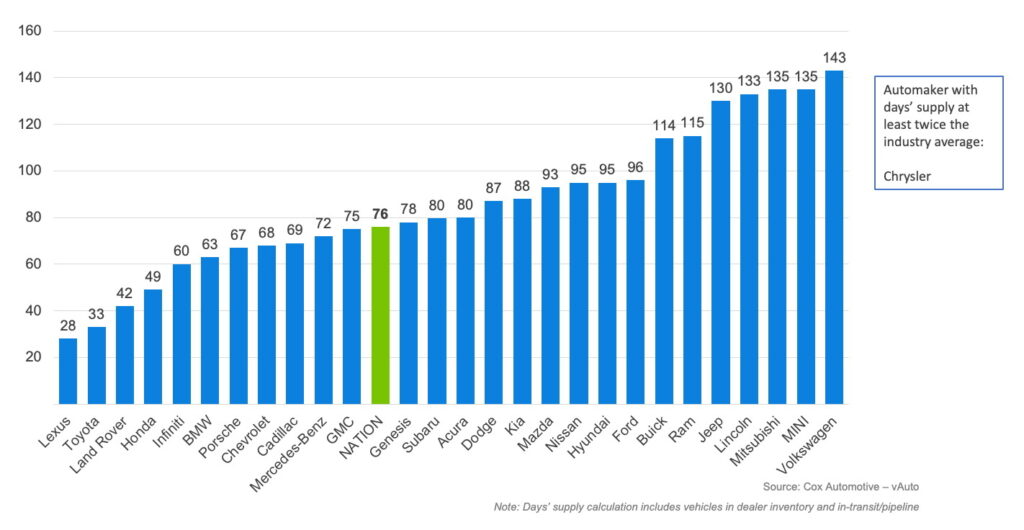
However, delving into the details reveals an extremely uneven picture. Toyota and Lexus remain the U.S. champions of inventory management, selling cars almost as fast as they arrive. Lexus had an average of only a 28-day supply, and Toyota had 33 days.
Land Rover is next with 42 days, and Honda with an overall figure of 49 days is not far off. These brands have mastered the art of matching production volumes with real demand.
At the other end of the industry “parking lot,” the situation is completely different and very overcrowded. Jeep ended the year with approximately a 130-day supply, while Ram trucks had accumulated to a level of about 115 days. Chrysler somehow looked even worse.
Lincoln, Mini, and Mitsubishi also struggled with inventories exceeding 130 days, and Volkswagen, whose U.S. sales are in crisis, had a colossal 143-day supply. For these brands, December resembled less of a sales celebration and more of a storage crisis.
Price and Availability

Pricing adds another strange twist. The average advertised price for a new car rose to just over $50,000, despite growing concerns about affordability. Meanwhile, luxury cars priced over $75,000 were actually selling out quickly, while models cheaper than $40,000 remained on the lots, suggesting that budget-conscious buyers are simply staying home.
All this means that good deals exist, but not everywhere. If you are interested in a Volkswagen or Stellantis vehicle and want to pick it up immediately rather than wait for a custom order, then you will at least have plenty to choose from.
Market Dynamics
Monthly data on retail sales of new cars shows a certain dynamic. At the end of 2025, despite the decrease in total inventory, the average advertised price continued to rise, reaching $50,465 in December. This trend may indicate that manufacturers and dealers are focusing on selling more expensive, and therefore more profitable, models, adapting to changes in demand. Strong fluctuations in days’ supply between months—from over 100 days at the start of the year to 73 in March—highlight the seasonality of the business and the impact of marketing campaigns, such as end-of-model-year sales. These figures also show how effectively individual brands manage logistics and demand forecasting compared to others.