


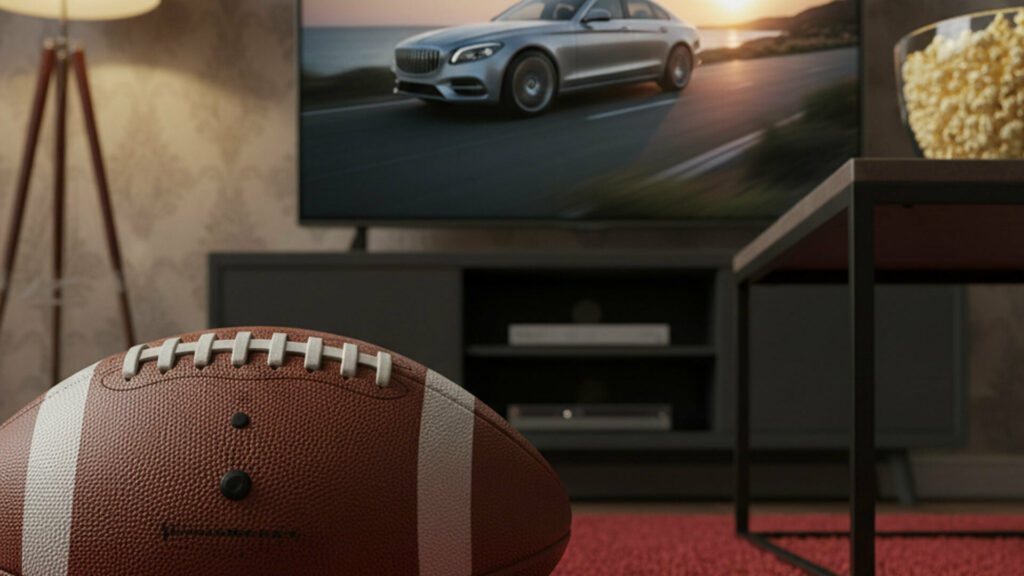
Automakers Are Avoiding Super Bowl Advertising
With less than three weeks to go until the biggest sporting show of the year in the USA, the Super Bowl, a number of automakers are not planning to show commercials during the broadcast this time. This is quite unusual, considering that last year’s game was watched by a record average of 127.7 million viewers across the country.
Stellantis Shifts Priorities
The Stellantis conglomerate, which usually has one or two high-budget commercials, has decided to focus its efforts on another large-scale event. Global Marketing Director Olivier François explained this refusal as follows:
The biggest American holiday this year is the 250th anniversary of the United States’ independence, so it, not the Super Bowl, will be our main moment in 2026.
This seems somewhat ironic, as the company promised to present limited series of Dodge, Jeep, and Ram A250 models at the Detroit Auto Show but never released their images or detailed information.
Who Will Still Show Ads?
While Stellantis is refusing to participate, Cadillac is reportedly set to show a commercial dedicated to its involvement in Formula 1. It is expected to feature the final livery of the race car, although for most American viewers, this probably doesn’t hold much significance.
Among other advertisers related to the automotive theme will be the companies Bosch and WeatherTech. As reported by Marketing Dive, Bosch will continue its campaign under the slogan “The More You Bosch, The More You Feel Like Bosch,” although the commercial will likely focus on household goods rather than auto components. WeatherTech is returning to the Super Bowl with a commercial that will presumably promote car accessories such as floor mats and window deflectors.
Cost and Expectations
Despite the sparse automotive list so far, new ad announcements are likely to appear in the coming days, as Super Bowl LX will take place on February 8th. As reported by Variety, advertising slots were sold out as early as autumn, and the NBC network was asking for about $7 million for 30 seconds of airtime. These are enormous sums, yet the Super Bowl remains one of the few events in the streaming era that gathers a mass audience.
The decision of giants like Stellantis to shift focus from a sporting event to a national holiday may indicate a change in marketing strategies in the automotive industry. At the same time, Cadillac’s participation linked to Formula 1 shows the brand’s desire to position itself in the context of high technology and prestigious competitions, trying to attract a new, possibly more global audience. The phenomenon of the Super Bowl as an advertising platform continues to demonstrate its strength, as the cost of participation only increases, confirming its status as a unique media event.