 by
by Autonomous driving technologies save lives in real-world situations
Autonomous driving and driver assistance systems are regularly criticized. Tesla’s Autopilot and Full Self-Driving often become subjects of lawsuits, and even standard driver assistance systems attract attention due to their shortcomings. However, the real picture is more complex.
People often have poor focus on the road, regardless of the car they are driving. But when autonomous systems and driver assistance systems work as intended, they can save lives. Here are just two examples.
When the system watches out for you
Consider the viral incident on an Oklahoma highway, where a man who had worked nearly 20 hours fell asleep at the wheel of his Kia. Traveling at a speed of about 65 km/h, the incident would almost certainly have ended in tragedy without systems like active lane keeping. Since the car had this function and it was activated, the vehicle remained in its lane.
He still crashed, but that happened because a police officer used a PIT maneuver to stop the vehicle, instead of simply driving ahead and slowing down.
After speaking with the driver, patrol officers learned he had worked nearly 20 hours within a 24-hour period. After work, the driver stopped to eat and then began driving home with the lane keeping assist system activated. The car maintained a steady speed of about 65 km/h. Patrol officers do not believe cruise control was on and are unsure how the driver maintained a constant speed, but they are confident the lane keeping assist system kept the car in its lane while the driver slept.
We have seen other similar situations where officers slow down a car by driving ahead, reducing speed and allowing adaptive cruise control to stop the vehicle. This can be considered a hidden additional example of how driver assistance systems save lives.
In any case, the point is that the driver was not injured and did not harm others. In fact, the worst part of this situation for the driver, aside from the damage from the police impact, was a fine, an awkward conversation, and a ride home.
What happens when the autonomous system reacts first?
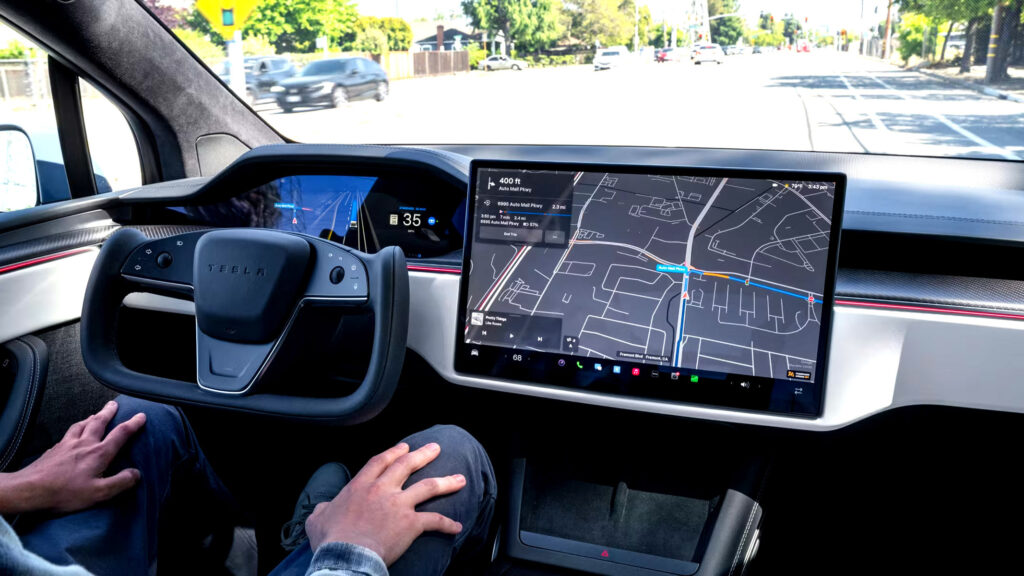
In another, more alarming example, Tesla’s misleadingly named Full Self-Driving system apparently saved Clifford Lee’s life. He was driving on a rural road in New Mexico when a truck in the oncoming lane decided to overtake a semi-trailer. The overtaking driver was not fast enough, and a head-on collision seemed inevitable. It was then that the Full Self-Driving system intervened and performed a maneuver faster than Lee realized what was happening.
The system’s cameras and real-time calculations executed the maneuver without input from the driver. The result was minor damage to the car, no injuries, and a convinced owner that automation had given him a second chance. These stories share a common theme: good outcomes rarely go viral.
Can you trust a computer with your life?
People often talk about near-miss accidents when something goes wrong, but the quiet instances where technology prevents accidents, such as lane keeping correcting course when a driver dozes, or an autonomous system avoiding an imminent collision, are almost certainly underreported. Autonomous driving technologies, despite their flaws, are already saving lives in subtle ways.
As automation becomes more widespread, understanding both its limitations and its life-saving potential matters. Lane keeping assistance will not replace human vigilance, and full self-driving is not a license to be distracted by a phone, apply makeup, or doze off. But when the unexpected happens, these systems can, and sometimes do, intervene at just the right moment.
These examples demonstrate that the discussion around autonomous technologies requires balance. On one hand, it is critically important to remain cautious and aware of technical limitations, and on the other – to acknowledge that even today these systems can be an effective safety tool. Their role often lies not in completely replacing the driver, but in providing critical assistance in those moments when human reaction may be delayed or insufficient. The future of road traffic will likely be built on the synergy between human attentiveness and machine precision, where each component complements the other to achieve a common goal – safety.