


The Alpina company, now fully owned by BMW, has unveiled an updated brand logo, symbolizing the beginning of a new era. The changes are quite subtle, so not everyone will notice them at first glance. Interestingly, the new logo retains some historical symbols whose meaning future customers may no longer understand.
Updating the Traditional Badge
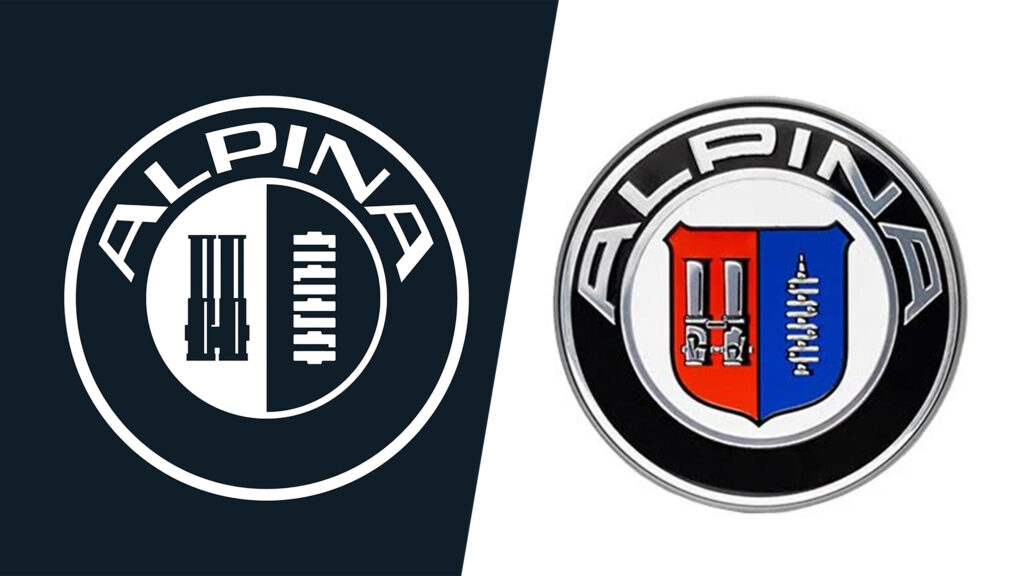
The emblem redesign adheres to traditions but makes the details neater. The circular frame and the core concepts that defined Alpina for decades are preserved. The difference lies in the execution: cleaner lines, fewer colors, and a transparent style make it more contemporary, similar to how BMW updated its own emblem a year earlier.
The old shield background, which once framed the graphic images of a carburetor (or throttle valve) and a crankshaft, has disappeared. Notably, BMW decided to keep them at all. These mechanical symbols themselves might confuse younger buyers raised on electric cars, who might wonder what they even mean.
A New Page in the Brand’s History
This updated emblem appeared a few weeks after BMW officially integrated Alpina as a separate brand into its empire. The acquisition deal was finalized back in 2022, but a transition period was granted, which ended in January of this year. It was then that BMW began sharing details, such as the new version of Alpina’s famous multi-spoke alloy wheel.

Alpina is no longer an independent tuning atelier that worked with BMW so closely that some of its cars were assembled at BMW’s own factories. Production of all models is being relocated to selected BMW plants, equipped to meet Alpina’s famously high standards. Customers can expect the same understated elegance in design, luxurious materials, and meticulous individualization that made Alpina cars iconic among enthusiasts who prefer speed delivered in an elegant wrapper.
Speed and Luxury in a New Format
BMW states that future Alpina models will focus on high sustained performance combined with the utmost comfort. In other words, the company wants these cars to occupy a position between top-tier BMW versions and Rolls-Royce in character and price, rather than competing with its own BMW M division. Rumors already point to ultra-powerful versions of future flagship SUVs and sedans, including electric models.
Full integration into the BMW structure gives Alpina access to cutting-edge technologies and a global dealer network, which could significantly expand the brand’s presence. On the other hand, the question arises of preserving the unique spirit and handcrafted work that were the foundation of Alpina’s image. The success of this union will depend on whether BMW can balance scaling up production with preserving the exclusivity and attention to detail for which customers are willing to pay a premium. Future models, especially electric ones, will be the true test of whether Alpina’s legendary driving “granularity” can be translated into a new era.