 by
by BMW Prepares an Updated Version of the M5 Touring
Spy photographers have repeatedly caught the updated BMW M5 sedan, and now they have managed to capture its wagon variant as well. Like the sedan, this model will receive updates inspired by the Neue Klasse style to remain relevant.
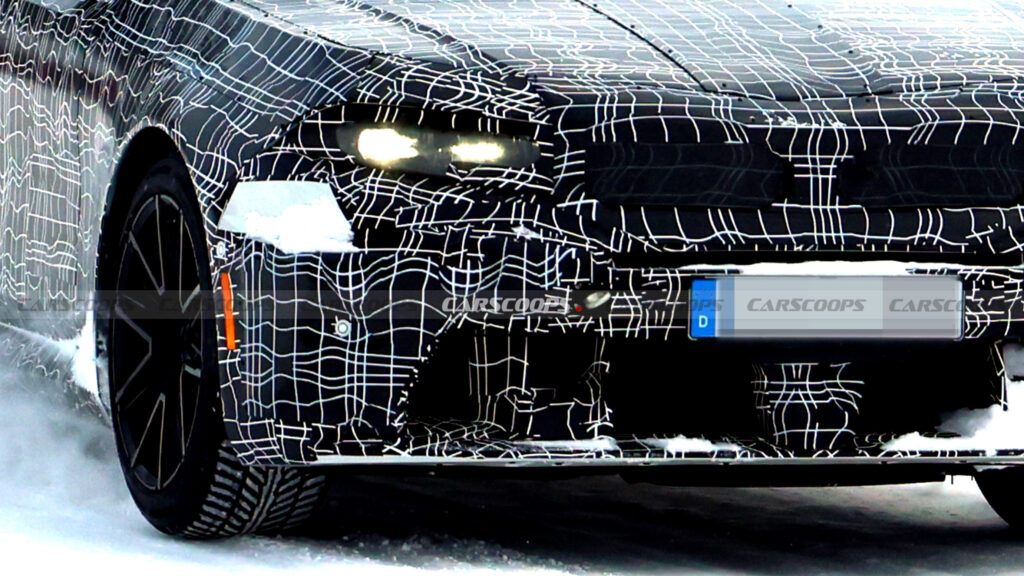
Earlier prototypes hinted that the car would receive a grille and headlights similar to the i3 and iX3, but this version looks more evolutionary. However, this is most likely due to camouflage that has cutouts for the classic BMW “kidney” grilles.
New Front-End Details
A closer look reveals a new centrally located air intake and a large lower opening. The latter seems to follow the model of the current generation, but the details have been revised, and a larger central support has appeared there.
BMW is working on an updated M5 Touring for 2027. The new front end includes a centrally located air intake. The manufacturer recently refined the V8 to comply with Euro 7 standards.
Changes in the Rear and Interior
The rest of the design is largely preserved, although the rear is effectively camouflaged by snow. This is unfortunate, but previous sedan prototypes make it clear that the changes will be relatively minor and will include an updated bumper and diffuser.
The updates will likely also affect the interior, where a completely new panoramic iDrive display system will appear, located at the base of the windshield. This full-width cabin screen is expected to be combined with a new 17.9-inch infotainment system running on Operating System X.
Powertrain Updates
Powertrain updates may be relatively minor, as BMW recently announced a series of changes to ensure the current M5 complies with Euro 7 emission standards.
Starting in March of this year, models in EU member countries and other markets adhering to European regulations will switch to the Miller combustion process and receive an improved exhaust gas cleaning system. They will also receive optimized engine management software aimed at reducing emissions and increasing efficiency.
As a result, the output of the twin-turbo 4.4-liter V8 has decreased from 577 hp (585 PS) to 537 hp (544 PS), which is a reduction of 40 hp. BMW has not confirmed whether the torque has changed compared to the previous 750 Nm.
Total Hybrid System Power
Despite the lower V8 power figure, the total power of the car’s hybrid system remains unchanged at 717 hp. The difference is compensated for by software optimization of the electric drive, not hardware changes.
These adjustments demonstrate how manufacturers balance the power their models are famous for with increasingly stringent environmental requirements. The transition to hybrid technologies is becoming a key tool to achieve this goal, allowing high dynamic performance to be maintained while reducing environmental impact. Similar updates are expected to become the standard for high-performance cars in the coming years.