


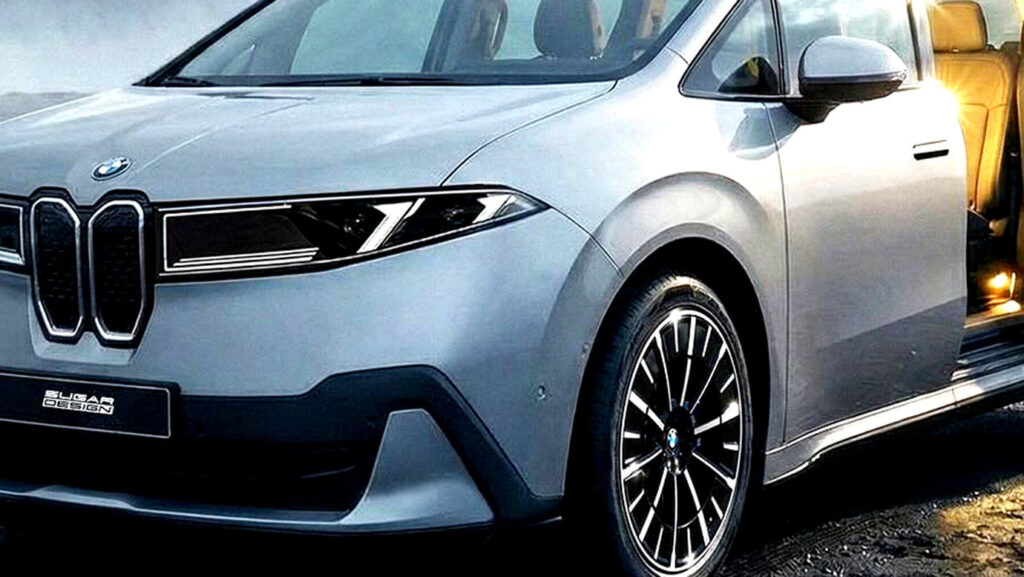
Independent Designer Imagines BMW as a Minivan
BMW has announced that by 2027, it will launch 40 new and updated models influenced by the style and technology of the Neue Klasse. This leaves ample room for expanding the lineup, perhaps even into unexpected market segments. However, the brand still ignores the rapidly growing premium minivan market in China. This is precisely what inspired the designer to create a visualization of what a BMW in this segment might look like.
His digital Neue Klasse minivan concept appeared on an Instagram page, quickly sparking reactions from both fans and critics. The model looks noticeably larger than the European 2-Series Active Tourer, which is currently BMW’s only compact minivan and has an uncertain future.
Neue Klasse Design in Minivan Form
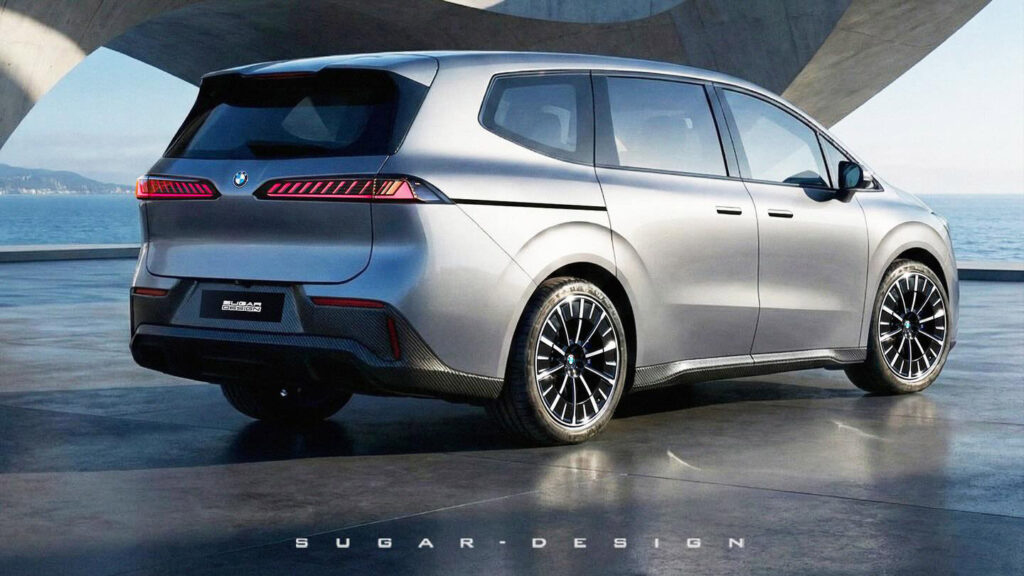
The front end borrows heavily from the new BMW iX3: thin LED headlights frame the narrow “kidney” grille. Similar motifs are present in the bumper graphics, elongated rear lights, and roof spoiler, aligning with the brand’s new, cleaner, and less aggressive design language.
In profile, the concept is defined by sculpted fenders, large sliding doors, and a long wheelbase. Despite its family orientation, it looks sportier than a conventional minivan. The lines are sharp, the proportions are balanced, and the large-diameter wheels help maintain an athletic appearance.
The designer did not share interior visualizations but describes a layout with three rows of seats for six or seven passengers.
And yes, imagining it with a 3.0-liter gasoline inline-six-cylinder engine is very tempting. Such an engine in a minivan would be a true BMW essence. However, if this idea ever materializes beyond pixels, it will most likely be built on the electric Neue Klasse architecture, especially if the model is primarily aimed at the Chinese market and possibly Europe.

Technology and Competition
Gen6 eDrive technology, a high-capacity battery, and powerful electronics could theoretically provide a compelling combination of range and performance. At the same time, BMW could remain true to its roots by tuning the handling to make driving truly engaging, not just comfortable transportation.
We are talking about competitors: a BMW Neue Klasse minivan would enter a saturated market. In China, rivals would include the Buick GL8 Avenir, Zeekr 009, Volvo EM90, Li Auto Mega, XPeng X9, Denza D9, Voyah Dreamer, and Maxus Mifa 9. Additionally, there are similarly sized minivans from Japan, such as the Toyota Alphard/Vellfire, Lexus LM, and Nissan Elgrand.
View this post on Instagram. A post by Sugarchow (@sugardesign_1)
Opportunities and Prospects
Although the concept mostly received positive comments on social media, some disliked the very idea of a BMW as a family car. Realistically, the Bavarian brand introducing a large minivan for China remains unlikely. However, as BMW’s model range expands, even stranger ideas have turned from sketches into production cars. In another timeline, such a model could have already lured customers away from Audi and Mercedes.
Despite BMW traditionally being associated with dynamic sedans and SUVs, market trends, especially in Asia, show growing demand for high-quality, technologically advanced family vehicles. The electrification of the Neue Klasse platform opens new possibilities for creating spacious and eco-friendly transportation without sacrificing brand heritage. The success of similar models from competitors indicates that a niche exists, and if BMW decides to fill it, it could be a logical step in the brand’s global strategy aimed at diversifying its product range and reaching new customer groups.