


The Beginning of the Story
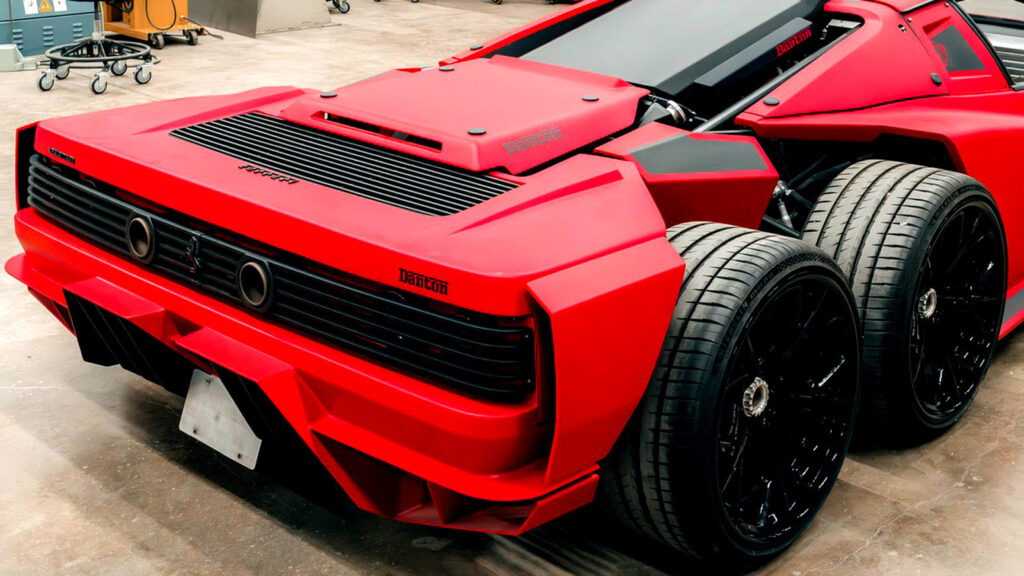
Over a year ago, a strange and almost heretical six-wheeled Ferrari Testarossa appeared online, capturing everyone’s attention. This unusual, elongated design sparked curiosity, disbelief, and many questions.
Now, after months of silence, official details have finally emerged about what this car is, how it came to be, and why its path turned out to be so difficult.
As it turned out, the story of this six-wheeled Ferrari was full of drama, missed deadlines, and creative disputes. Progress was slow, and it seems the universe is hinting that some ideas are better left unfinished.
What Happened?
In early 2024, the workshops Danton Art Kustoms and Frechy Export LLC built a six-wheeled AM General Humvee that only delivered power to two wheels. This power was provided by a Dodge Hellcat Hemi V8 engine.
On paper and in photos, it looked great. The two workshops sold the car to Richard Rawlings and his company Gas Monkey Garage. This design was then sold at a Barrett-Jackson auction for $750,000.
This deal was supposed to be the start of a new collaboration. Danton and Rawlings reportedly agreed that if the Humvee sold well, Gas Monkey Garage would finance their next ambitious development. This project became the six-wheeled Ferrari Testarossa.
No one had seen or heard about it for quite a long time. But about three weeks ago, an Instagram post appeared with Rawlings and the car, and Alex Danton left a comment that ignited new controversy.
“It’s so easy to steal and take credit for other people’s work. Karma is very important. Yes, liar and thief, I did it, they didn’t touch a single nut.”
“He paid me less than 10 percent for my work, even though I did it alone, and made me sign contracts to keep silent. He uses his financial power to crush people. I’d rather work to get my art seen than pay lawyers for nothing.”
However, according to Rawlings, the Ferrari required much more work than everyone thought. The fabrication, paint, and fitment, he said, did not meet expectations, and the team had to rework almost every part of the car. This is the state the project is in now.
How Close to Completion?
At this stage, Rawlings and the team are closer than ever to completion, but he openly states that in its current form, the car is only “somewhat acceptable.”
To bring it to the desired state will require “a ton of work,” he says. So, after all that, the car is still far from finished. As for Danton, in response to a question about where the car is now, he said: “destroyed.”
Here’s what’s strange: we saw and covered this car back in September when it was being transported to the GMG workshop. At that time, it seemed there was progress, but now it’s clear that the project was already in a dire state back then.
Now, considering the new information from Rawlings, it’s obvious that this aberration would probably beg for its suffering to end if it could.
This story raises questions about ethics in automotive tuning and the complexity of collaborations between independent workshops and major brands. Conflicts over authorship, payment, and work quality often overshadow the creative process, especially when it comes to experimental projects. Such situations can affect the reputation of all participants and leave unique cars without a chance of completion.