 by
by The Prehistory of the Bugatti 16C Galibier
Long before the Veyron hit the market and redefined the world of supercars, Bugatti was experimenting with the idea of creating a high-end luxury sports sedan. Initially, in 1993, the EB 112 concept was presented, and six years later, the EB 218. Neither made it to series production, but these were not the last sedans from Bugatti.
Presentation and Fate of the Concept
In 2009, several years after the launch of the Veyron, Bugatti once again showed a wild sedan prototype called the 16C Galibier. This time, the company had a clear intention to put it into production as the sole model following the Veyron. However, this never happened, and the concept virtually disappeared from view. Until now.
Matte Rimac Says Using VW Parts In A Bugatti Is A Bad Idea
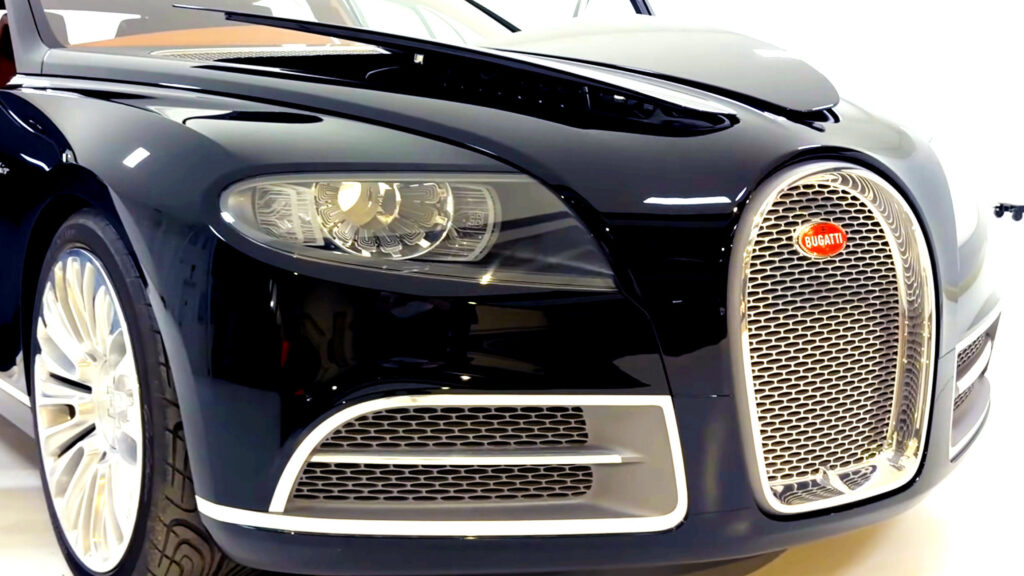
Recently, Horsepower Hunters got the opportunity to closely examine the 16C Galibier, which is now on display at the Autostadt museum in Wolfsburg, Germany. Unlike many concept cars that appear raw, the Galibier is executed flawlessly.
Car Details and Finishing
The build quality and finishing appear to be of the highest standard. Bugatti clearly spent a lot of time and resources to make the car worthy of the EB emblem. As with the Veyron, and later the Chiron and Tourbillon, the front is dominated by a massive horseshoe-shaped chrome radiator grille, and the complex headlights also attract attention.
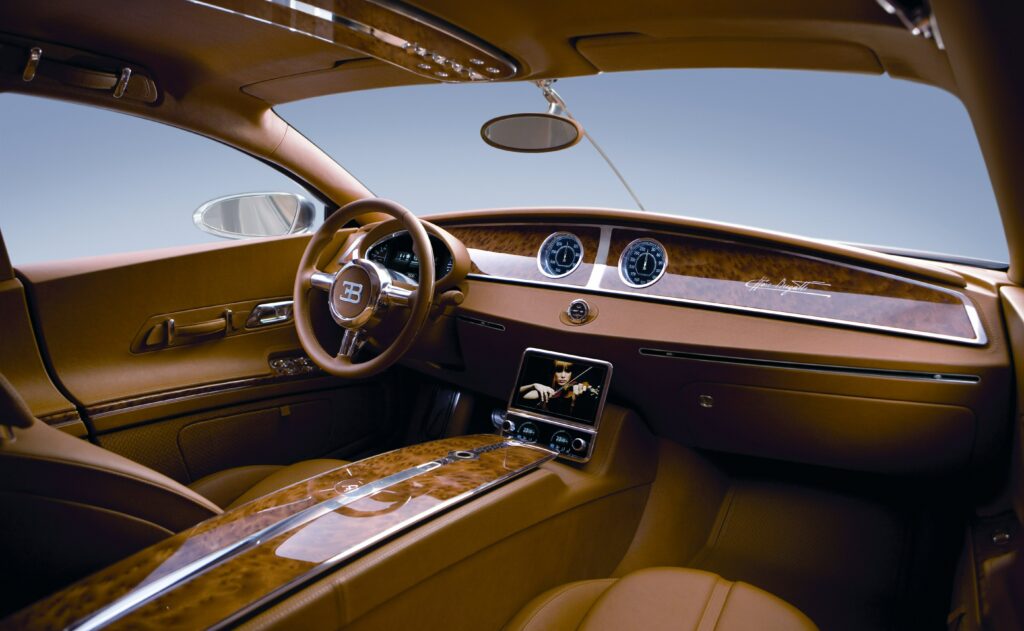
The interior looks no less luxurious than that of a Rolls-Royce or Bentley. The four seats are upholstered in plush brown leather, with plenty of accents made of polished aluminum and polished wood throughout, including on the dashboard.
Despite the concept’s age, it features an interesting LCD infotainment screen, combined with physical switches located at the lower part of the panel.
Unique Technical Features
One of the most interesting features of the Galibier is found in the second row of seats. After pressing a button on the center console, a hidden information screen appears and rotates.
Bugatti also gave the concept an interesting engine. Instead of simply installing the quad-turbo 8.0-liter W16 from the Veyron, engineers removed the turbos and replaced them with two superchargers. This would have allowed the car to produce over 1,000 hp, like the Veyron, but with a wider power band, more suitable for this type of vehicle.
Despite the project being shelved, the 16C Galibier remains an important milestone in Bugatti’s history, demonstrating the brand’s aspiration to move beyond the supercar segment. Its exquisite execution and innovative solutions, such as the supercharged W16 and complex interior, show how seriously the company took creating a unique luxury product. Today, this concept serves as a reminder of an alternative development path for the manufacturer, which ultimately chose to focus on hypercars but preserved the legacy of its experiments with luxury sedans.